One pound of dust a year
A average duct system can collect close to a pound of dust and debris over a year. That's what's riding the airflow into your rooms every time the blower kicks on.
Get the right pro for your ductwork
Dust that comes back a few days after you clean usually means your duct system is spreading it, not catching it. With the air conditioner running most of the year here, air moves through those ducts constantly, carrying dust with it. This page gets into what's likely going on and what cleaning the ducts actually involves. If you'd rather skip the search and the back and forth with contractors, you can get matched with one who handles this and have them reach out directly.
Get my matchMost house dust is a mix of dead skin, fabric fibers, and the dirt that comes in through doors and windows. In a normal room it settles on shelves and floors. In a house with a duct system, the return vents pull that same dust back into the air before it has a chance to settle, then push it right back out through every room on the next cycle. If your air conditioner runs most days from April through October, as it does around Montgomery, that air is moving almost constantly, which means more passes through the ducts and more dust gets carried along with it. A dirty or poorly sealed filter lets fine dust straight through instead of catching it, and leaky duct joints in an attic or crawlspace can pull in dust and insulation fibers from those spaces and add them to the mix. If you are vacuuming and wiping down the same surfaces every few days, the ducts are the likely source, not the cleaning.


Air has to move somewhere, and the path it takes explains most of this. A return duct with a gap in it does not know the difference between the air in your hallway and the air sitting in a crawlspace or attic, so it pulls both. Once that air is in the system, the blower sends it straight through the supply vents into your rooms, filter or no filter, because the filter only works on air that actually passes through it. The coil and blower wheel collect their own layer of dust over time too, and pieces of that break off and travel the same path. Flex duct that sags behind a wall changes things further. Airflow slows where it sags, and dust drops out there instead of riding all the way to the vent, so one run can be dirtier than the rest of the house. In older construction, the return sometimes runs through the open space between floor joists rather than a sealed metal duct, and that space picks up whatever has settled in it over the years.




A average duct system can collect close to a pound of dust and debris over a year. That's what's riding the airflow into your rooms every time the blower kicks on.
A filter only cleans air that actually flows through it. Air leaking in through a gap in the duct never gets filtered before it reaches your vents.
Half the homes here were built by 1979
Half the homes in Montgomery County were built in 1979 or earlier, old enough that duct seams and joints have had decades to work loose.
Heat runs November through March
Cooling runs May through October here, six months of the blower pushing air through every gap in the duct run, carrying dust with it.
Cooling runs May through October
Heat runs November through March, so for the other five months the same ducts are still moving air and still able to pull in dust from wherever they leak.
ACS 2020-2024 · NOAA nClimDiv 1991-2020
The blower switches on and pulls air through the return vents.
Air gets drawn through any gaps along the way to the unit.
Loose dust and debris from the joist bay rides along with it.
The system pushes that mixed air back out through the supply vents.


You've already read what's pulling that dust through your house and why it keeps settling back on the same shelves a few days after you wipe them down. Knowing the cause doesn't clear it out. The dust sitting in your ducts right now, that pound or so built up over the year, stays there until someone physically removes it, and with the blower running for six months of Alabama summer, it keeps cycling through every room in the meantime. Finding someone to do that work usually means searching around, calling a few companies, describing the same problem more than once, then sitting with quotes trying to tell them apart. None of that gets the ducts any cleaner. Put in a request here and it goes to one contractor who covers Montgomery and the surrounding county, so you skip the sorting and get straight to someone who can look at what's actually going on in your system.
Dust from a leaky duct system doesn't spread evenly. It shows up where the air moves most, and once you know where to look, the pattern is easy to spot. The shelves and tables under a supply vent catch the heaviest dust because that's where the conditioned air, and whatever is riding along with it, comes pouring into the room. Furniture near a return vent tells the same story from the other direction. Dust and fine debris get pulled toward the return before the system draws it back through the ducts, so that corner of the room collects more than the rest. You'll notice it most on dark, flat surfaces. A TV stand or a countertop shows a gray film within days of being wiped clean, while a lighter surface hides the same buildup longer. Some homeowners notice it less on their shelves and more in how they feel. Sinus irritation or allergy symptoms that ease once you're outside and come back soon after you're home again often trace back to what's circulating through the vents, not something in the room itself. Turning the blower down to a lower fan setting doesn't change any of this. Slower airflow still passes through the same gaps and carries the same dust, so the cleaning cycle on your shelves stays the same, no matter the fan speed you're running.
At 17.58 cents per kilowatt-hour, running the blower this much of the year already shows up on your power bill. A leaky duct makes the system work harder to hold its temperature, so the extra dust isn't the only cost of those gaps.
EIA-861 2025

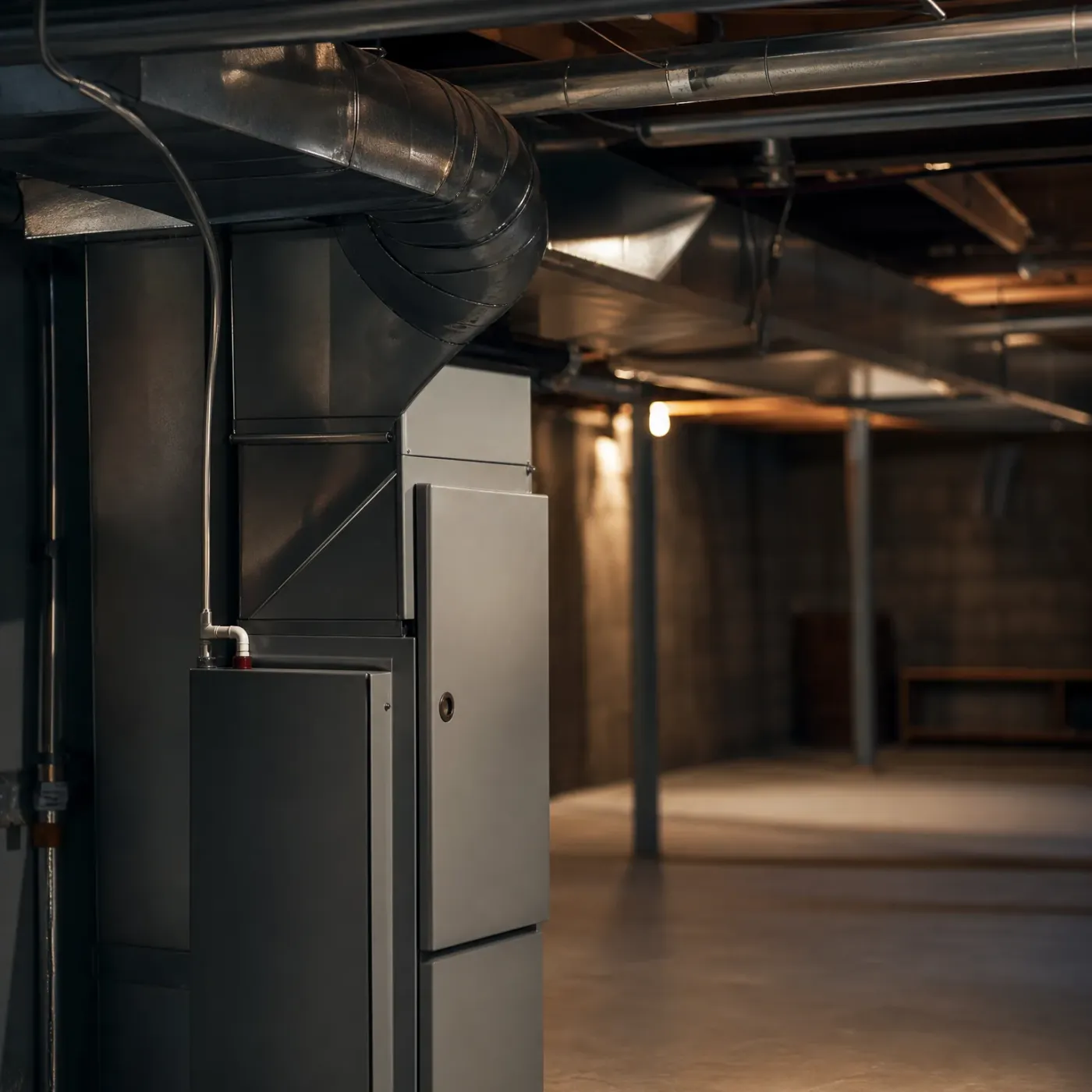
This is a duct system doing its job. The metal runs are tight at every joint, so the blower pulls air only from the return vents, not from the basement around it. Air goes where it's supposed to and nothing else rides along with it.

This is where ducts usually give out, right at a branch like this one. A seam that's worked loose here sits open to everything around it, the joist bay, the dust that settles near those cast-iron drain pipes. The blower doesn't know the difference. It pulls air from wherever it can get it.



The dust settling back on your shelves a few days after you clean them is coming through your vents. In Montgomery County, with the air conditioner running May through October, that air moves constantly, and a duct system with gaps at the seams carries dust with it every time the blower kicks on. A cleaning clears out what's already built up in there. It doesn't close the gaps that keep drawing more in.
Finding out how much of that is cleaning and how much is a leak takes someone looking at your actual ducts, not another round of wiping shelves. A contractor who works on duct systems in this area can look at yours and tell you which one you're dealing with, then reach out to go over what they found. That's one call instead of searching, comparing a handful of companies, and explaining the same problem to each of them.


Find a duct system cleaning pro in Montgomery County