Profile view of a bearded man wearing a dark baseball cap and a dark gray T-shirt against a plain off-white background.

Why your house is so dusty in Alabama

Duct and vent cleaningDucts or ventsAlabama
Step 1 of 2

What ZIP code is the job in?

Why is my house so dusty all the time in Alabama?

You dust the shelves on a Sunday and by Wednesday there's a film on them again. It's not just the shelves either, it's the TV screen, the ceiling fan blades, the top of the fridge. You keep a clean house and this still happens, so something is putting dust into the air faster than you can wipe it away, and you want to know what.

Your duct system is likely recirculating dust instead of trapping it

Every home with ducts moves the same air through the house over and over, and whatever the filter doesn't catch goes right back into your rooms. In Alabama, that system runs almost nonstop. Summers are muggy enough that the AC is on for months at a stretch, and most homes here heat with electricity, so the blower is working one way or another nearly year round. That's a lot of air passing through, and a lot of chances for a dirty filter, a leaky duct, or a buildup of dust inside the ductwork itself to put more back into the air than it removes. The more the system runs, the faster dust reappears on surfaces you just cleaned.

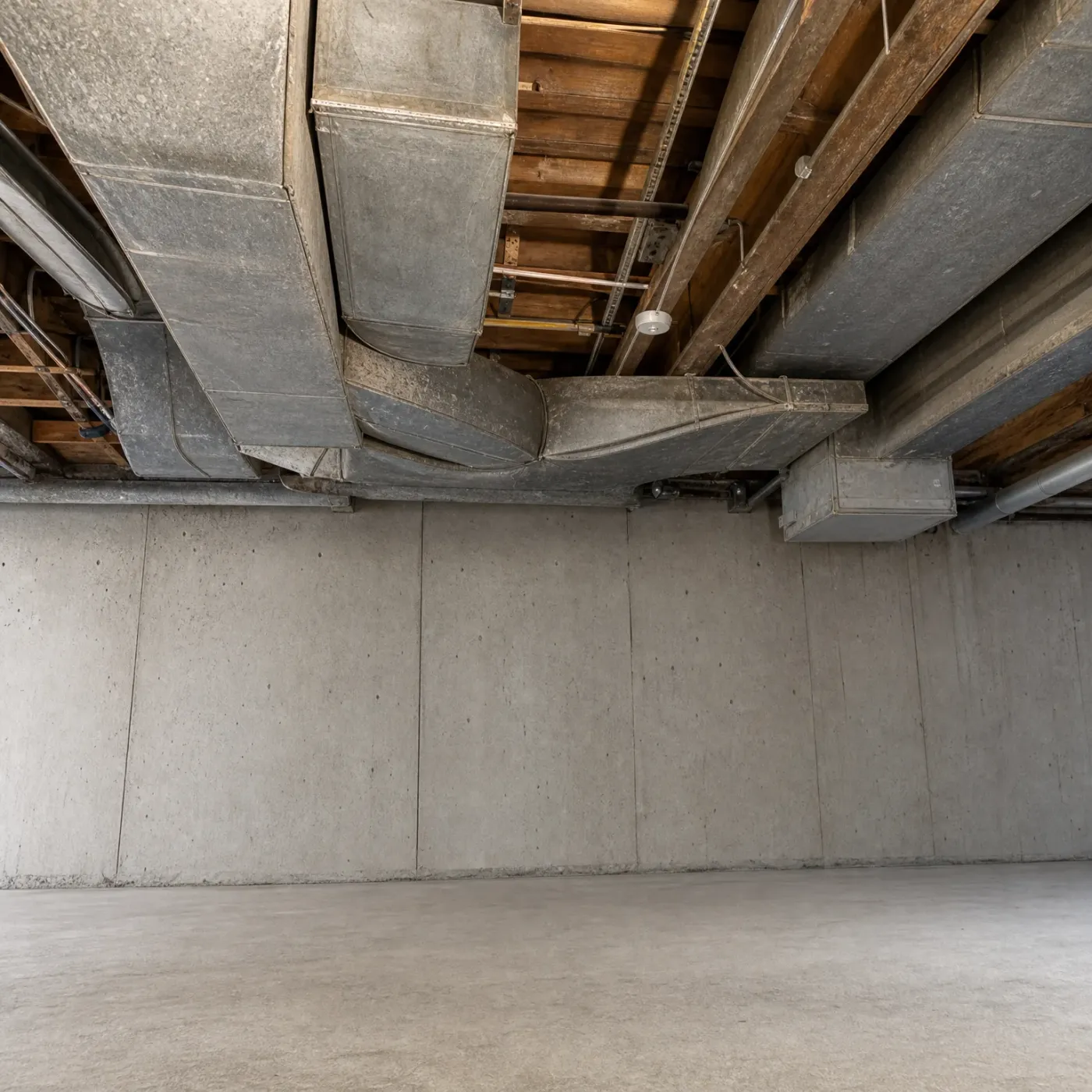
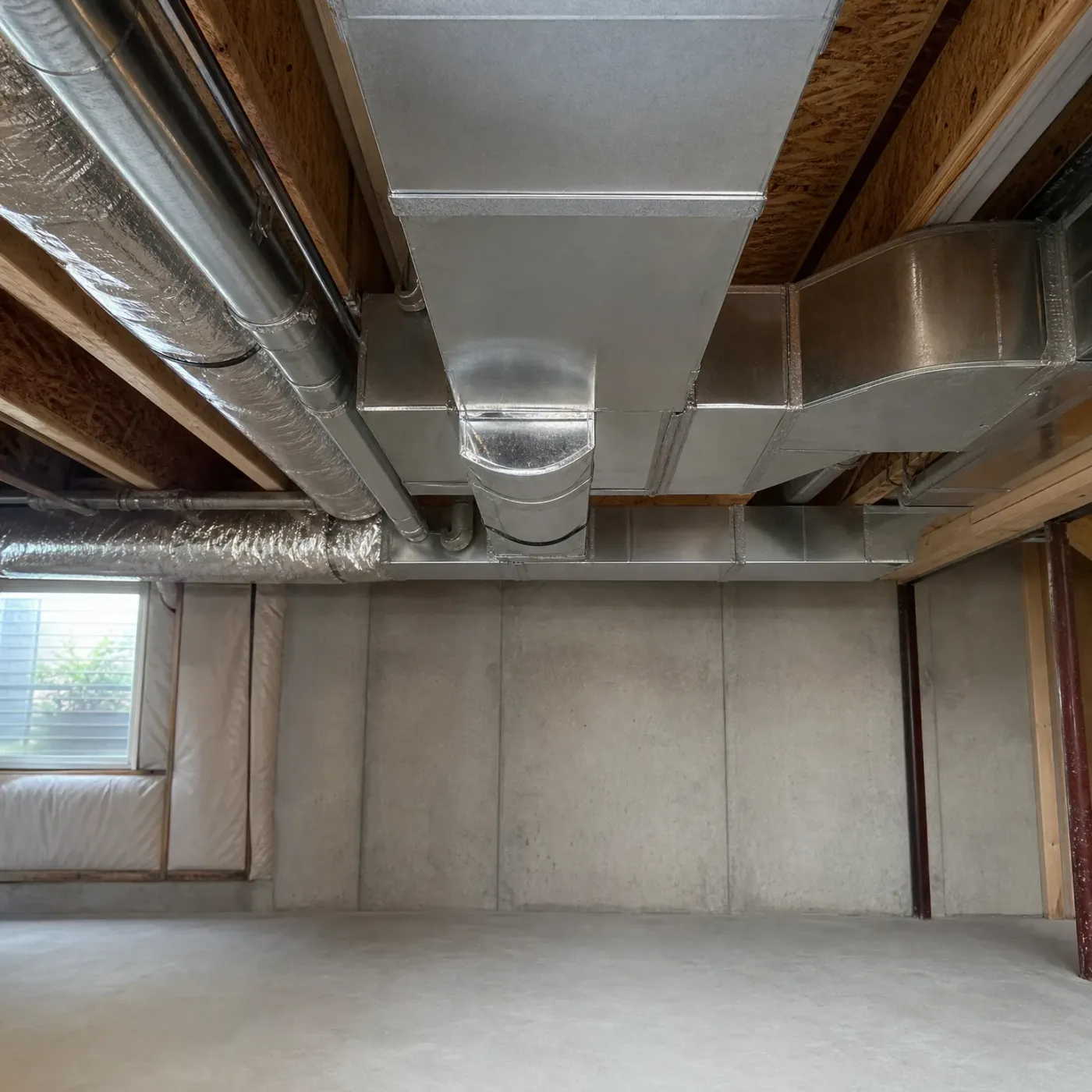
Empty unfinished basement with bare concrete walls and floor, showing galvanized sheet metal ductwork, insulated flexible duct, and pipes running along the wood-framed ceiling, with a small window at left.

Ducts moving clean air

This is what a duct system looks like when it's keeping dust down. Sealed joints, tight connections, nothing pulling in loose air from the basement itself. The air your vents push out is the same air your return pulled in, filtered on the way.
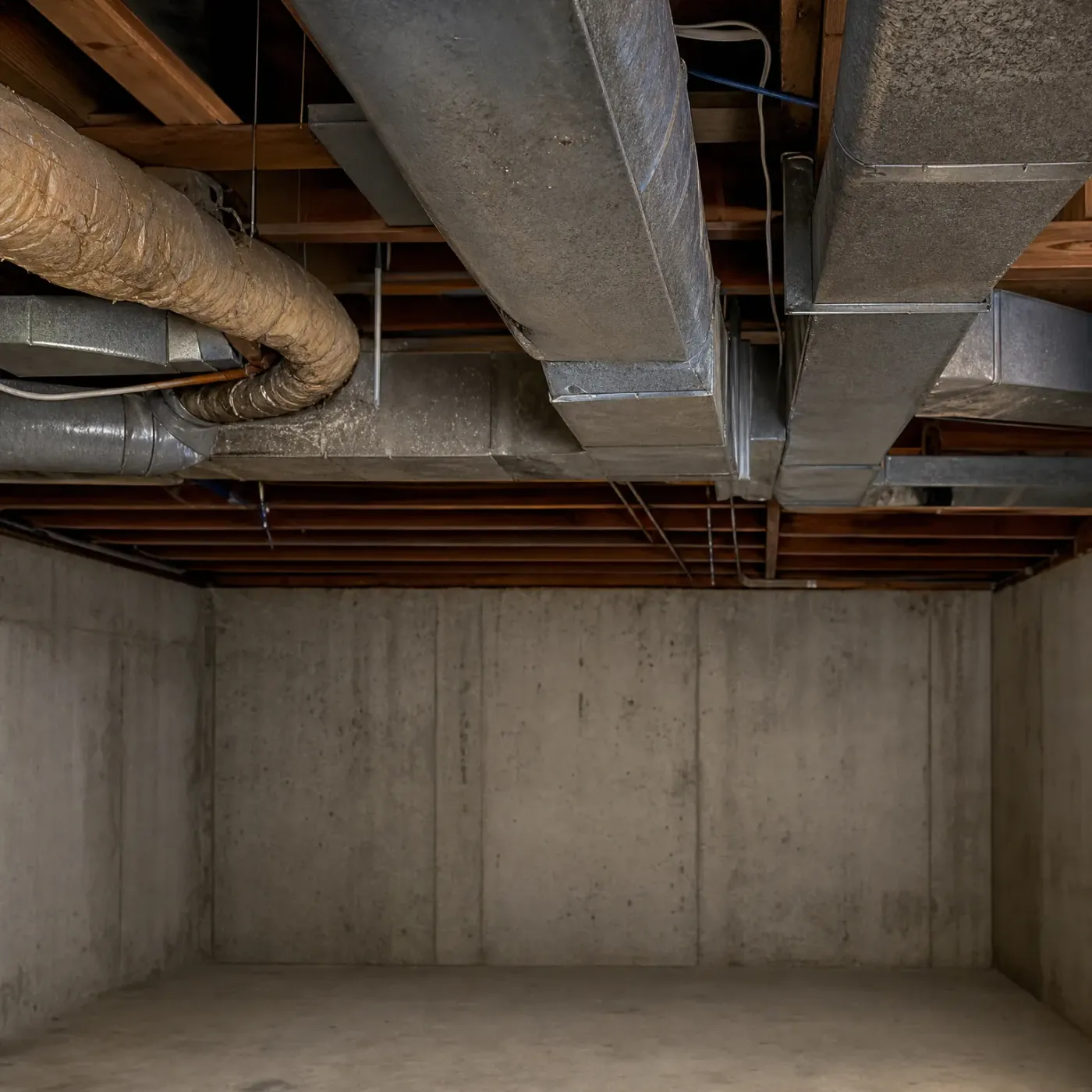

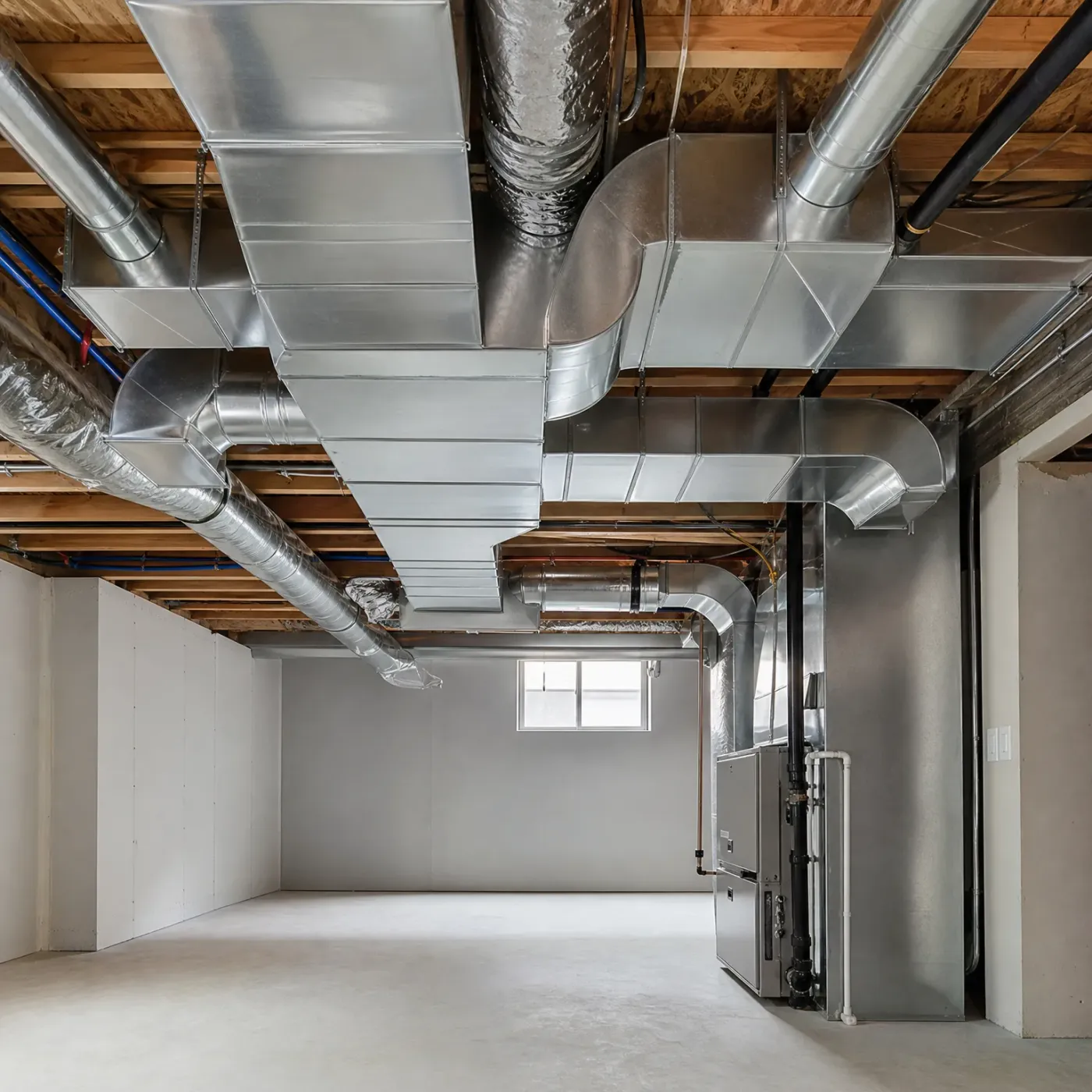
Empty basement room with bare concrete walls and floor, with exposed wooden joists, sheet-metal HVAC ducts, an insulated flexible duct, and pipes running across the ceiling.

Ducts pulling dust into the air

Flex duct sagging, joints that have come loose, gaps where a return pulls in basement air instead of room air. Every pass through a system like this picks up dust from the crawlspace or basement and carries it right back to your living room.

A smiling man in a dark green shirt over a white t-shirt sits at a kitchen counter with a dark mug, looking off to the side, with shelves, plants and a bright living area behind him.
A man in a gray long-sleeve waffle-knit shirt smiles and looks off to the side in a kitchen with open shelving, a refrigerator, a wooden sideboard with a potted plant, and a glass door to the right.
A man in a dark green ribbed sweater stands smiling and looking off to the side beside a stone kitchen counter with a ceramic mug, with a dining table, pendant lights, and large windows in the background.
A bearded man in a gray long-sleeve shirt stands smiling and looking off-camera beside a kitchen counter with a white mug, with a living room, fireplace and wall-mounted television behind him.

Why humidity makes dust worse

Alabama summers run muggy, and that moisture gives dust something to stick to. Dry dust drifts and settles. Damp dust clings to ducts, coils, and the inside of vent covers, building up layer on layer instead of blowing through. A duct system that's leaking air pulls in attic or crawlspace air to replace what escapes, and that air carries moisture with it. The result is dust that cakes onto surfaces inside the ductwork rather than getting filtered out, and every time the blower kicks on, some of it breaks loose and ends up back in the air you breathe.

Electric heat moves more air

Most homes in Alabama heat with electricity, which usually means a heat pump or electric furnace running air through the same ducts as the AC. Electric systems tend to cycle on and off more often to hold a set temperature, and every cycle pushes more air through the ducts. If there's a leak or a buildup of debris anywhere in that system, more cycling means more chances for dust to get stirred up and carried into the rooms. With power costs what they are in Alabama, a system working harder to push air through clogged or leaky ducts also means higher bills for the same comfort.

Empty basement room with bare concrete walls and floor, and an exposed ceiling of wooden joists with large galvanized sheet-metal ductwork and pipes.
Before you get your ductwork cleaning
Unfinished basement with exposed wood joists, galvanized sheet-metal ductwork, insulated flex ducts, piping, a small window, and a furnace or air handler against a gray wall.
After you get your ductwork cleaning
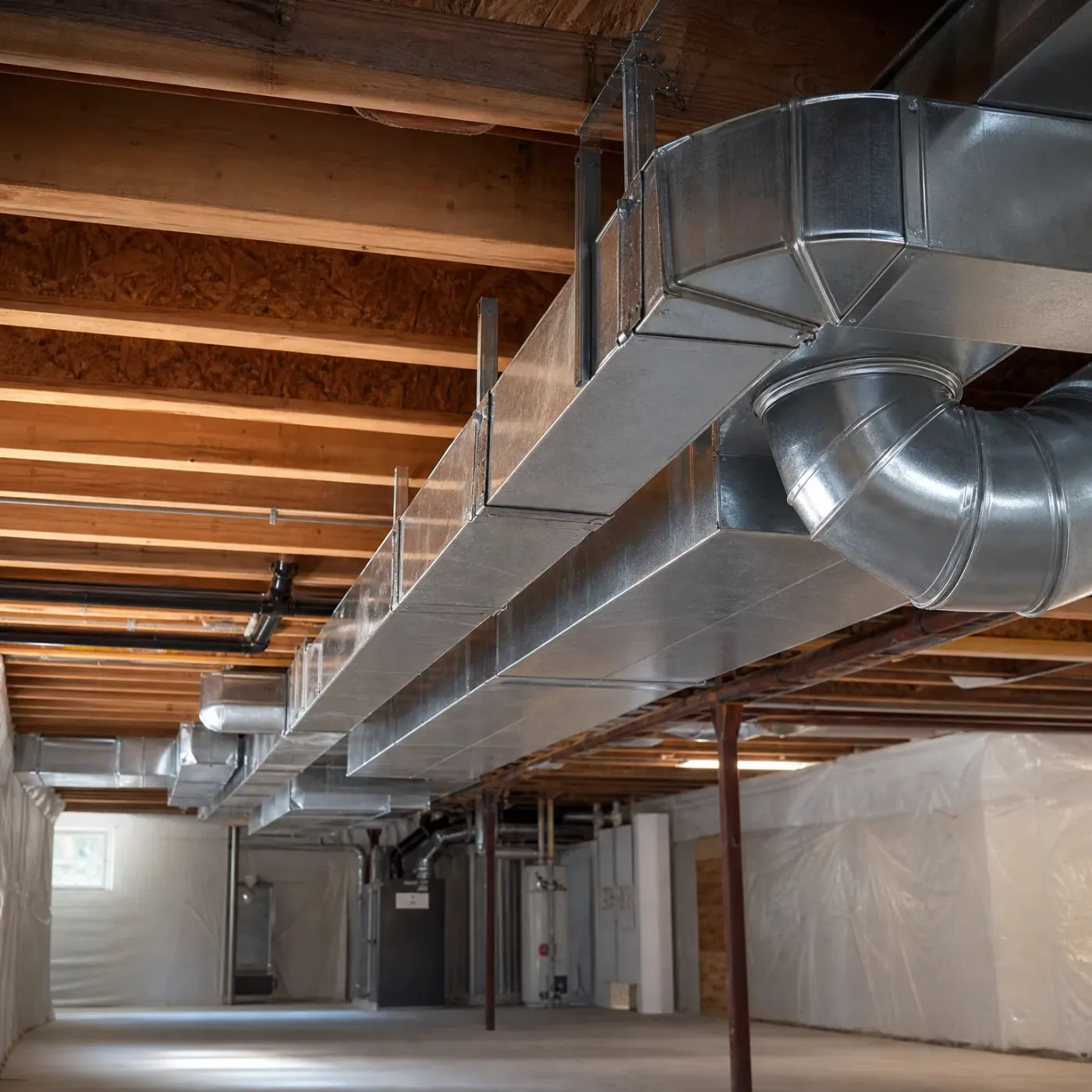
Unfinished basement with galvanized sheet-metal trunk ductwork and round branch ducts suspended beneath wood floor joists, with support posts, plastic sheeting on the walls, and a furnace and water heater along the far wall.

One request and it's handed off

Only one pro gets your request, so you hear from one company.

After this form, you can stop searching for a duct system pro.

Find a licensed pro

Sending the form costs nothing.

Dust You See vs. Dust You Don't

Dust you can see

  • Shelves, the TV screen, the ceiling fan blades all show a film again within a few days of wiping them down.
  • This is dust the vents are pushing into the room right now, and cleaning the surfaces again does nothing to the source.
  • Dust like this usually means loose buildup inside the ducts is breaking off and riding the airflow out into the house.
  • A filter change helps for a week or two, then the same film comes back because the filter was never the problem.
  • This is the dust a homeowner who stays on top of small things catches early, before it turns into a bigger strain on the system.

Dust you can't see

  • Buildup sitting on coil surfaces and inside duct runs doesn't show up on a shelf, it shows up in a electric bill that keeps creeping up.
  • Electricity here isn't cheap, and a system working harder to push air through narrowed, caked ducts spends more to do the same job.
  • This kind of buildup grows slowly, a little more each muggy Alabama summer, so there's no one day it suddenly got worse.
  • A system moving air through clean ducts doesn't have to run as long to reach the same temperature in the house.
  • This is the dust that only shows up once a contractor who works on this equipment all season opens up the ducts and looks.
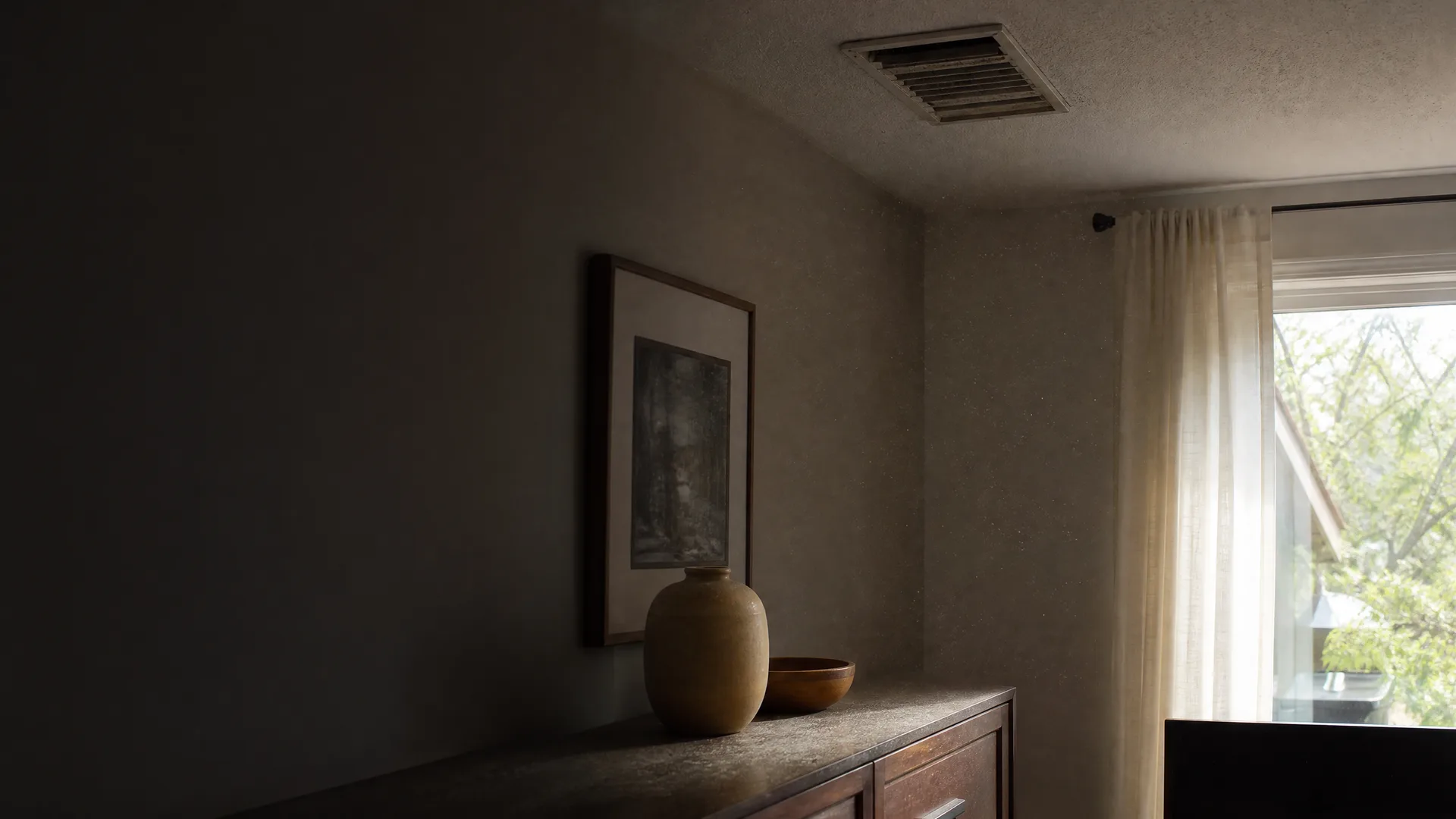
Dim room corner with a framed picture on a textured wall above a counter holding a tall ceramic vase and a shallow wooden bowl, with a sheer curtain beside a window and a ceiling air vent overhead.

It's a Saturday afternoon in April, warm enough that the windows are still shut and the AC is running. Light comes in sideways across the living room. Up on the ceiling, the vent grille has a gray edge of dust along its slats, thick enough to see from the couch. Below it, the side table has a dull film over the wood, and a few flecks sit on the arm of the chair where the air from the vent drifts down. You wiped that table off Tuesday. The grille hasn't been touched in longer than that, and it shows.

Why does dust come back so fast in your house?

Run your finger along a vent cover and check what comes off on it. If the grille has a gray edge building up again days after you wiped it, that's air moving through dust on its way into the room, not just dust sitting on top of the register. You might notice it most in the room you spend the most time in, since that's the vent working hardest. Left alone, it keeps feeding the same cycle: the air handler pulls it through, the coil collects some of it, and the rest lands back on your furniture. A coil caked with dust also has to work harder to cool the air, which in Alabama means more running time on a system you're already paying a lot to power.

  1. A technician opens the supply and return ducts at the plenum.

  2. A vacuum collects loose dust and debris pulled from the lines.

  3. A rotating brush knocks packed dust off the duct walls.

  4. Air whips through each line to carry the loosened dust out.

Unfinished basement with concrete walls and floor, a steel beam on posts, and exposed wooden joists with sheet-metal ductwork and piping overhead.
Steel ducts and a steel beam overhead, joints tight where the plenum boxes meet the round lines.
Unfinished basement with bare concrete walls and floor, and galvanized sheet-metal HVAC ducts, pipes and wiring running along the wood-joist ceiling.
Same kind of run, but this is where loose dust gets pulled in and pushed straight to your vents.
A bearded man in a navy T-shirt sits on a light-colored couch indoors, smiling while looking down at a laptop screen in the foreground, with a framed picture and a potted plant blurred behind him.
A bearded man in a plaid flannel shirt stands indoors looking out a window at snow-covered conifers, with a ceramic mug on the wooden sill and wooden cabinets behind him.

Power costs 16.09 cents per kilowatt-hour statewide

Most homes here heat with electric furnaces or heat pumps, and at 16.09 cents a kilowatt-hour, that equipment already costs more to run than gas. Dust packed in your ducts makes the blower work harder to push the same air, so a dirty system is pulling more power just to keep up.

EIA-861 2025 statewide residential average

The dust on your shelves is coming from the ducts that run through your house, and wiping it off the furniture never touches that. Alabama's humidity gives it something to stick to, which is why it builds up in layers instead of blowing through and out. A cleaning clears what's packed against the duct walls so your vents stop pushing it back into the room. From there it's a matter of getting someone out who knows this equipment, and that's a local contractor who works on duct systems like yours all year and has a good sense of where the buildup collects and why. You'll hear from one contractor, not a handful of companies competing for the job, so there's no juggling calls or comparing strangers. Send the request and that search becomes someone else's job instead of yours.

A dark wood cabinet with a paneled door and a ceramic pot of green foliage on top stands in a beige-walled room with white baseboard, a window at left, hardwood floor, and a patterned area rug.
A dark wood glass-front cabinet holding folded towels, woven baskets and a ceramic vase stands in a bathroom corner beside a window, with a potted fern and stacked towels on top and a freestanding tub partly visible at left.
A woven basket holding a green cushion and a cream fringed knit throw sits on a wood floor in a room corner beside a window and a dark wooden cabinet.
Corner of a room with a dark wood cabinet topped by a round vase, a linen curtain at a window, white baseboard, oak plank flooring with sunlight patches, and a woven jute rug in the foreground.
A dark wood sideboard against a pale wall holds a shallow stone bowl and a round ceramic vase with leafy branches, with sunlight from a curtained window falling across the wall, wood floor and woven rug.

Done looking for a duct system pro

Your request stays with one local pro.

Find a local pro

You're not committing to anything by asking.