Profile view of a bearded man wearing a dark baseball cap and a dark gray T-shirt against a plain off-white background.

Signs your air ducts need cleaning in Alabama

Duct and vent cleaningDucts or ventsAlabama
Step 1 of 2

What ZIP code is the job in?

Dust coming back within days of cleaning, a musty smell when the AC kicks on, and more dust on furniture than you remember are the main signs. So is a room that never cools evenly, or a filter that turns gray again a week after you changed it. In Alabama, humidity for most of the year gives dust and dander something to cling to inside the ducts, and if the system has ever had a leak or pest problem, that debris builds up fast. Rooms that always run warm or stuffy, even with the air running, often trace back to buildup blocking airflow rather than a problem with the unit itself. If anyone in the house has started sneezing more indoors than outdoors, or you can see dust puffing out of the vents when the system starts, the ducts are telling you something. None of these signs are rare. They show up gradually, which is why most people don't notice until the air in the house just feels wrong.

A smiling woman with long dark hair in a gray sweater sits behind a white countertop holding a glass of red wine, with a dimly lit living room and dark kitchen island in the background.
A woman in a beige knit sweater with her hair up laughs while looking to the side, seated in a dimly lit living area with a sofa, windows and a kitchen counter behind her, a glass of red wine in the lower right foreground.
A woman in a black sweater laughs while seated at a light stone counter with a glass of red wine, in a dimly lit living and dining room with bookshelves, a table lamp and framed artwork behind her.
A smiling woman with long dark hair in a beige sweater sits at a granite counter with a glass of red wine, with a living room, fireplace and dining area behind her.

Your system doesn't just cool the air once and let it go. It pulls the same air through the house several times an hour, so whatever is loose in there keeps making another pass instead of settling out. Most of that pull happens on the return side, which is why the return grille usually looks worse than the supply vents. Along the way, the ductwork itself isn't sealed tight. Flex duct and sheet metal both have seams, and those seams open up a little over the years, especially where runs pass through the attic or crawlspace. That gives dust from those spaces a way in. Moisture adds to it. Alabama summers push humid air through the system for months, and if a duct or the coil stays damp between cycles, that dampness gives mold a place to start before you ever smell it. A system that short cycles, running in short bursts rather than steady stretches, moves less air each day, which only gives dust more time to settle inside instead of getting carried back to the filter.

How dust ends up in your ducts

  • A duct system pulls the same air through the house four to seven times an hour, so loose dust and dander recirculate instead of settling for good.
  • Flex duct and sheet metal runs have seams and joints that open slightly over the years, pulling in attic or crawlspace dust as air moves through.
  • A musty smell on startup usually means moisture sitting in the duct or at the coil, not just a dirty filter.
  • The return side of the system draws in more than supply vents push out, so dust often builds heaviest at the return grille first.
  • Humid air moving through a duct that stays damp between cooling cycles gives mold something to grow on long before it shows up as a smell.
  • A system that short cycles on and off during the day moves less air overall, so dust has more time to settle inside the ductwork between runs.
A basement with a gray furnace on a concrete pad connected to large sheet-metal ducts running along an exposed wood joist ceiling, with PVC pipes and plastic sheeting on the walls.
Clean metal ducts run tight to the plenum, with no gaps where attic or crawlspace air can leak in and add dust to what you're breathing.
Galvanized sheet metal HVAC ductwork with a vent grille running along a wooden joist ceiling above a bare concrete wall.
Open seams between duct sections let joist-bay air and insulation fibers get pulled into the system every time it runs.
A dimly lit living room corner with a dark wood side table holding a pale ceramic vase of leafy branches, a beige sofa with a dark gray cushion, and a sheer-curtained window showing trees and a roofline outside.

You're dusting the living room on a Saturday afternoon in April, the kind of day when it's warm enough that the AC has started cycling on again after a winter of running the heat strip. You wipe down the side table, the TV stand, the mantel. Twenty minutes later you walk back through and there's already a thin gray film on the table again. You look up at the ceiling vent and notice the grille is coated, almost furred with dust, and a faint dark smudge trails down the ceiling from one corner of it. The air kicks on, and you catch that same stale smell you noticed last summer and figured was the house settling in after being shut up all winter.

Skip calling around

Finding someone to look at this usually means searching for duct cleaning companies, calling a few, explaining the dust and the smell and the uneven cooling to each one, then waiting on quotes to compare. That's its own chore on top of the problem itself. Here, one request goes to a contractor local to Alabama, someone who works on duct systems through these same muggy summers and knows what a few years of attic air leaking into open seams does to a house. You're not fielding calls from five companies trying to win the job. You explain it once, to the one contractor who gets the request, and they already know what gray filters and recirculating dust usually mean in homes around here. With electric heat and AC running most of the year and power costing what it does, a duct system working against itself is worth sorting out now rather than living with another season of it.

What a clean system does

Clean metal ducts carry air straight from the furnace or coil to each room without picking up anything along the way. The air moved is only what the system already conditioned. A filter rated for household dust catches what's in that air before it ever reaches the ductwork, so the duct interior stays close to what it looked like on install day. With no outside air entering the run, there's nothing extra for the duct to carry, and nothing extra for the filter to keep up with between changes.


What draws cleaning sooner

A crawlspace or attic run with loose connections pulls in outside air every time the blower starts, and that air carries dust, insulation fibers, and whatever else is sitting in that space. Humidity in that pulled-in air can settle on the duct interior too, especially where metal meets a cooler surface. None of that shows up by looking at the vents. It shows up as dust that returns fast, a filter that grays out early, and a system working through more than the air inside your house.

A smiling bearded man in a dark crewneck sweater sits at a dinner table with a lit candle, glasses of wine and water, and plates of food in the foreground, with a lamp, framed art and a potted plant behind him.
A woman with dark hair in a bun reclines on a gray sofa with her eyes closed and a slight smile, wrapped in a cream knit sweater and blanket, with an open book resting in the foreground and a lit lamp in the dim room behind.

4 to 7 times an hour

That's how often your air cycles through the ducts in a day. Dust, pet dander, and anything leaking in from the attic rides along every single pass.

Get one local pro

Once a season

A system with tight, sealed ducts only needs a look between cleanings, since there's no open seam pulling in attic or crawlspace air to begin with.

Get one local pro
An unfinished basement with bare concrete walls and floor, showing exposed wooden floor joists, pipes, wiring, and metal HVAC ducts with a vent grille overhead.
Before you get your ductwork cleaning
Unfinished basement with galvanized sheet-metal rectangular and round ductwork running along a wood-joist ceiling, two steel support columns, a small window, and a furnace unit against the far right wall.
After you get your ductwork cleaning

A furnace or coil that keeps cycling because the thermostat can't satisfy the room means the system works harder and runs longer, and in Alabama that shows up fast on an electric bill.

Once the ducts move air freely again, the system shuts off when the room actually reaches temperature instead of running past it, and the electric bill reflects that difference.

Power costs 16.09 cents per kilowatt-hour statewide

At 16.09 cents per kilowatt-hour, every extra minute your system runs to make up for clogged ducts shows up on the bill fast. Most Alabama homes heat with electric strips too, so a system straining to push air through dirty ducts costs you on both ends of the year, not just summer.

EIA-861 2025 statewide residential average

  1. A technician inspects every vent and the main trunk line.

  2. A vacuum collection unit connects to the ductwork at one point.

  3. A brush or air whip knocks dust loose inside each run.

  4. Loosened debris is pulled into the vacuum under negative pressure.

A wooden table in the foreground holds a closed laptop and a ceramic mug of coffee, with a spindle-back wooden chair behind it, a beige wall with paneled wainscoting, a window at left, and a kitchen counter with a cutting board, bowl of fruit and greenery at right.

Dust that keeps coming back isn't something to live with

The signs are straightforward. Dust that returns within days, a musty smell on startup, a room that won't cool even, a filter gone gray in a week. Any one of those points to the same thing: air leaking into the ducts somewhere between the furnace and the vent, carrying dust and attic air along with it. A technician can confirm it room by room and seal what's open.

You could spend an evening searching for duct cleaning companies, calling each one, describing the smell and the dust and the uneven cooling again to every person who picks up, then waiting around for quotes to stack up against each other. Or you could skip that and get matched with one licensed contractor local to Alabama, someone who works on duct systems through these summers every year and knows which seams give out first. No flood of calls to sort through. Just the one, and a system that runs the way it's supposed to.

A speckled beige ceramic vase holding thin dried branches sits on a round wooden table near a window with sheer curtains, with a dark upholstered chair and draped blanket blurred in the background.
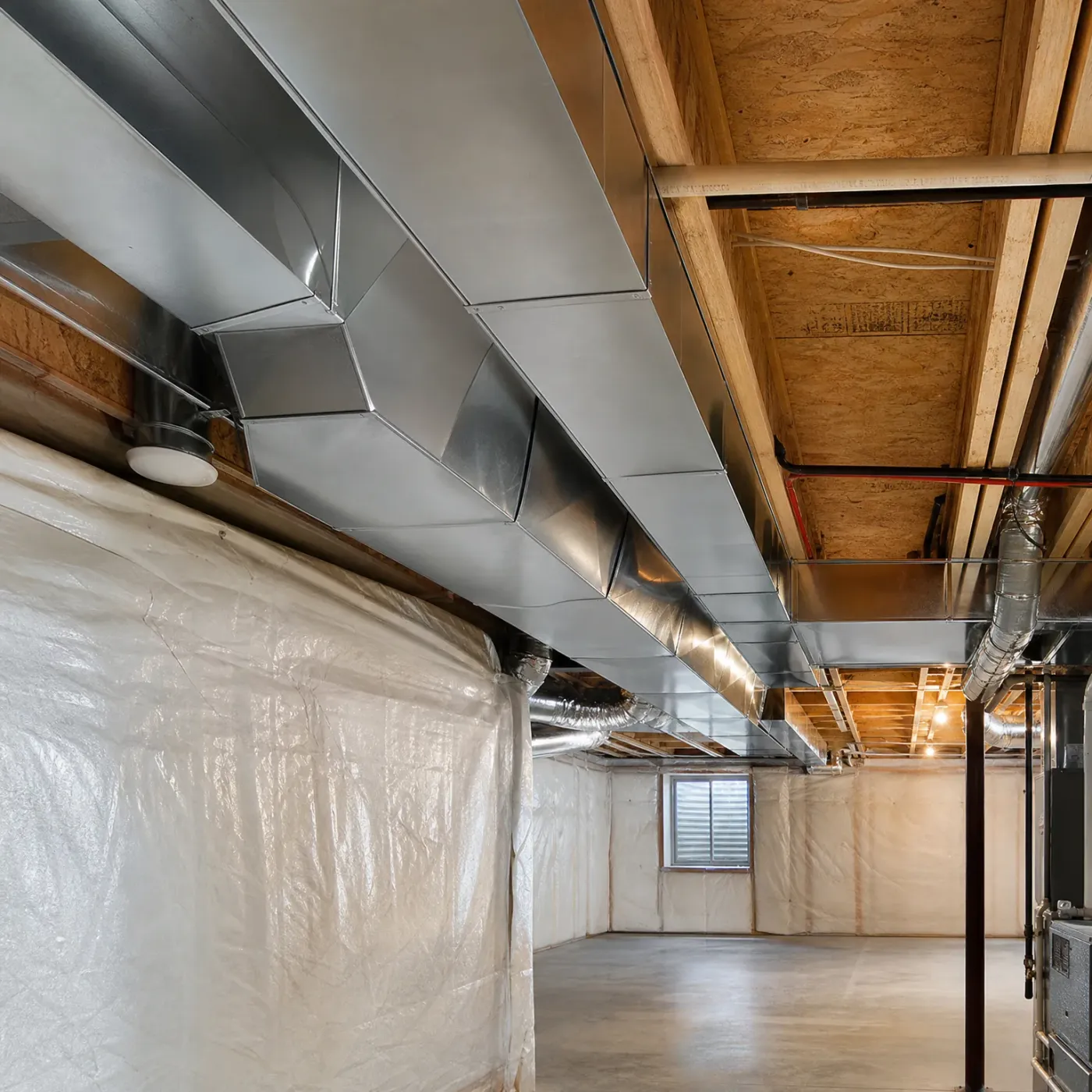
Unfinished basement with exposed wood floor joists, large sheet-metal HVAC trunk ducts, flexible insulated ducting, plastic sheeting over insulated walls, a small window, and a concrete floor.

No phone calls to make

Answer a few questions

Only one pro gets your request, so you hear from one company.

No charge to send it. You decide if you hire them.