




Signs your ducts need cleaning in Montgomery, AL

Get a duct system pro

You're searching this because something changed. Maybe it's dust that settles back on the shelves a day after you clean, or a musty smell when the air handler kicks on, or a room that never feels as cool as the rest of the house even with the thermostat set low. In Montgomery, where the AC runs for most of the year, ducts that aren't moving clean air put strain on a system that already works hard against the heat and the humidity. Figuring out whether what you're seeing actually calls for cleaning, and finding someone who can look at your specific setup, takes time most people don't have. Submit your information and you'll be matched with a contractor who serves Montgomery and the surrounding area, and they'll reach out to you directly. No more searching, no more calling around for quotes. Just a straight path from the question you typed to a professional who can answer it for your house.

What are the signs your ducts need cleaning?

You've noticed dust coming back fast, a musty smell from the vents, or a room that won't cool down no matter what the thermostat says. You want to know if that points to the ductwork itself, and whether cleaning is the thing that actually fixes it, before you have someone come look at a system you can't see into.

Dust, smell and uneven rooms are the signs

Dust that resettles within a day of cleaning, a musty smell when the air handler starts, and rooms that stay warm or stuffy while others cool fine are the three signs that point to the ducts rather than the unit itself. Dust and debris sitting inside the duct run get pushed back into the room every time the blower turns on. A musty smell usually means moisture is sitting somewhere in the system, and Montgomery's long, muggy summers give that moisture plenty of chances to build up. Uneven cooling across rooms can mean a blockage or a leak is cutting off airflow to part of the house, not a weak air conditioner.

A gray-haired bearded man in a dark snow-dusted coat and scarf stands inside a dimly lit home entryway, with a hallway, framed picture, lit table lamp and staircase behind him.
An older man with gray hair and a beard, wearing a dark snow-dusted coat, stands in a warmly lit home entryway with a hallway, console table with lamp, patterned rug, and living room visible behind him.
An older man with gray hair and a beard, wearing a dark coat dusted with snow and a blue plaid scarf, stands smiling in a dimly lit entryway with a window, framed picture, table lamp and staircase behind him.
A gray-haired man in a dark coat dusted with snow stands in a warmly lit home entryway, with a lamp, sofa, window and white staircase banister behind him.

Duct Problem or Something Else

Clean the ducts

  • Dust shows up again on shelves and furniture within a day or two of cleaning, even with the filter changed on schedule.
  • A musty smell comes through the vents when the air handler starts, but you can't find a damp spot or leak anywhere in the house.
  • One or two rooms stay warmer than the rest of the house all summer, and closing or opening vents doesn't change it.
  • You can see dust or debris built up right at the vent covers or returns when you pull them off.
  • Nobody in the house has new allergy symptoms or a new pet, but the air feels dustier than it used to.

Look elsewhere first

  • Dust comes back fast but it's worse in rooms with pets, carpet, or a lot of foot traffic, which points to the room and not the ducts.
  • The musty smell only shows up after rain or in humid weather, which points to moisture around the house, not the ductwork.
  • One room runs warm but it also has more windows or sits over a garage, which is a layout issue, not a duct problem.
  • The filter is overdue, visibly clogged, or the wrong size, which can cause the same dust and uneven cooling on its own.
  • A room was recently added, finished, or closed off, which can mean the duct run there was never sized for it.
Unfinished basement with bare concrete walls and floor, showing exposed wood floor joists overhead with sheet-metal rectangular ductwork, insulated flexible ducts, and pipes.

Ducts moving air the way they should

Air comes off the trunk line and into each branch without resistance. Sheet-metal runs and flex ducts hold their shape across the joists, so every room gets the air the system is sending it, and the air handler isn't working harder than it needs to.


Basement ceiling with galvanized sheet metal rectangular ducts and round pipes running between wooden joists above a bare concrete wall and floor.

Ducts worth a closer look

The same metal and flex runs sit against a concrete wall and dirt-level humidity, both known for feeding dust and mold inside ductwork over time. If a room runs warmer than the rest of the house, this is where to check first.

Why does ductwork in Montgomery wear this way?

  • Half the homes here were built by 1979

    Half the homes in Montgomery County were built in 1979 or earlier. Older duct runs have had more years to gather dust, loosen at the joints, or settle after insulation work.

  • Heat runs November through March

    Heat runs November through March here, about five months a year. Every time the system starts, air moves through the same ducts and stirs up whatever has built up inside them.

  • Cooling runs May through October

    Cooling runs May through October, about six months a year. That's the stretch when a dirty duct system shows up fastest, since the air handler is working longer and harder to keep up.

ACS 2020-2024 · NOAA nClimDiv 1991-2020

Unfinished basement with galvanized sheet-metal ductwork and pipes beneath wood joists, a gray furnace unit at left, insulated plastic-covered walls over a concrete foundation, and a bare concrete floor.

Ducts in good shape

The runs sit tight against the joists, wrapped or sealed where they pass through the block walls. Supply and return connect without gaps, so the air handler pulls and pushes air through a closed system. Nothing here feeds dust or outside air into the house.

Empty concrete-walled basement room with galvanized rectangular and round HVAC ducts and pipes running along the exposed wood-joist ceiling.

Ducts worth a second look

Bare runs cross an unfinished space with joints you can see from below. Seams that opened over the years pull in air straight from the basement before it ever reaches a room. If that air carries dust or damp, the house gets it too.

What's going on in your house right now

Walk through your own place for a minute. A vent cover has a gray ring of dust around it that wasn't there last month. You can run a finger along the louvers of a supply register and come away with a dark film even though the filter's been changed. Maybe you've started closing the door to one room because the air coming out of its vent smells off, especially right when the air handler cycles on. Or a family member who deals with allergies seems worse indoors than out, and you can't explain why. None of this is dramatic on its own, but it points to air moving through ducts that are carrying more than it should, and it won't clear up by itself.

Empty basement room with bare concrete walls and floor, with exposed wooden joists, sheet-metal HVAC ducts, an insulated flexible duct, and pipes running across the ceiling.
Before you get your ductwork cleaning
Empty unfinished basement with bare concrete walls and floor, showing galvanized sheet metal ductwork, insulated flexible duct, and pipes running along the wood-framed ceiling, with a small window at left.
After you get your ductwork cleaning

A pro who works on ducts

Once you send the form, finding a pro is off your list.

No fee to send it, and nothing to sign.

What's actually moving through the ducts

A duct system doesn't make dust. It moves whatever air is already in the house, and the return pulls that air back through the filter before it goes around again. When the filter is doing its job, most of what's in the air gets caught there, not in the duct walls. If dust is building up inside the runs themselves, faster than the filter schedule accounts for, that buildup sits in the path of every cubic foot of air the system pushes out, and some of it rides along into the rooms.

Why a musty smell points to the ducts

Moisture inside a duct run doesn't dry out the way a wet towel does. Sheet metal and flex duct sit inside walls and above ceilings where air barely moves except when the system is running, so any dampness that gets in stays longer than it would out in the open. Mold and mildew growing on the inside surface of a duct release their smell straight into the airstream every time the blower turns on, which is why the odor shows up with the air handler and fades when it shuts off.

A woman wrapped in a thick cream knit blanket sits in a chair with an open book on her lap, beside a lit table lamp and a frost-covered window at night.
An older woman with grey-blonde hair in an updo and a beige turtleneck sweater smiles while looking to the side in a warmly lit kitchen, with a round loaf of bread on the counter in front of her and a dark window showing snow outside.

Clean ducts, same dust

If shelves stay clean for weeks after dusting and the filter still looks the way it did last time you changed it, the ductwork isn't what's feeding the problem.

Find a pro near me

Dust back in a day or two

If a surface you wiped down is dusty again before the week is out, something inside the runs is shedding into the air every time the system cycles.

Find a pro near me
A smiling man in an olive T-shirt and jeans stands in an open front doorway holding the door, facing a person in a navy polo and cap seen from behind in the foreground, with horizontal wood-look siding and a potted white flowering plant nearby.

How a duct system actually picks up dust and mold

The return side of your system is one long path, and every joint in it is a place where something can get in or get loose. Flex duct is a wire coil wrapped in insulation and a vapor jacket, and where it connects to a metal collar or boot, a technician uses a mastic seal or a clamp. If that clamp loosens over the years, the duct pulls air from inside your attic or crawlspace instead of from your living space, and whatever is up there, insulation fibers, dust, sometimes a trace of mold where moisture has gotten in, comes in with it. A cleaning crew runs a brush or a whip through each branch from the register back to the trunk line, then pulls everything loose into a vacuum set up at the air handler.

None of that tells you on its own whether your ducts need it. What it does mean is that a technician who comes out to look is checking specific things: the seal at each boot, the inside of the trunk line near the coil, whether the insulation on the flex duct is torn or compressed. That's a different inspection than most people can do by pulling a vent cover and looking in with a flashlight. If you request a visit, the contractor who reaches out to you can tell you what they're checking and why before anyone touches a duct.

Interior corner of a living room with a sheer-curtained window, a light wood console table holding a vase of greenery and a shallow bowl, a woven basket on the lower shelf, and a blurred upholstered sofa and dark wood table in the foreground.

Power here costs 17.58 cents per kilowatt-hour

At 17.58 cents a kilowatt-hour, every degree your air handler fights to push through a clogged or leaky run shows up on the bill. A blower working harder to move air through dusty, narrow ducts draws more power doing it, and in Montgomery that extra draw costs more than it would almost anywhere else.

EIA-861 2025

Galvanized sheet-metal HVAC ducts running along wooden joists at a basement ceiling, next to a plain off-white wall.

A home that works with you

Some mornings you walk through the house and nothing fights you. The air coming out of the vents matches what you set on the thermostat, and the room holds that temperature instead of drifting back up by afternoon. You dust the shelves and they stay clean for more than a day or two. The air handler kicks on and off without a smell trailing behind it. None of this is luck. It means the path the air travels, from the return through the ducts and back out the supply, isn't adding anything to what's already in the house.

Unfinished basement interior with galvanized sheet-metal HVAC ductwork and round pipes running along a wooden joist ceiling, a furnace and water heater at the far end, and a blank white wall filling the left half of the frame.

A home that keeps fighting back

Other houses never quite settle. You clean a vent cover and it's gray again within the week. A room at the end of a long run stays warm no matter how low you set the thermostat, because the air reaching it has lost pressure somewhere along the way. The air handler runs longer to make up the difference, and in Montgomery that longer runtime costs you at 17.58 cents a kilowatt-hour. The house isn't failing you. The ducts carrying its air are the part worth looking at.

The signs point to the ductwork or they don't, and now you know which. Dust back within a day or two, a musty smell when the air handler kicks on, a room that won't hold its temperature, those are the ductwork talking. A filter that's still clean and rooms that cool evenly mean the ducts are doing their job and something else needs a look. Either way, you don't have to figure out what comes next on your own. Send the form and a contractor who works on duct systems in Montgomery County takes it from there, matched to what you described. You won't need to track down who to call or sort through who's worth trusting. That part is done once you send it.

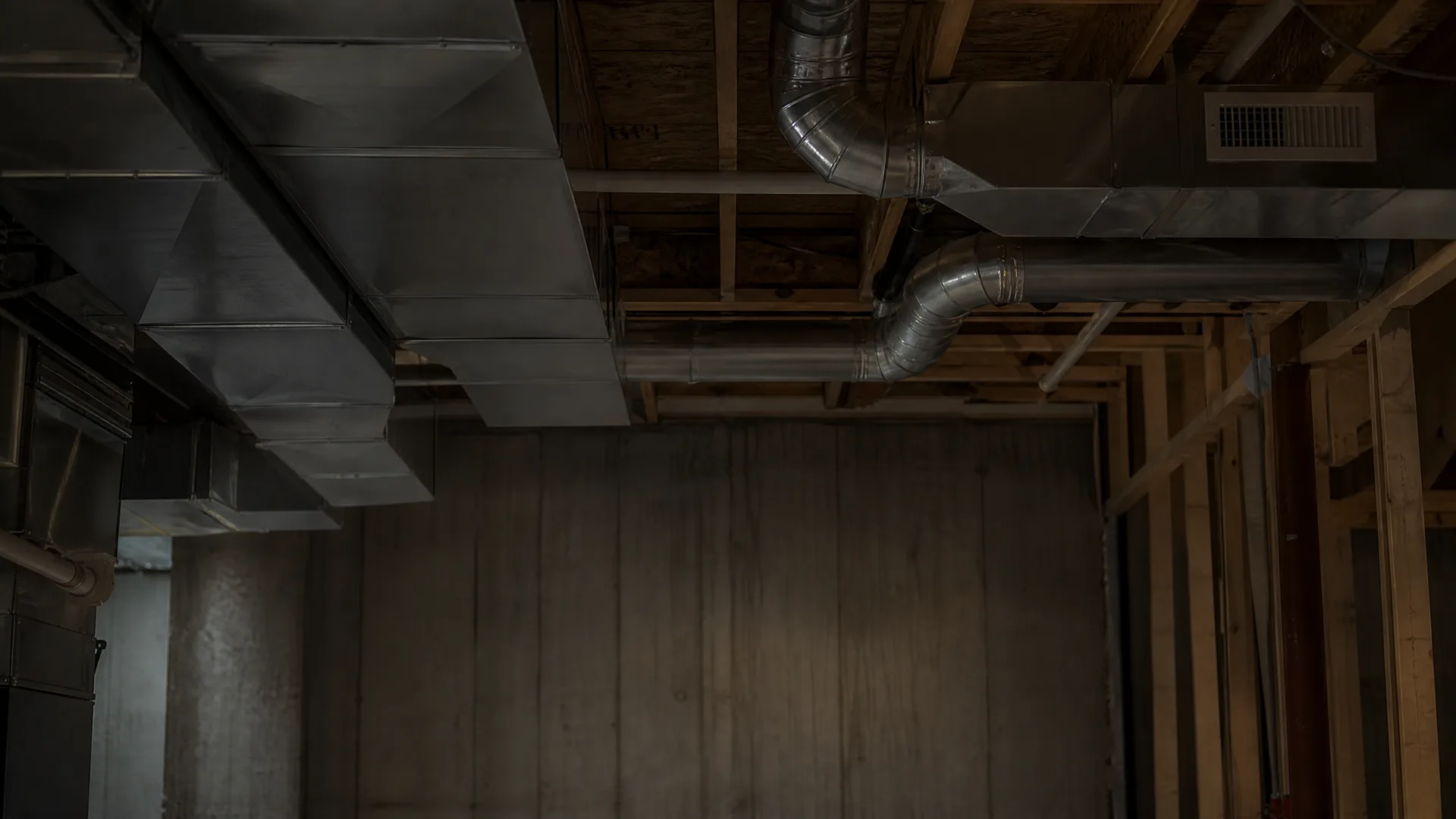
Dimly lit unfinished interior ceiling with galvanized rectangular and round sheet-metal ducts, a wall vent grille, exposed wood framing and joists.

Find a duct system cleaning pro in Montgomery County

Send the form and the duct cleaning stops sitting on your list.

Duct and vent cleaningDucts or ventsMontgomery County, AL
Step 1 of 2

What ZIP code is the job in?