
Ducts running clean
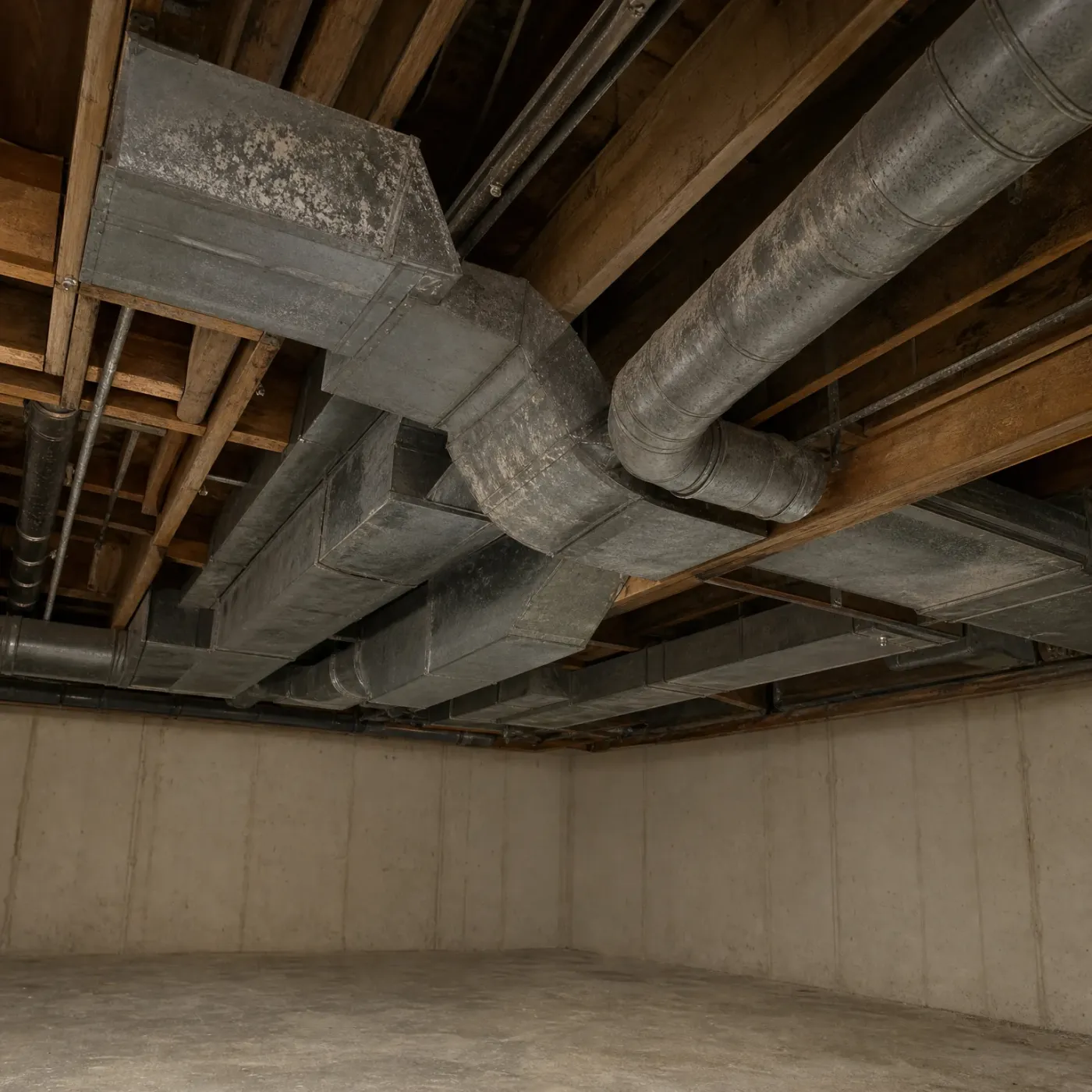
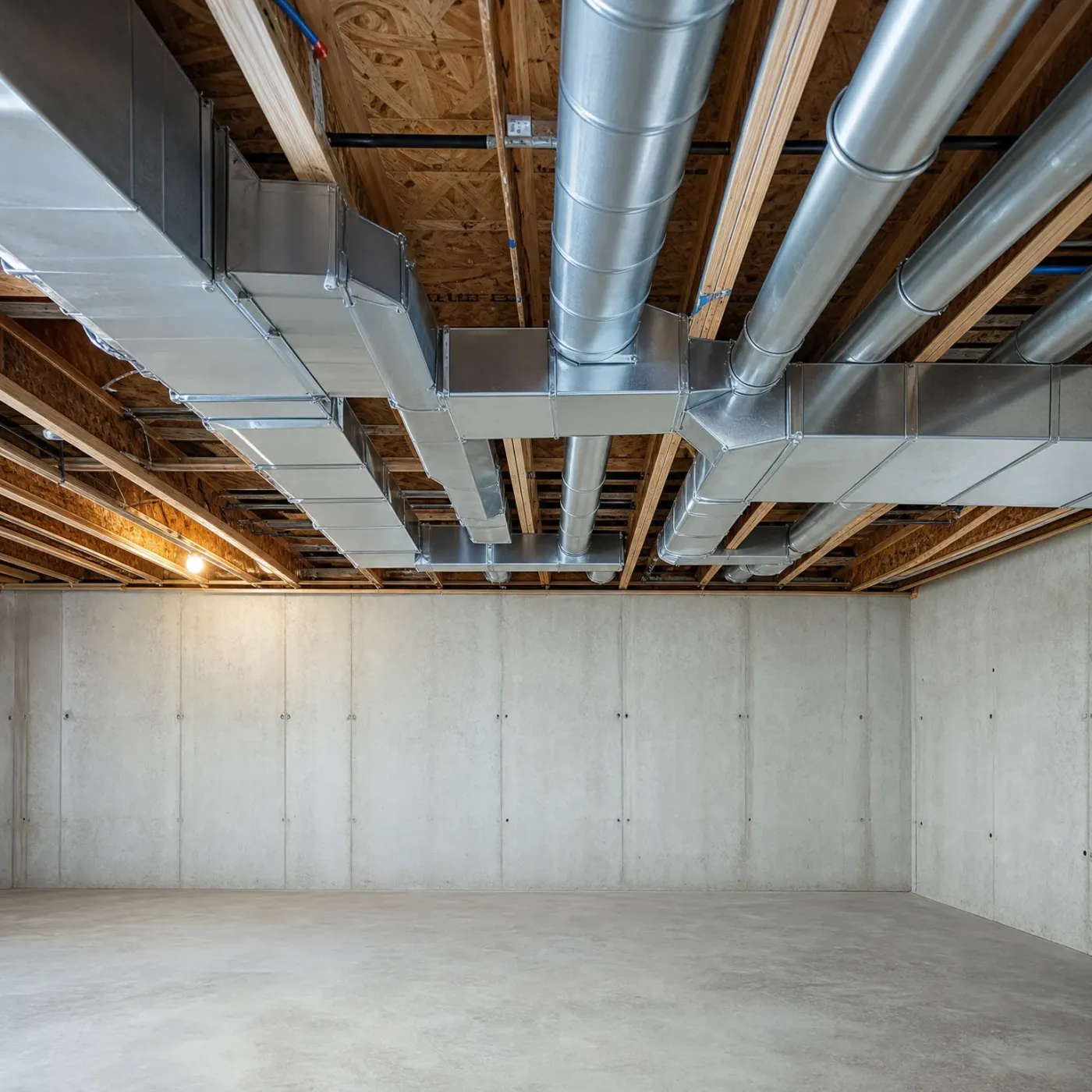
Metal ductwork like this moves air with nothing to flag. No dust ring around the registers, no musty smell when the blower kicks on. If yours looks like this, cleaning won't change how your system runs.
Get matched with a Baldwin County pro who cleans ducts.
Find my proFor most homes in Daphne, duct cleaning is not something you need on a schedule. It earns its cost when there's a reason for it: you can see mold growing inside the ducts or on the register covers, a pest problem has gotten into the ductwork, or the ducts are clogged with enough dust and debris that air isn't moving through the house the way it should. Daphne summers run long and muggy, and ducts that leak or sweat in that humidity are more likely to grow mold than ducts in a dry climate, so if you've had a leak, standing water, or a musty smell near your vents, that's worth a look. Dust alone settling in the ducts over the years usually isn't worth paying to remove. If nobody in the house has allergy or breathing trouble that gets worse at home, and there's no visible mold or pest sign, cleaning likely won't change your air or your bill. Check your ducts and your register covers before you decide.

Metal ductwork like this moves air with nothing to flag. No dust ring around the registers, no musty smell when the blower kicks on. If yours looks like this, cleaning won't change how your system runs.
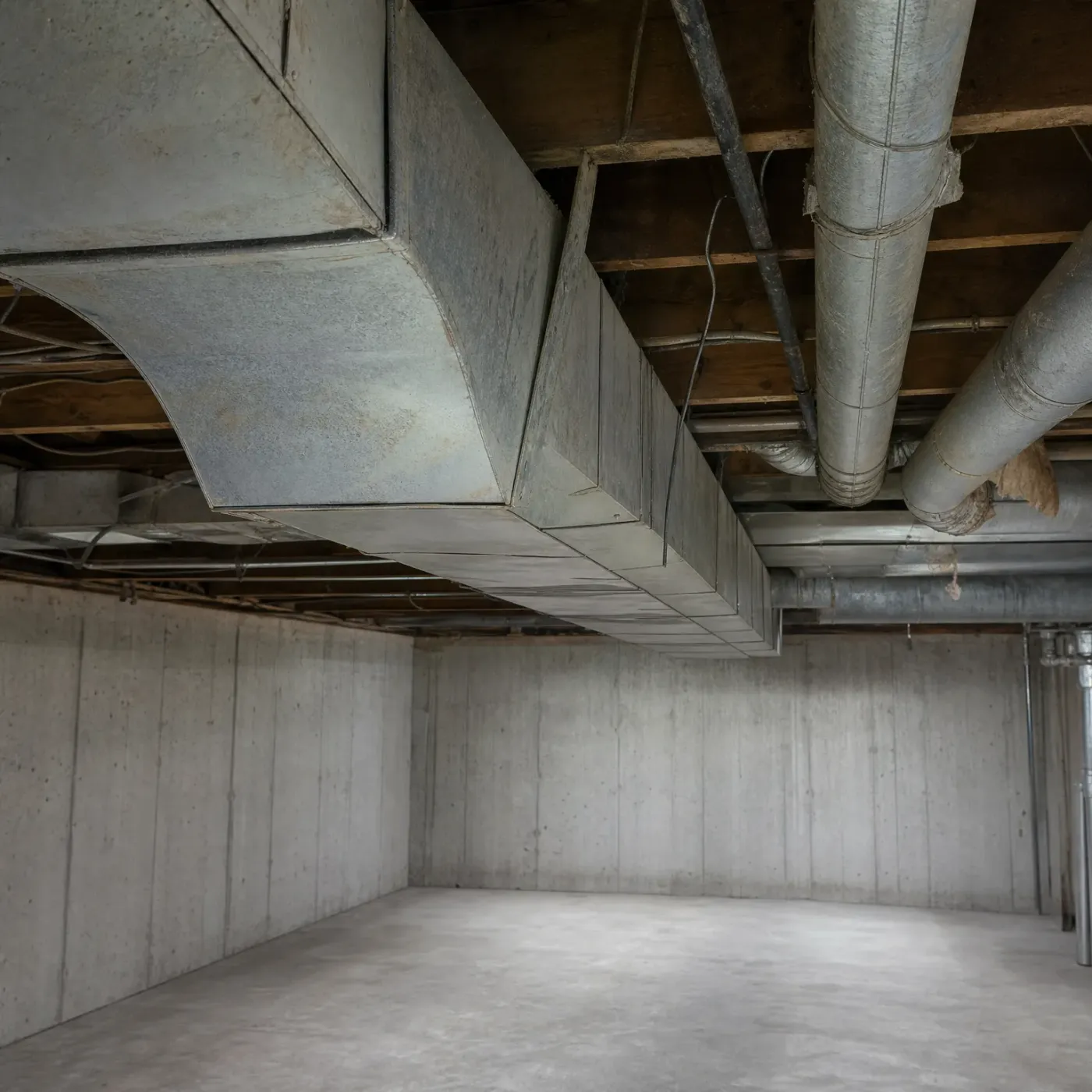
This is what calls for a closer look, not routine duct work. Dust caked on the outside of a duct run, a gap at a joint, or a damp patch on the insulation around it points to something worth having checked before you spend money on cleaning.
Half the homes here were built by 1999
Half the homes in Baldwin County were built in 1999 or earlier. Older ducts aren't automatically dirtier, but they've had more years to pick up a tear or a loose joint worth checking.
Heat runs November through March
Heat runs about five months a year here, November through March. That's five months the ducts sit unused before the blower pushes air through them again each fall.
Cooling runs May through October
Cooling runs about six months a year, May through October. That's the stretch when your ducts do most of their work, so any dust or moisture problem shows up fastest then.
ACS 2020-2024 · NOAA nClimDiv 1991-2020
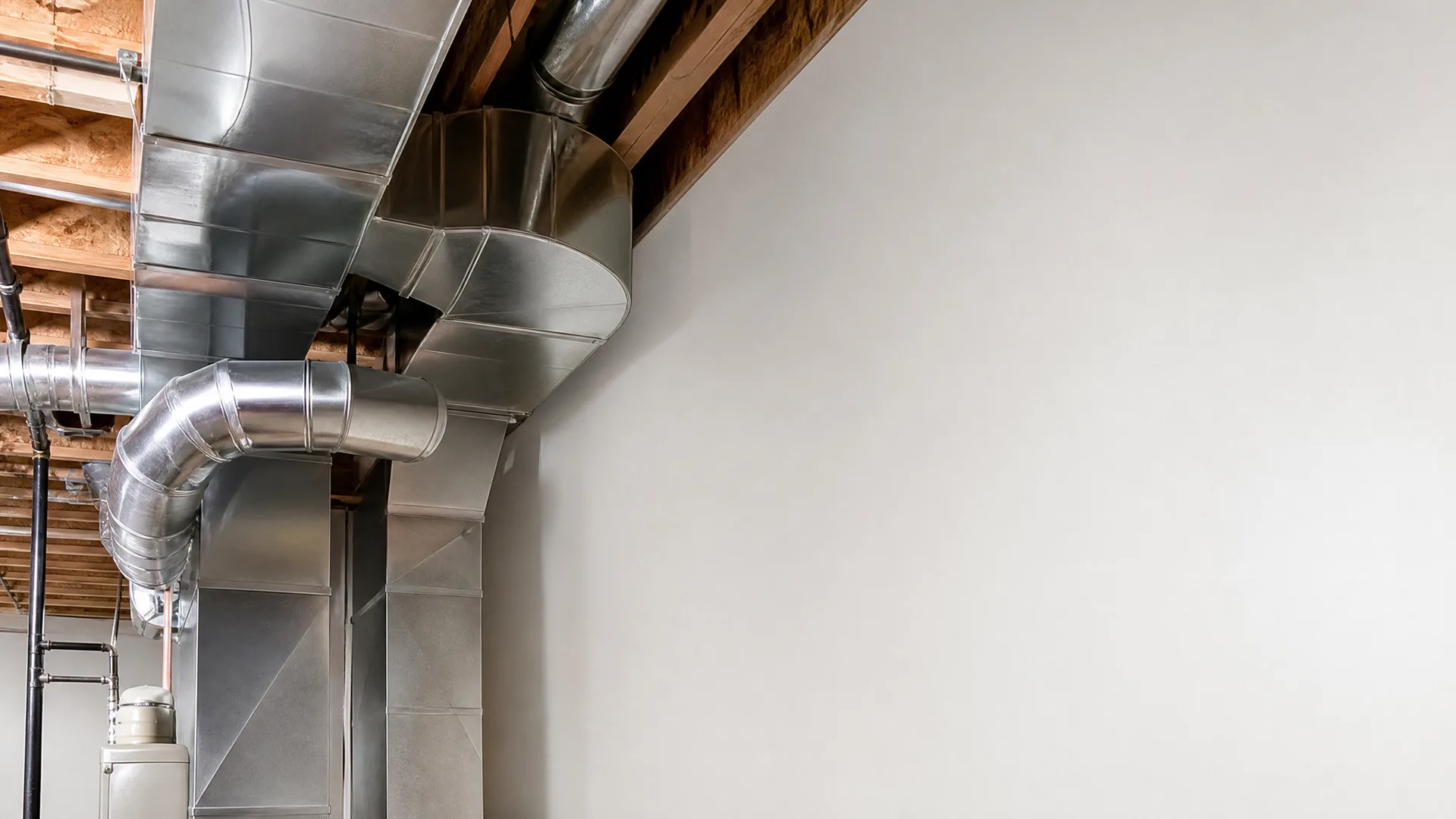
Dust sitting in a duct run doesn't move much on its own. It takes a tear in the duct, a loose connection, or a return pulling air from a crawlspace or attic to bring in the volume that shows up as a ring around your registers or a smell when the blower starts. Cleaning clears what's there, but it doesn't close a gap or fix a seam, so the same problem shows up again if that's the actual cause.

Your filter sits between the return air and the blower, and it's doing the work of keeping dust out of the ducts in the first place. A filter left in too long stops catching much and lets more through, which settles in the ductwork over months. Checking it and swapping it on a regular basis does more to keep your ducts clean than a cleaning ever will, and it's something you can see for yourself by pulling it out and holding it to the light.

You'd see it before you'd think to call about it. A gray ring on the wall around a return register that wasn't there last year. A smell when the air handler first kicks on after sitting idle, gone in a minute. Dust that resettles on the same shelf two days after you wipe it down. None of that means your ducts need cleaning. It means your filter needs changing more often, or the one you're using isn't rated to catch what's getting through.
If your ducts run through a crawlspace, as a lot of homes in this area do, a loose joint down there can pull in dust and even moisture along with the air, and that's a different problem than dirt sitting still in a duct run. A local contractor who works on duct systems around Daphne every week can tell you in one visit whether what you're seeing is a cleaning job or a sealing job, and you'd be working with the one company instead of fielding calls from several.





If something in your ductwork actually needs looking at, a camera and a straight answer matter more than a truck with a big hose. A contractor who works on duct systems around Daphne and Baldwin County every week has seen what a torn flex run looks like versus what normal dust buildup looks like, and can tell you which one you've got before any cleaning starts. That matters here, because with summers as long and muggy as they are, a return pulling air from a crawlspace or attic can bring in real volume fast, and you want someone who knows that pattern, not a crew guessing. Getting matched with one local contractor means one person looks at your specific registers, your specific ducts, and tells you straight whether cleaning fixes anything or whether the real problem is a seal or a tear. If you're already seeing a ring around a register or smelling something when the system starts, that's worth having someone look at.
Say a return pulls air from a crawlspace that's flooded twice in the past few years, or a vent run got torn open when someone was up there working on wiring. That's a real path for dirt, insulation fibers, even mold spores to get pulled into the air you breathe. In that case cleaning isn't cosmetic, it's clearing out what shouldn't be there before it keeps cycling through the house. A contractor who opens the ducts can also tell you whether the tear or the loose joint needs sealing, since cleaning alone won't stop it from happening again.
If nobody in the house has new or worse allergy symptoms, there's no visible mold, and the registers aren't rimmed with dust, cleaning the ducts won't change anything you can feel or measure. The air moving through them was already reasonably clean. Paying to have them cleaned on a schedule, the way you'd service a water heater, isn't how duct systems work. They don't wear out or get dirty on a timeline. Without a specific problem behind it, the job is cosmetic at best and the house will feel exactly the same the day after as the day before.
At 13.81 cents a kilowatt-hour, your air handler's blower is already working against whatever is blocking airflow in those ducts. A torn run or a loose joint that's leaking conditioned air into a crawlspace or attic means that fan runs longer to do the same job, and you pay for the air that never made it to the register.
EIA-861 2025
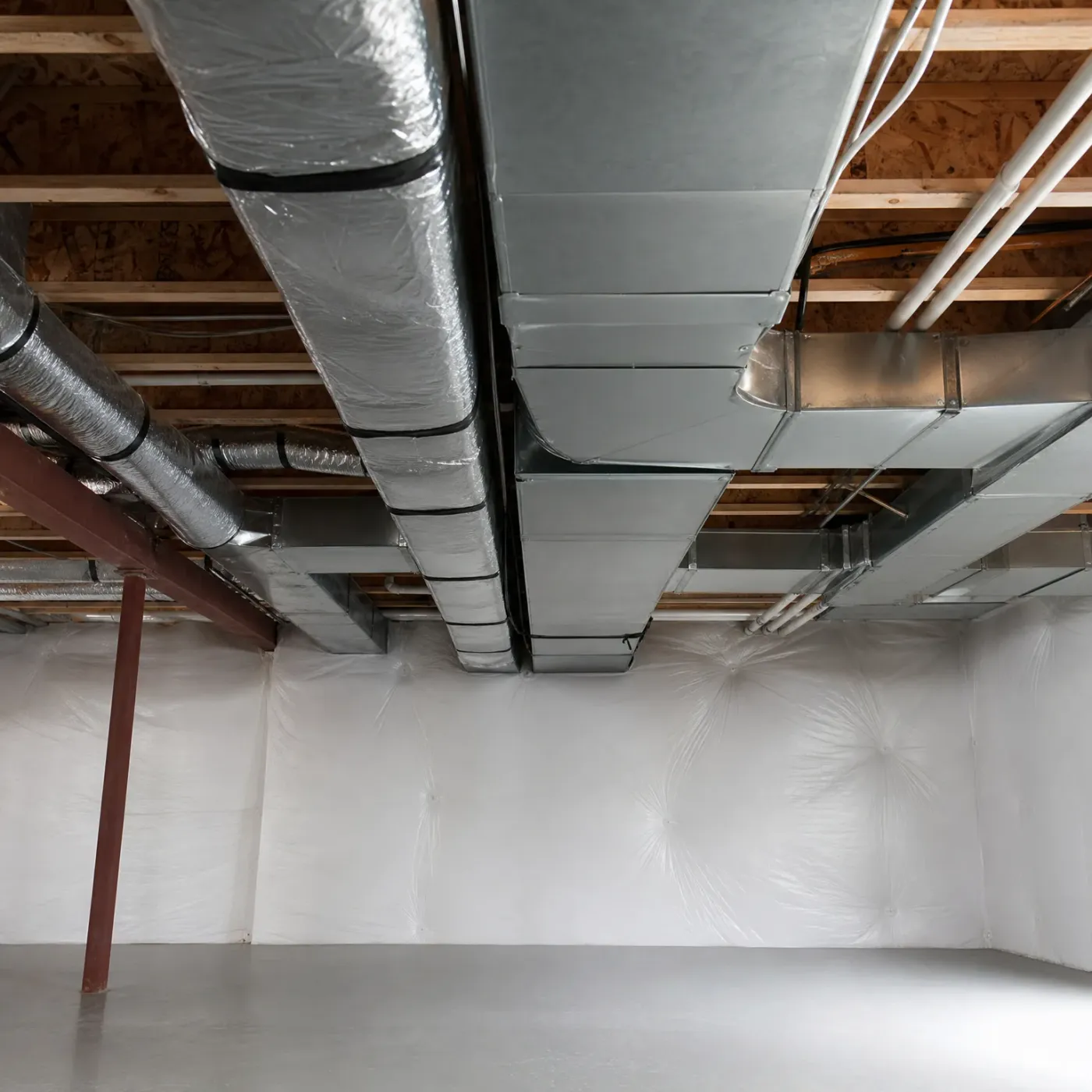
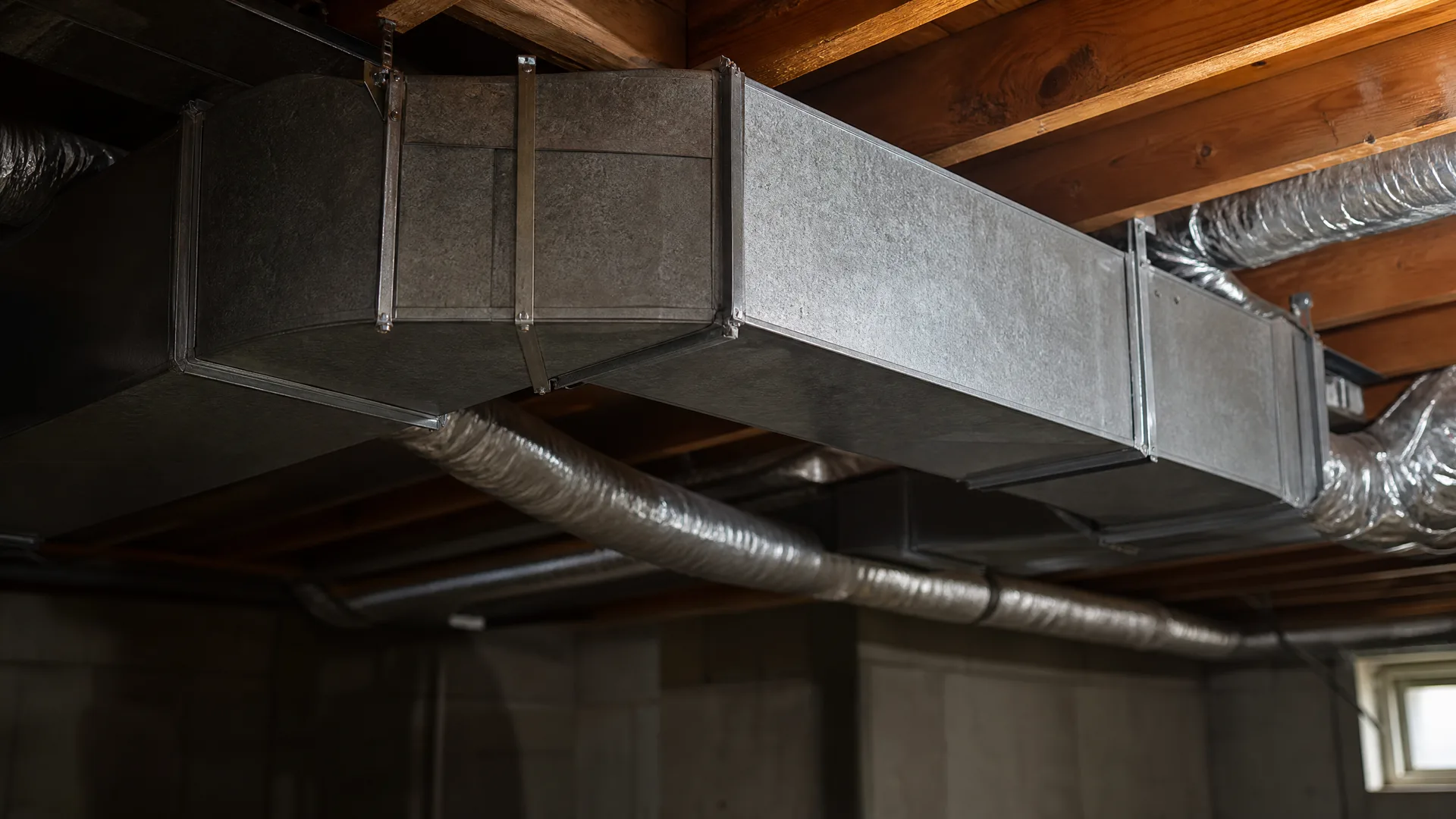
This is what most basements and crawlspaces look like. Metal trunk lines and flex runs tied off tight, insulation wrap intact, nothing hanging loose between the joists. Air moves through here without picking up anything extra. There's no reason to open this up and clean it.
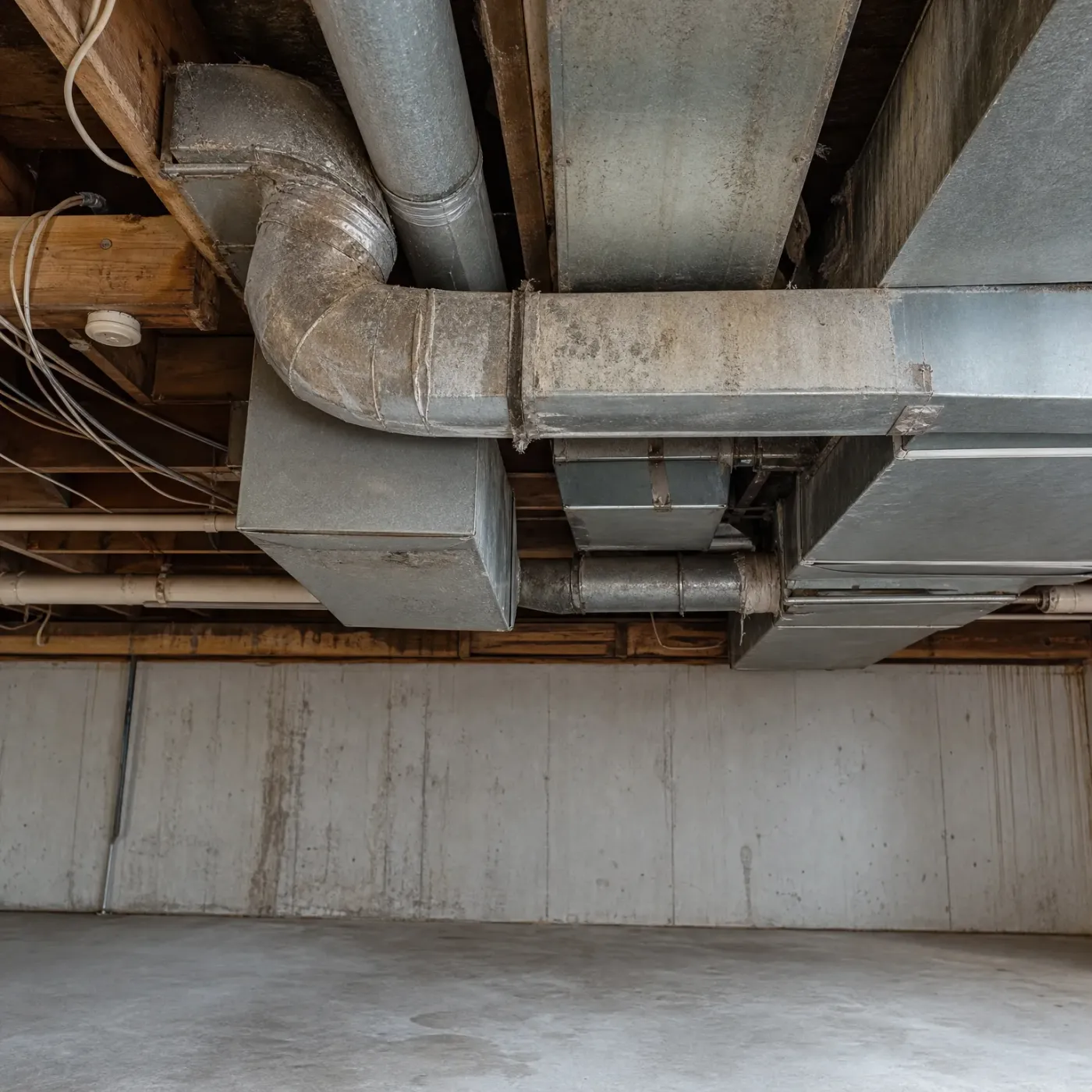
A flex connector pulled loose, a joint gapping where it meets the trunk line, insulation sagging off the duct wall. This is the kind of thing a contractor finds with a camera, not a guess. If your ducts look like this, cleaning is only part of the job.
You're noticing dust on the furniture again a day after you wiped it down. Maybe someone in the house has been sneezing more since the air handler kicked on for the season, or there's a smell when the system first starts up that fades after a minute. You might see a ring of gray building up around a supply register or a return grille that wasn't there before. None of that by itself means your ducts need cleaning. It could be the filter overdue for a change, or it could be nothing at all. But if the dust keeps coming back fast after cleaning, or the smell doesn't fade, that's worth a contractor actually looking inside the duct run rather than guessing from the living room.
A contractor inspects the ductwork with a camera before touching anything
A negative pressure machine connects to the duct system to contain debris
Agitation tools knock loose dust and debris from the duct walls
A high-powered vacuum pulls the loosened debris out through the access points


The question you came with has a straight answer. Most ductwork doesn't need cleaning, and nothing in this piece changes that for your house unless one of the specific things it covered applies to you: mold you can see, a pest problem, or a torn run letting in dirt from a crawlspace or attic. Age alone isn't a reason, and neither is a vague feeling that it's been a while. A camera inspection tells you which case you're in without any guessing, and that answer takes minutes, not a sales visit.
If you want that answer, the contractor who gives it to you matters. Someone who inspects ductwork around Daphne and the rest of Baldwin County every week has already seen what a genuine problem looks like, torn flex, a loose boot, a return pulling from the wrong space, and knows it from the ordinary dust and smell that don't mean anything. That's the difference between a straight answer and an upsell. You'd also be working with one contractor matched to your situation, not a handful of companies competing for the job, so the person who shows up already has the context of what you described rather than starting cold.
Either outcome tells you something useful. If the inspection finds a real issue, you'll know what it is and why it matters. If it doesn't, you'll know your ducts are clean and you can stop wondering about it. Both are worth having settled.
Find a duct system cleaning pro in Baldwin County