





How often to clean air ducts in Alabama

A local pro who cleans ducts gets in touch with you.

Duct and vent cleaningDucts or ventsAlabama
Step 1 of 2

What ZIP code is the job in?

Most homes in Alabama should have their air ducts cleaned every 3 to 5 years. The muggy summers here push humidity into the ductwork, and that moisture gives mold and dust a place to build up faster than it would in a drier climate. Since most homes here heat with electricity and power costs add up, dirty ducts make the furnace or heat pump work harder to move air through, which shows up on your bill. If anyone in the house has allergies, or if you've had recent work done on the house like a renovation that stirred up dust, cleaning every 2 to 3 years makes more sense. Check your filter and the supply vents for dust buildup between cleanings. If you're seeing dust collect fast or notice a musty smell when the system kicks on, that's a sign it's time sooner rather than later.

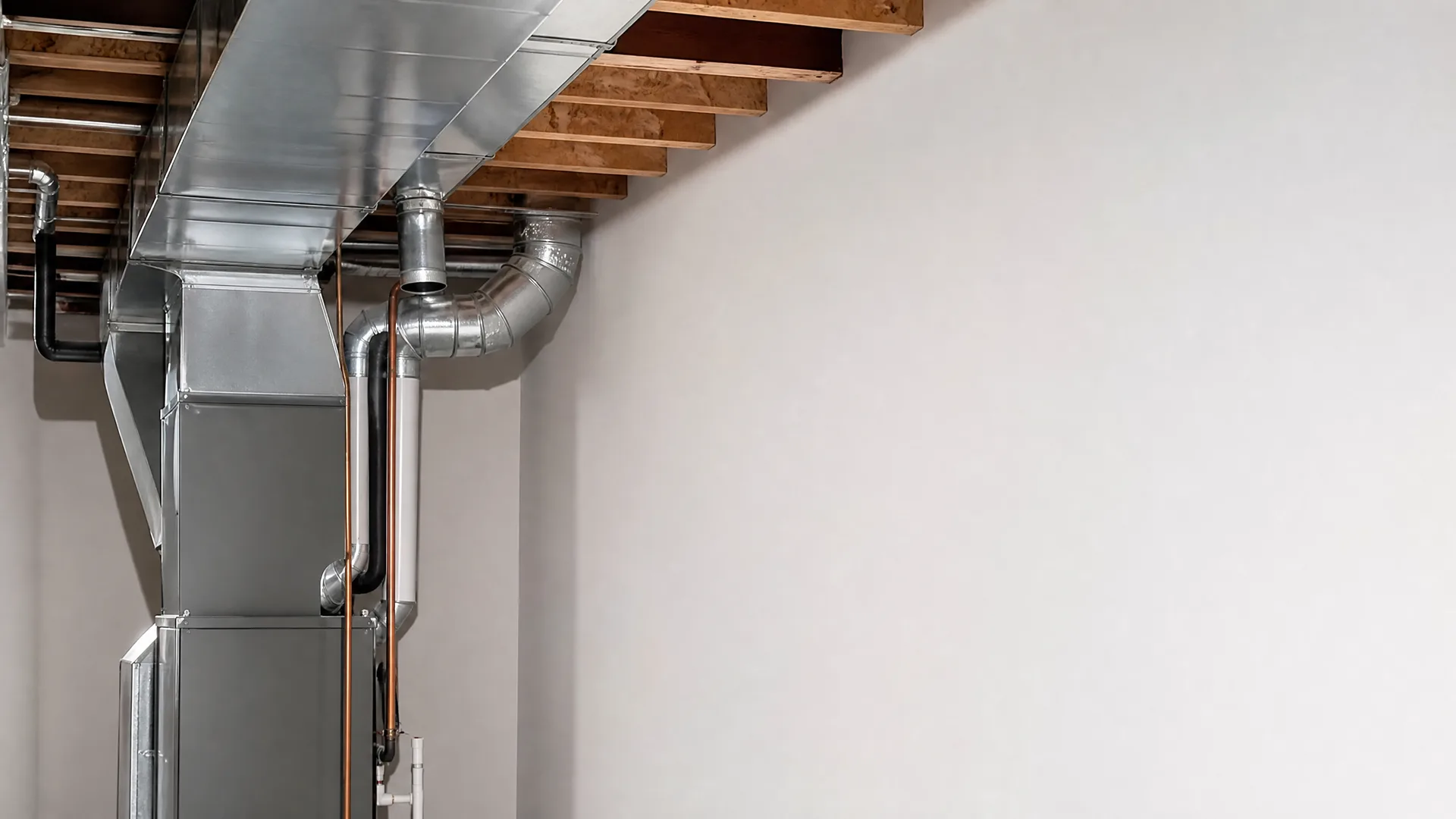
Basement interior showing a furnace with sheet-metal ductwork, a round flue pipe and copper lines running beneath exposed wooden floor joists next to a plain light-colored wall.

Why humidity speeds up buildup

Warm, wet air moves through the ducts all summer, and when it hits the cooler metal near the supply runs, it leaves moisture behind. That dampness settles into the dust already sitting in the duct, and mold doesn't need much more than that to take hold. In a drier state the same dust would mostly stay put. Here it tends to clump, feed mold growth, and stick to the walls of the duct instead of blowing out the vents.

Interior corner of a building with a large blank white wall beside an unfinished ceiling showing wood joists, galvanized sheet-metal ductwork, and white and copper pipes.

What heating with electricity changes

An electric furnace or heat pump pushes air through the same ducts every time it runs, which in Alabama is most of the year between the heat and the cold snaps. Each cycle moves whatever is sitting in the ductwork past the blower and out into the rooms. Ducts that are holding mold or heavy dust make the system work harder to push air through, and with power costs what they are here, that extra draw shows up on the bill.

3 Years or 5: Which Fits Your Home

Shorter interval, closer to 3 years

  • Homes with pets or anyone with allergies see dust and dander collect in the ducts faster, and cleaning on the shorter end keeps that from building up between visits.
  • A home that's run its AC hard through several muggy Alabama summers without a cleaning is more likely to have mold sitting in the supply runs by year 3.
  • If you notice a musty smell when the AC kicks on, that's often moisture and buildup in the ductwork rather than something wrong with the unit itself.
  • Homes near construction, farmland, or unpaved roads pull in more dust through the return air, and that dust settles in the ducts quicker than it would elsewhere.
  • Running the system through both a full summer and a full winter every year means more total runtime pushing air through the ducts, which speeds up how fast residue builds.

Longer interval, closer to 5 years

  • A home with newer ductwork that was sealed well when installed holds up longer before moisture and dust become a real problem inside it.
  • If nobody in the home has allergies and the air coming through the vents hasn't smelled off, there's less urgency to clean on the shorter end.
  • Homes that keep the AC on a steady setting rather than cycling hard all summer put less strain on the ducts and may not need cleaning as often.
  • A home without pets has less hair and dander moving through the return air, so buildup tends to collect more slowly.
  • If a duct cleaning was done recently and the home hasn't had any water intrusion or humidity problems since, 5 years is a reasonable stretch before the next one.
A gray-haired man in a dark coat dusted with snow stands in a warmly lit home entryway, with a lamp, sofa, window and white staircase banister behind him.
An older man with gray hair and a beard, wearing a dark coat dusted with snow and a blue plaid scarf, stands smiling in a dimly lit entryway with a window, framed picture, table lamp and staircase behind him.
A gray-haired, bearded man in a dark winter coat with snow on the shoulders stands in a doorway of a home interior with a lit lamp, framed pictures, a potted plant and a staircase behind him, and an evergreen wreath at the left edge.
A gray-haired man in a dark coat with snow on the shoulders and collar stands smiling in a dimly lit entryway with a paneled front door, lamps, and a framed picture in an adjoining room.

Why does your house feel dustier than it should?

Dust that settles back on furniture a day or two after you wipe it down is usually coming from the vents, not the air. You might notice a musty smell when the AC first kicks on, especially after the system's sat idle for a bit. Some rooms may feel stuffier than others, or the airflow out of a vent feels weaker than you remember. Check the supply vents for a dark ring of buildup around the edges. None of this is dangerous by itself, but it means the ducts are circulating what they're holding onto, and with electric heat running those same ducts all winter, buildup left alone pushes the system to work harder to move the same air through your house.

Unfinished basement with bare concrete walls and floor, showing exposed wood floor joists overhead with sheet-metal rectangular ductwork, insulated flexible ducts, and pipes.

Ducts running clean

This is what a duct system looks like when it's keeping up with the summer humidity. The metal trunk lines and flex ducts move air through the joists without anything clinging to the inside walls. Air moves through freely, and nothing in that network is feeding mold or holding dust.


Basement ceiling with galvanized sheet metal rectangular ducts and round pipes running between wooden joists above a bare concrete wall and floor.

Ducts overdue

Same kind of basement, same layout of trunk ducts and round flex pipes, but the buildup inside has had years to collect. Dust has settled into the metal, and the moisture that comes through every muggy summer has given mold a place to take hold. This is what waiting past 5 years looks like from underneath.

A woman wrapped in a thick cream knit blanket sits in an armchair beside a lit table lamp, with an open book in the foreground and a frost-covered window behind her.
A woman in a cream knit sweater sits in an armchair with her eyes closed near a window showing yellow autumn foliage, with a mug on a round wooden side table beside her.

A duct system pro near you

A duct system that's gone past its cleaning window doesn't announce it the way a dead capacitor or a tripped breaker does. It just quietly makes the air worse and the AC work harder to move it, and with power costs in Alabama what they are, that adds up over a muggy summer. Figuring out where your ducts actually stand, whether they're closer to that 3 year mark or still have time left, isn't something you can tell from looking at a vent cover. A local contractor who cleans ducts in homes around your area every season can look at what's actually built up in your runs and tell you where you fall. Getting matched connects you with one licensed contractor local to Alabama, not a handful of companies competing for your callback. Once your ducts are handled, you'll know the musty smell and the dust settling back on your furniture have an actual cause behind them, not just a guess.

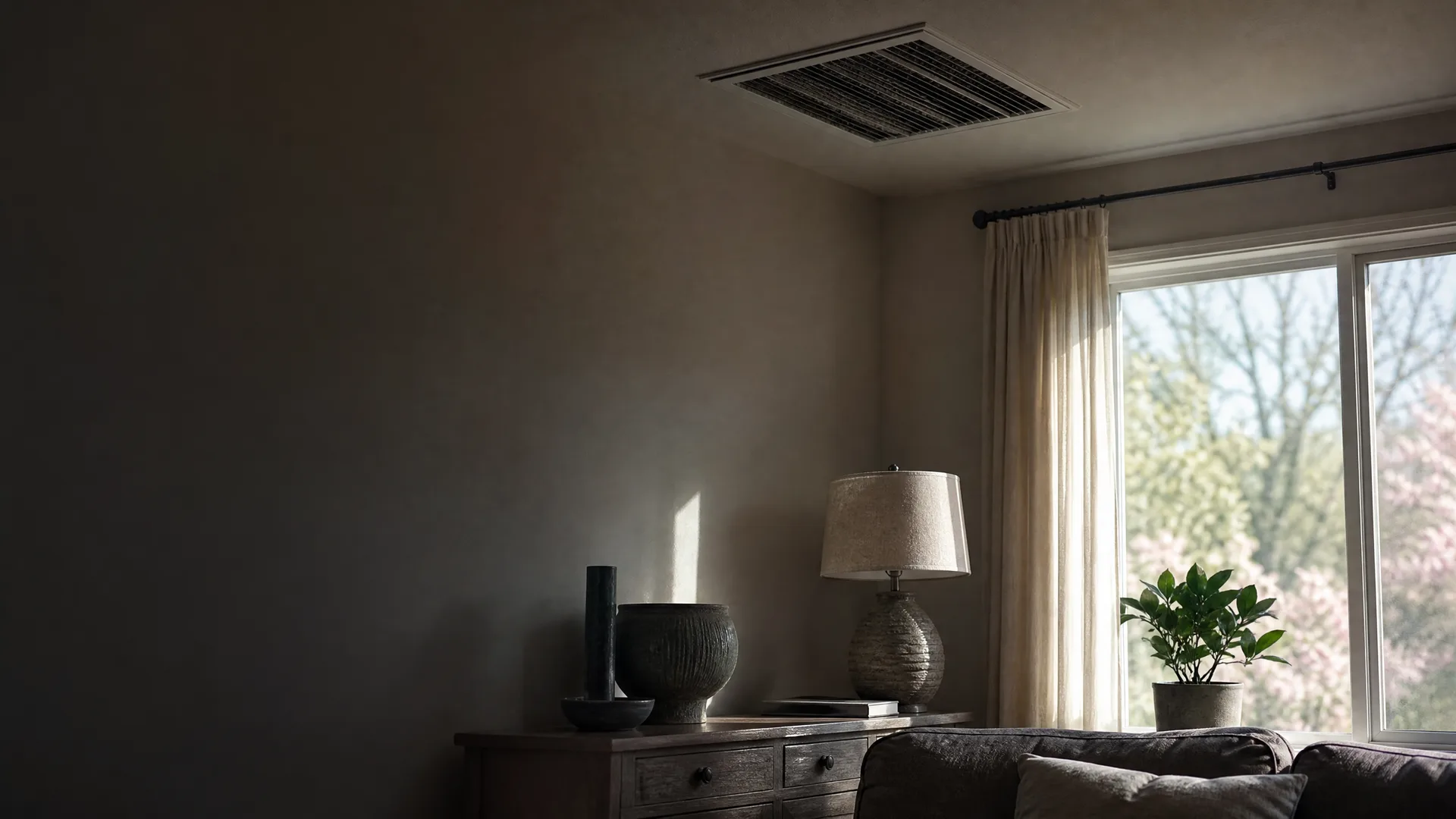
A dim living room corner with a ceiling air vent, a curtained window showing blossoming trees, a table lamp and dark ceramic vessels on a wooden dresser, a potted plant, and a sofa in the foreground.

It's a Saturday afternoon in April and the windows are open for the first time in months. You're on the couch with a magazine when the light catches the ceiling vent overhead, a soft gray edge of dust ringing the grille. You run a finger along the side table and it comes away coated, the same table you wiped down yesterday. The AC clicks on for a minute, pushes that smell out into the room, then shuts off. You look up at the vent again, then back down at the table, and leave the magazine there while you go get a rag.

Power costs 16.09 cents per kilowatt-hour statewide

At 16.09 cents per kilowatt-hour, every extra hour your AC runs to push air through clogged ducts shows up on the bill. Most homes here heat with electric strip heat or a heat pump, so the same restricted airflow costs you again come winter.

EIA-861 2025 statewide residential average

Unfinished basement with galvanized sheet-metal ductwork and pipes beneath wood joists, a gray furnace unit at left, insulated plastic-covered walls over a concrete foundation, and a bare concrete floor.
Air moves through the metal runs without resistance, which is what keeps the system from working harder than it has to.
Empty concrete-walled basement room with galvanized rectangular and round HVAC ducts and pipes running along the exposed wood-joist ceiling.
Dust rings the joints and settles on the duct walls, narrowing the path air has to move through.

Where That Leaves You

  • Most homes in Alabama hold up fine on a 3 to 5 year cleaning cycle, closer to 3 with pets, allergies, or heavy AC use.
  • Watch for dust that resettles fast, a musty smell at startup, or rooms that stay warmer than the thermostat says they should be.
  • Ducts that stay clean keep the blower from working harder than it needs to, which matters with electric heat and rates near 16 cents a kilowatt-hour.
  • A local contractor who services ducts through every muggy Alabama summer has seen which joints and runs clog first in homes like yours.
  • Matching you with one licensed local contractor means a single call back, not a string of competing bids.

Three to five years is the range that holds up for most houses in Alabama, and the signs along the way tell you whether you're on the long end or the short one. Dust that comes back fast, a musty smell when the AC first kicks on, a room that won't cool to what the thermostat says, these are the ducts asking for attention before the calendar says it's time. Left alone, the blower just keeps working harder to push air through a narrowing path, and on electric heat with rates near 16 cents a kilowatt-hour, that shows up on the bill twice, once in summer and again in winter. None of this takes special equipment to notice. It takes paying attention, which you're already doing if you've read this far.

What happens next matters as much as the schedule does. A contractor who's worked on ducts through enough Alabama summers has a sense for which joints collect dust first and which runs tend to hold moisture, because they've opened up systems like yours before. That's worth more than a quick visit from whoever answers first. When you request service through this page, you're matched with one licensed local contractor, not a handful competing for the job, so the call you get back is the one that's actually looking at your house. You know the interval now. The next step is finding out where your own system stands.

Corner of a house with cream horizontal lap siding and tree shadows, beside a covered porch with a square column, wooden deck, steps, white balusters, and a shrub at right.
Corner of a white clapboard house with a multi-pane wood window in warm low-angle sunlight, with hydrangea shrubs and other green foliage growing along the base and dark trees behind.
A wooden front door with divided-light glass panes set under an arched entry on a white shingled house, with a black wall lantern, a tall gray planter, flowering shrubs, and a flagstone walkway.
Exterior corner of a house with cream horizontal siding, a dark-framed three-section window, and a stone veneer foundation, with white hydrangeas and clipped shrubs along a paved walkway and tree branches overhead.
Corner of a white-clad house with a dark-framed grid window, dark downspout and eaves, surrounded by trimmed hedges, shrubs, white hydrangeas and a leafy tree in sunlight.

A local pro for your ductwork cleaning

The pro who reaches out is licensed in Alabama.

Match me with a pro

No fee to send it, and nothing to sign.