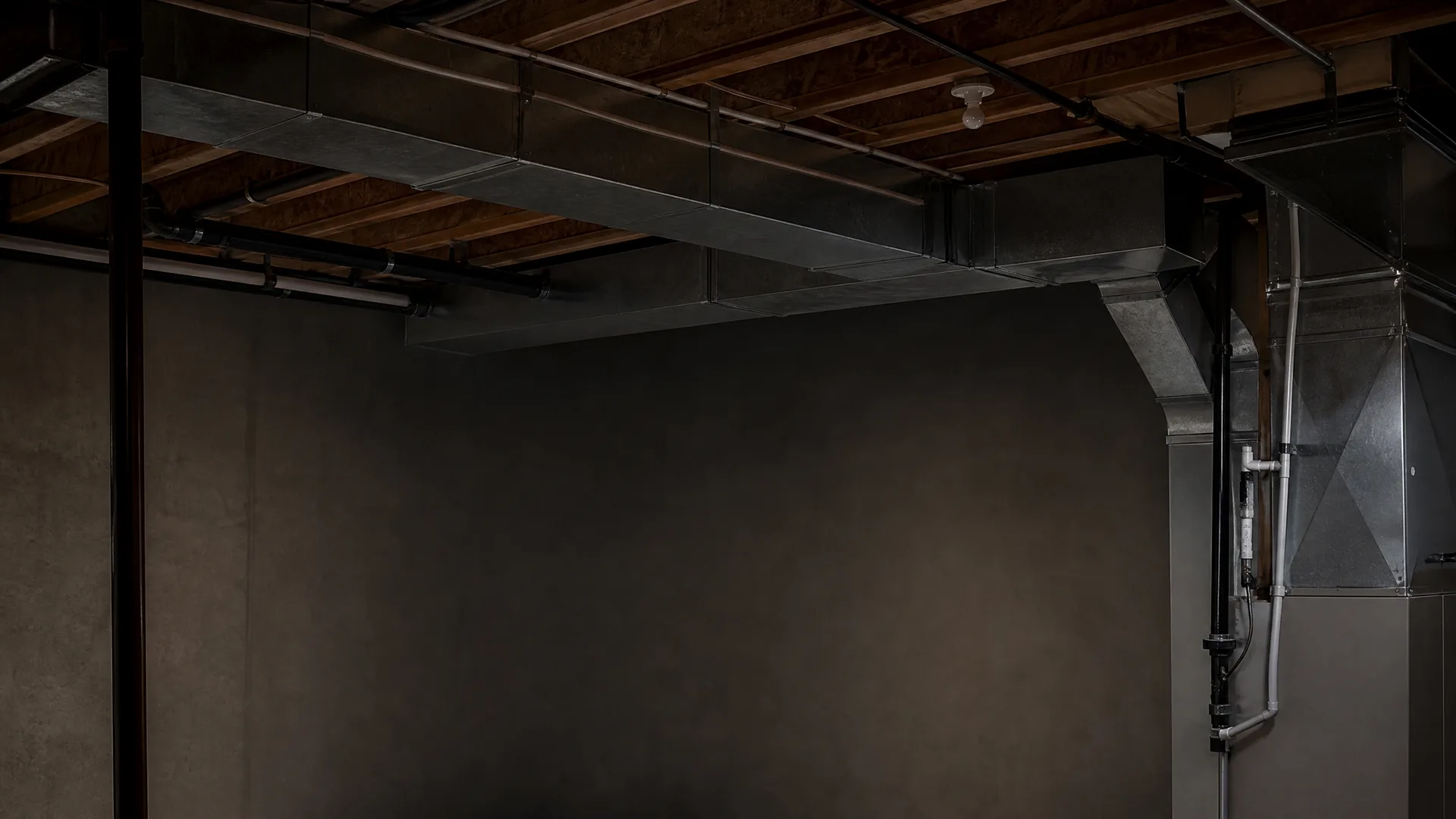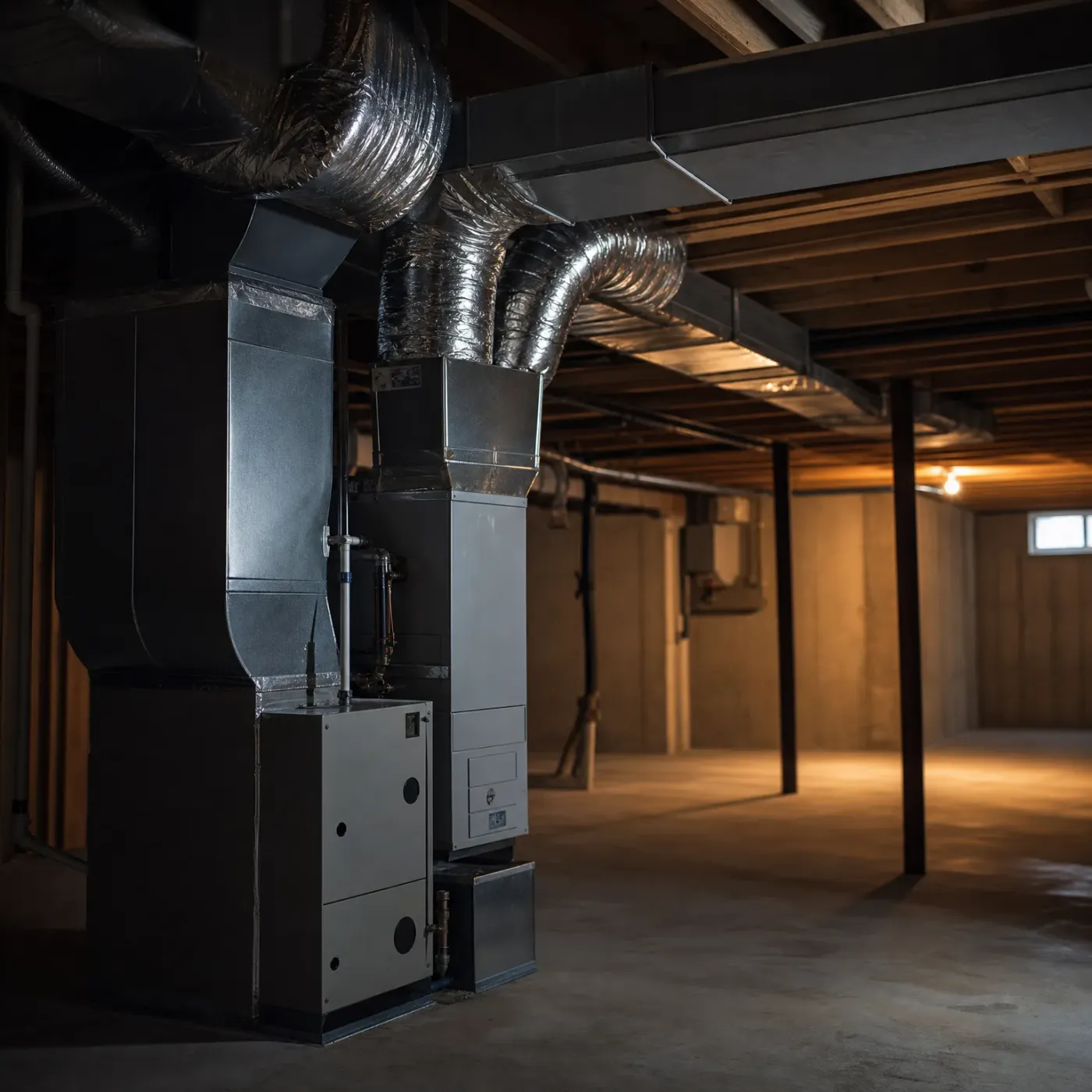

Unfinished basement with concrete floor and walls, exposed wood joists, steel support columns, and two furnace-type units connected to sheet-metal and flexible insulated ducts.

Done looking for a duct system pro

Is duct cleaning worth it in Alabama

Alabama's humidity makes duct cleaning tempting to add to the list, but whether it does anything for your air or your power bill depends on what's actually in those ducts. This page gets into when cleaning helps and when it doesn't. Send the form and skip the work of finding someone to look.

Hand it over

It depends on what's in the ducts, not on the calendar. Dust and pet hair build up on duct walls over years, but a thin layer of dust doesn't hurt your air or your power bill enough to matter. What's worth paying attention to is signs of something more: mold growth from humidity getting into the ductwork, a rodent or insect problem, or dust so heavy it's visibly blowing out of the vents. Alabama's humidity makes mold inside ducts more likely than it would be somewhere dry, especially if there's been a leak or condensation problem nearby. If you see any of that, cleaning is worth doing. If your ducts just have ordinary dust and your system runs fine, cleaning won't lower your electric bill or make the air noticeably better. Check your vents and registers before you decide.

Unfinished basement with concrete floor and walls, exposed wood joists, steel support posts, and large galvanized sheet-metal ductwork running to a furnace or air handler against the far wall.

Ducts running clean

This is what most duct systems look like, even older ones. Metal runs carrying air to each room, nothing growing inside, nothing blocking the flow. A little dust on the walls of the duct isn't pulling your power bill up or giving anyone in the house trouble breathing.


Galvanized sheet-metal ductwork and round pipes run along a wooden floor joist ceiling above a bare concrete wall and floor.

Ducts in trouble

This is what you're checking for: water stains on the metal, a musty smell when the furnace kicks on, or dust coming out of the vents heavy enough to see. Alabama's humidity can get into a basement like this and start mold on duct walls. That's worth a cleaning, not routine maintenance.

What's actually coming out of your vents

Stand near a vent when the air handler kicks on. A musty smell means moisture got into the ductwork somewhere, and in Alabama's humidity that can turn into mold before long. Dust that puffs out when the air starts, or a layer thick enough to see on the grille itself, means it's built up past the point of sitting still. Some homes have both and some have neither. If anyone in the house has started coughing more or breathing harder since the AC's been running non-stop, that's worth paying attention to, especially with what electricity costs here when a system has to work harder to push air through.

Unfinished basement interior with exposed wooden floor joists, galvanized rectangular and round sheet-metal ducts, a gray furnace unit at left, and a large blank light-colored wall at right.

Where moisture actually gets in

Ductwork sweats when warm, humid air meets a duct carrying cooled air, the same way a glass of ice water sweats on a July porch. That moisture lands on dust already sitting on the duct walls, and dust holds water longer than bare metal does. Leave that damp patch alone through a few months of Alabama summer and it's not just dust anymore. A contractor cleaning the duct can see whether that's happened or whether it's still just dry dust sitting there.

Galvanized sheet metal ductwork with elbows and a vent grille running beneath an exposed wood joist and OSB ceiling, next to a blank white wall.

Why electric heat changes the math

Most homes here heat with electricity, and electric heat runs the air handler and its blower just as hard as the AC does all summer. That means whatever is sitting in the ducts gets pushed through the house nearly year round, not just for a few months. A duct that's actually dirty costs you more here than it would somewhere the furnace only runs occasionally, because the blower doesn't get a break to let things settle.

Power costs 16.09 cents per kilowatt-hour statewide

At 16.09 cents per kilowatt-hour, electric heat here isn't cheap, and most Alabama homes heat that way. If mold or a blockage is making your system work harder to push air through, you're paying more every month it goes unfixed.

EIA-861 2025 statewide residential average

A smiling man in a blue denim shirt over a white tee sits at a light stone kitchen counter with a grey mug and a bowl of oranges and bananas, with pendant lights and shelving behind him.
A smiling bearded man in a grey long-sleeved shirt sits at a kitchen counter with a dark mug, with a dining table, pendant light and glass doors onto greenery behind him.
A bearded man in a dark green knit sweater smiles and looks off to the side while standing at a kitchen counter with a white mug of coffee, with open shelving, a potted tree, and a dining table near large windows behind him.
A man with dark curly hair in a dark green sweater stands smiling and looking to the side in a kitchen with white cabinets, a potted plant, a stone countertop with a ceramic mug, and a dining area with framed art in the background.

It's off your list after this

You already know if something's off with your ducts. Maybe it's the musty smell near the vents, maybe it's a room that never gets cool enough in August, maybe it's a power bill that keeps climbing at 16 cents a kilowatt-hour and nobody can tell you why. Figuring out which one you're dealing with means someone has to look inside the ducts, not guess from the outside. Finding that someone usually means searching, calling a few companies, describing the smell or the room or the bill all over again to each one, then sitting with quotes trying to judge who actually knows mold from ordinary dust. None of that gets your air any cleaner. Send the form and that search is off your plate. What's left is the actual question, whether your ducts need cleaning or just need leaving alone, and that gets answered by someone standing in your house looking at them, not by another hour of searching on your own.

Where this leaves you

  • Clean ducts move air with less resistance, so a blocked or moldy system can push your power bill higher every month it runs.
  • Mold, pests, and blockages are worth paying to fix; a thin layer of dust on the duct walls usually isn't.
  • A musty smell at the vents or a room that won't cool down in August are signs worth checking, not ones to ignore.
  • Finding a contractor who'll actually inspect before recommending a cleaning takes time most people don't have to spend.
  • Sending one form means you're not calling around, explaining the same musty smell three different times, or sorting through quotes on your own.
  • What's actually in your ducts decides whether cleaning is worth it, not how long it's been since the last one.

The question was never whether duct cleaning is worth it everywhere, every few years, on a schedule. It's whether your ducts have something in them worth paying to remove. A thin coat of dust on metal walls isn't costing you anything. Mold, a nest, a blockage pushing your air handler to work harder, that's different, and in a state where most homes heat with electricity at over 16 cents a kilowatt-hour, a system working harder shows up on the bill. The musty smell near a vent, the room that won't cool past a certain point in August, those are the signs that tell you which situation you're in. Figuring that out means getting someone out to actually look before any cleaning gets recommended, and finding that person is its own job. Most people end up calling a few contractors, describing the same smell or the same room to each one, then trying to compare quotes that don't line up because nobody looked at the same thing. Sending one form here skips that part. You're not searching, not repeating yourself on the phone, not guessing which quote actually reflects what's in your ducts. What's actually in them still decides whether cleaning helps. But once you've sent the form, finding someone to check isn't something you have to keep spending time on.

Dim interior with a dark gray wall, exposed wood joist ceiling, sheet-metal ductwork, conduit, pipes and a sprinkler head.

Stop chasing a duct system pro

Describe your ductwork job once, to one pro.

Duct and vent cleaningDucts or ventsAlabama
Step 1 of 2

What ZIP code is the job in?