




Side profile of a bearded man wearing a dark faded baseball cap and a dark gray t-shirt against a plain light background.

Signs of leaky ductwork in Mobile, AL

Duct and vent cleaningDucts or ventsMobile County, AL
Step 1 of 2

What ZIP code is the job in?

Leaky ductwork usually shows up as rooms that never feel right. One bedroom stays warm while the rest of the house is cool, or the air coming out of the vents feels weak even with the system running. You might notice your electric bill climbing without a clear reason, since conditioned air is escaping into the attic or crawlspace instead of reaching the room it's meant for. Dust settling fast around vents, or a musty smell when the AC kicks on, can mean the ducts are pulling in attic air through a gap instead of circulating the air already inside your home. In Mobile, where the system runs hard through the long muggy stretch from spring into fall, a leak forces it to work longer to hit the thermostat setting, and that extra runtime is what shows up on the power bill. None of this fixes itself. A gap or a loose connection stays open until someone seals it.

A bearded man in a blue T-shirt sits on a gray couch smiling while looking down at a laptop screen, with a houseplant and window in the blurred background.
A bearded man in a plaid flannel shirt stands indoors looking out a window at a snow-covered conifer, with a steaming dark mug on the windowsill and wooden cabinets behind him.

Most duct leaks start at the joints, the spots where two sections of metal or flex duct meet and get sealed together. In an attic that sits well over 100 degrees most of the summer, that seal is the first thing to give. Once it does, cooled air escapes into the attic instead of reaching the room it was meant for, and the system has to run longer to make up for it. A return-side leak works against you differently. Instead of losing air, it pulls hot attic air into the system before it reaches the coil, so the unit is cooling air that was never supposed to be there. Flex duct adds another way things go wrong. If it sags between the joists or kinks around a turn, airflow gets choked off even where the duct is sealed tight, and a sagging run often has a leak at the low point too. The tape used to patch these joints matters. Cloth-backed tape dries out in the heat and peels back within a few years, while mastic sealant stays flexible and keeps holding the joint long after.

Where Ductwork Actually Fails

  • Ducts that run through a hot attic lose cooled air fastest at the joints where two sections meet.
  • A disconnected duct dumps air into the attic or crawlspace instead of the room it was built to reach.
  • Leaks on the return side pull hot attic air into the system before it ever reaches the coil.
  • Flex duct that sags or kinks restricts airflow the same way a leak does, so both can be present at once.
  • Mastic sealant holds up over time where cloth-backed tape dries out and peels away from the metal.
  • A duct leak near the air handler can make the blower run longer to push the same air through the house.
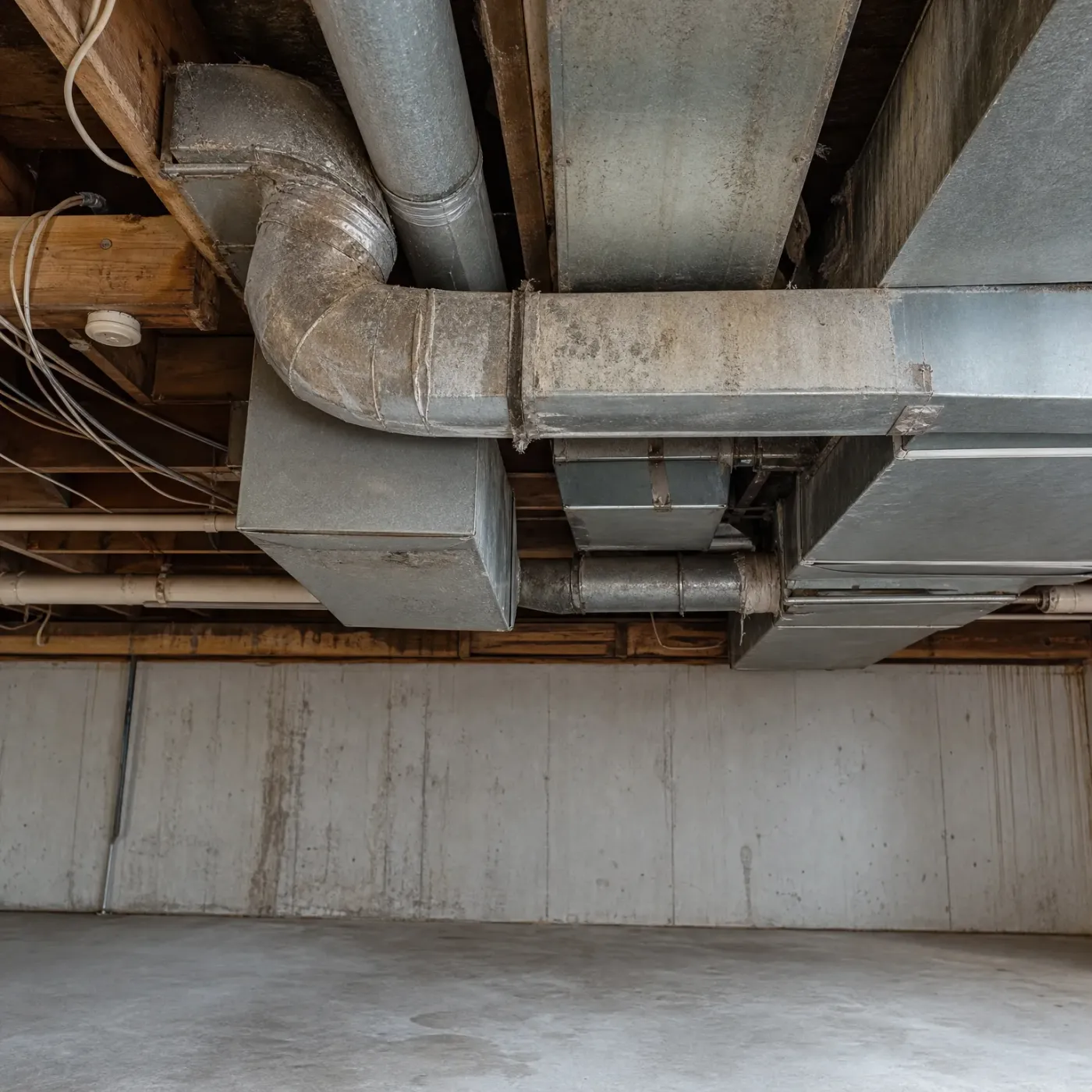
Galvanized sheet-metal ductwork and round pipes run beneath wooden floor joists in a basement with concrete walls and floor.
Before you get your ductwork cleaning
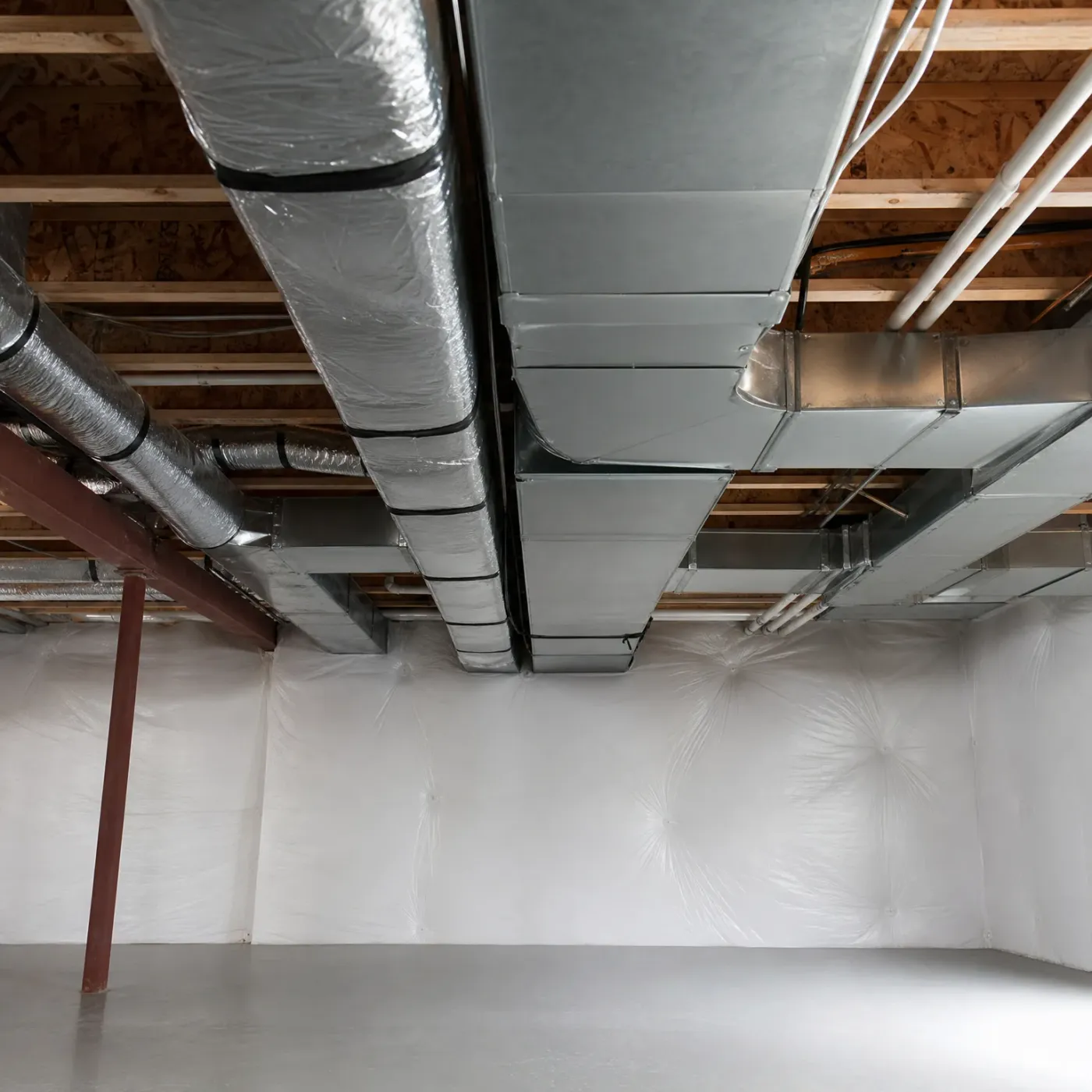
Unfinished basement with exposed wood joists, sheet metal and insulated flexible ductwork, white pipes, a steel support post, plastic-covered walls, and a bare concrete floor.
After you get your ductwork cleaning

A system that's losing cooled air through the ducts runs longer to hit the temperature on your thermostat, and in Mobile that means it runs long hours most of the year.

That extra runtime is what shows up on your electric bill. The duct leak itself never costs you a dime until the system has to work around it.

Why would your ducts be leaking in the first place?

  • Half the homes here were built by 1980

    Half the homes in Mobile County were built in 1980 or earlier, so a lot of duct runs are old enough that the sealant at the joints has dried out and cracked.

  • Heat runs November through March

    Cooling runs April through October here, about seven months. That's seven months of air pressure pushing on every seam and joint in the system.

  • Cooling runs April through October

    Heat only runs November through March, so the ducts get less of a break than you'd think. Most of the year they're carrying cooled air, not warm.

ACS 2020-2024 · NOAA nClimDiv 1991-2020

Unfinished basement corridor with exposed wood floor joists, pipes and wiring overhead, sheet-metal HVAC ductwork and an electrical panel along the left wall, and a blank white wall on the right.

What it does to your attic

Warm, wet air from the attic gets pulled into the return side of your ductwork and pushed through the house along with the cooled air. That moisture ends up on the coil and in the duct runs themselves, and with Mobile's summers lasting from April into October, it doesn't get much chance to dry out between weeks. Insulation around the leak can stay damp longer than it should, and the attic air you're breathing indoors isn't the air your system was built to move.

Interior basement ceiling with exposed wooden joists, sheet-metal HVAC ducts, and white PVC pipes beside a plain off-white wall.

What it does to your budget

A house with leaky ducts spends more to reach the same temperature on the thermostat every single month cooling is running, which in Mobile County is most of the year. The system cycles on more often and stays on longer each time, and electricity here isn't cheap to begin with. None of that shows up as a single bill you can point to. It shows up as a number that's higher than it should be, month after month, for a reason the bill itself never names.

Does one room in your house never cool off right

Walk your house and put a hand near each vent. If one room's airflow feels thin compared to the rest, or a closet or hallway vent barely pushes anything out, that's air leaving the duct before it gets there. Check the attic hatch too. A musty smell or damp insulation near a duct run means moisture is getting pulled in where it shouldn't. Dust settling heavier around a vent cover, or a fine layer collecting faster than it used to, points the same way. None of this fixes itself. Left alone, the moisture sitting in your ducts gives mold a place to grow, and that's air your household is breathing every day the system runs.

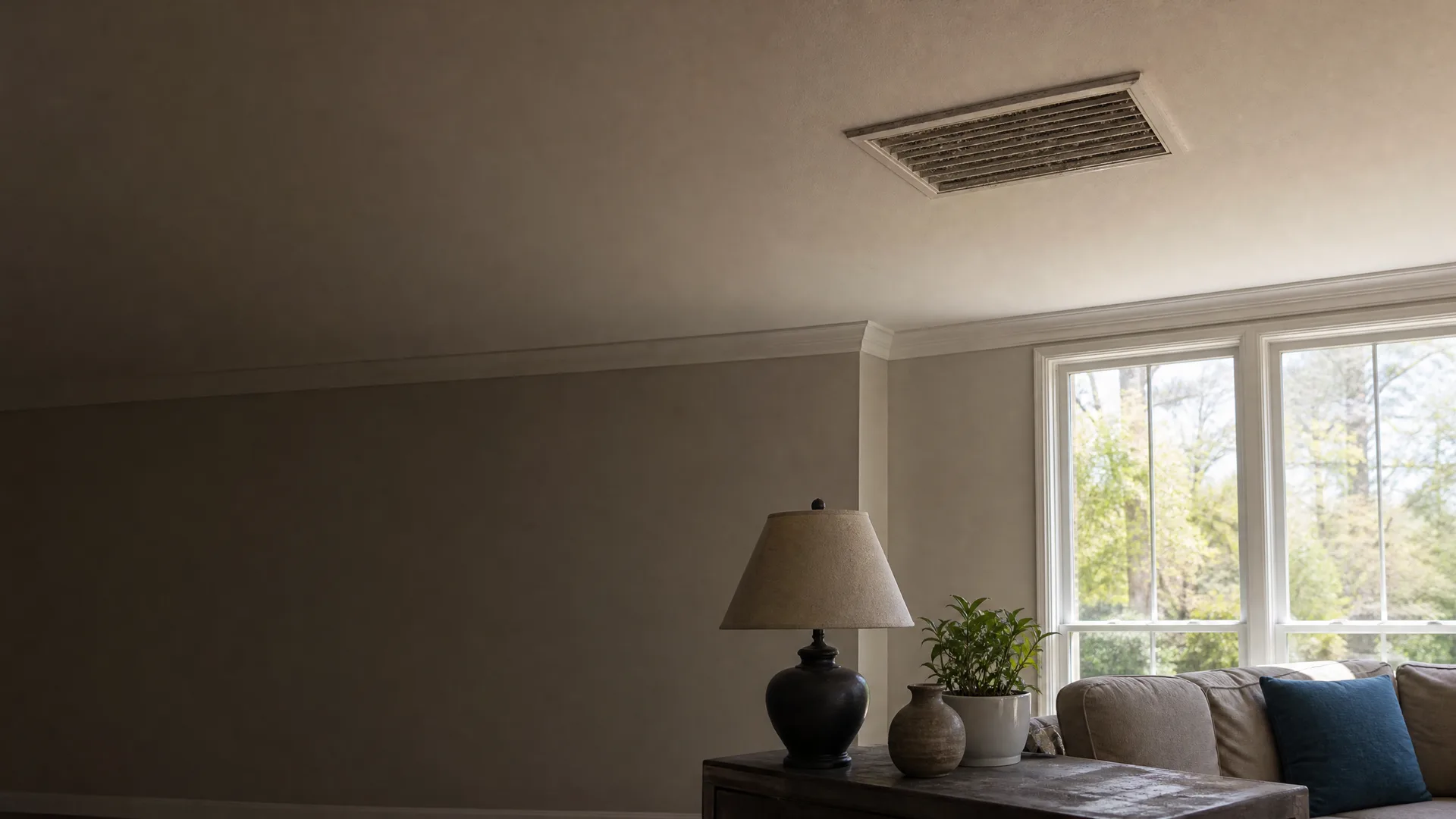
A ceiling air vent in a living room with beige walls, a table lamp and potted plant on a wooden console, a sofa with a blue cushion, and a window showing green trees outside.

It's a spring afternoon and the light coming through the living room window is doing you no favors. It shows the dust sitting on the ceiling vent grille overhead, a soft gray line following the slats, and more of it settled on the end table and the top of the TV stand below. The air conditioning kicked on a while ago and it's still running, and you can feel it moving but not much is coming out of that vent. You wipe the end table down, look back up at the grille, and figure it's past time someone who knows this system took a look at what's feeding dust into this room instead of cool air.

Stop chasing a duct system pro

You've read this far because something about your system doesn't add up, and it's probably not a mystery. Leaky ducts in a Mobile County house are common enough that a contractor who works this area has likely sealed a dozen like yours this year. That's not a guess about your home, it's what the pattern above points to: warm rooms, weak vents, a bill that climbs for no clear reason. Someone local who services ductwork every summer knows which joints fail first in homes built the way a lot of them are here, and where to look before pulling a single panel. Sending the request puts your address and your situation in front of one contractor, not a handful, so you're not fielding five calls to sort out which one actually knows your kind of system. The part that's been eating your bill and leaving that one room uncomfortable stops being something you have to chase down yourself.

You seal the ducts now

A contractor finds the leaks, seals the joints and connections, and reattaches anything that's come loose. Your system stops pulling attic air through the return side, and the air you pay to cool actually reaches the rooms. Your thermostat setting and what the house feels like start to match again. The AC still works hard in a Mobile summer, but it's not fighting a leak on top of the heat. Over time, less moisture gets pulled onto the coil and into the duct runs, which matters here more than most places.


You leave it as it is

The warm room stays warm and the weak vent stays weak, no matter how you adjust the thermostat. The system keeps running long hours trying to make up for air it's losing before it reaches the house, and that shows up on your electric bill every month it goes on. Moisture from the attic keeps getting pulled into the return side and settling on the coil and in the ducts. None of this fixes itself. The leak is in the same spot a year from now, just older, and the system has been working around it the whole time.

A smiling man in a dark olive long-sleeve shirt sits in a kitchen beside a counter with a dark mug, with a dining table, sideboard and hallway visible in the blurred background.
A smiling bearded man in a navy sweater sits at a white kitchen island with a ceramic mug, with open shelves, potted plants and a range hood behind him.
A smiling bearded man in a grey long-sleeved shirt sits at a kitchen counter with a dark mug, with a dining table, pendant light and glass doors onto greenery behind him.
A smiling man in a blue denim shirt over a white tee sits at a light stone kitchen counter with a grey mug and a bowl of oranges and bananas, with pendant lights and shelving behind him.

Before duct sealing

Dust keeps settling back on the same shelves within days of cleaning, because attic air carrying dust is still getting pulled into the system through the leaks.

Find a licensed pro

After duct sealing

The ductwork stops pulling in attic dust and insulation fibers, so the air moving through your vents stays cleaner and a cleaning actually holds.

Find a licensed pro

Power here costs 17.82 cents per kilowatt-hour

At almost 18 cents a kilowatt-hour, every extra hour your system runs to make up for lost air costs more here than in most places. Leaky ducts don't just waste cooled air, they waste it at a rate that shows up fast on your bill.

EIA-861 2025

What the Signs Add Up To

  • Uneven rooms, weak airflow at the vents, and a climbing electric bill together point to ducts losing air before it reaches the house.
  • Sealing the joints and reattaching loose sections stops the waste and lets the system reach its set temperature without running as long.
  • A contractor who works Mobile County duct systems all summer has likely sealed runs just like yours this year.
  • One licensed local contractor takes the job, so you're not fielding calls from a handful of different companies.
  • The dust pattern on the shelves and the uneven room are both pointing at the same leaks, not separate problems.

Everything this page walked through points at the same thing. The warm bedroom, the weak vent, the dust that comes back days after it's wiped, the electric bill that climbed without a clear reason. These aren't separate problems to chase down one at a time. They're what a duct system looks like when it's losing air at the joints and pulling in attic air through the return side. Once you've checked the vents and noticed the pattern, there isn't much more diagnosis you can do from inside the house. The joints and connections that need sealing are up in the attic, and finding every leak means getting eyes on the actual duct runs.

That's a job for someone who does this work in Mobile County houses all summer, not an occasional call for most contractors elsewhere. A tech who's spent the season sealing ducts in homes built the same years as yours has a good idea where the leaks usually are before the ladder goes up. When you send a request through this page, it goes to one licensed local contractor, not a handful of companies competing for the job. You'll deal with one name, one visit, one person who already knows what tends to fail in a Mobile duct system and why. That's a different experience than fielding calls from several outfits trying to get on your schedule first. The rooms that never cool right, the bill that keeps climbing, the dust that won't stay off the shelves: a sealed system is how all three stop at once.

A gray standing-seam metal roof with two stone chimneys in the foreground, framed by pine branches and moss-draped trees, overlooking misty forested hills and distant mountains under an overcast sky.

Finding a pro stops being your job

Find a local pro

You only hire the pro if you want to.

A contractor can check the whole duct run in an afternoon and tell you exactly where the air is escaping. You don't have to guess which room or live with the bill creeping up another summer while you decide. Send the request and let someone who knows this equipment find the leak.