












Alabama HVAC Service
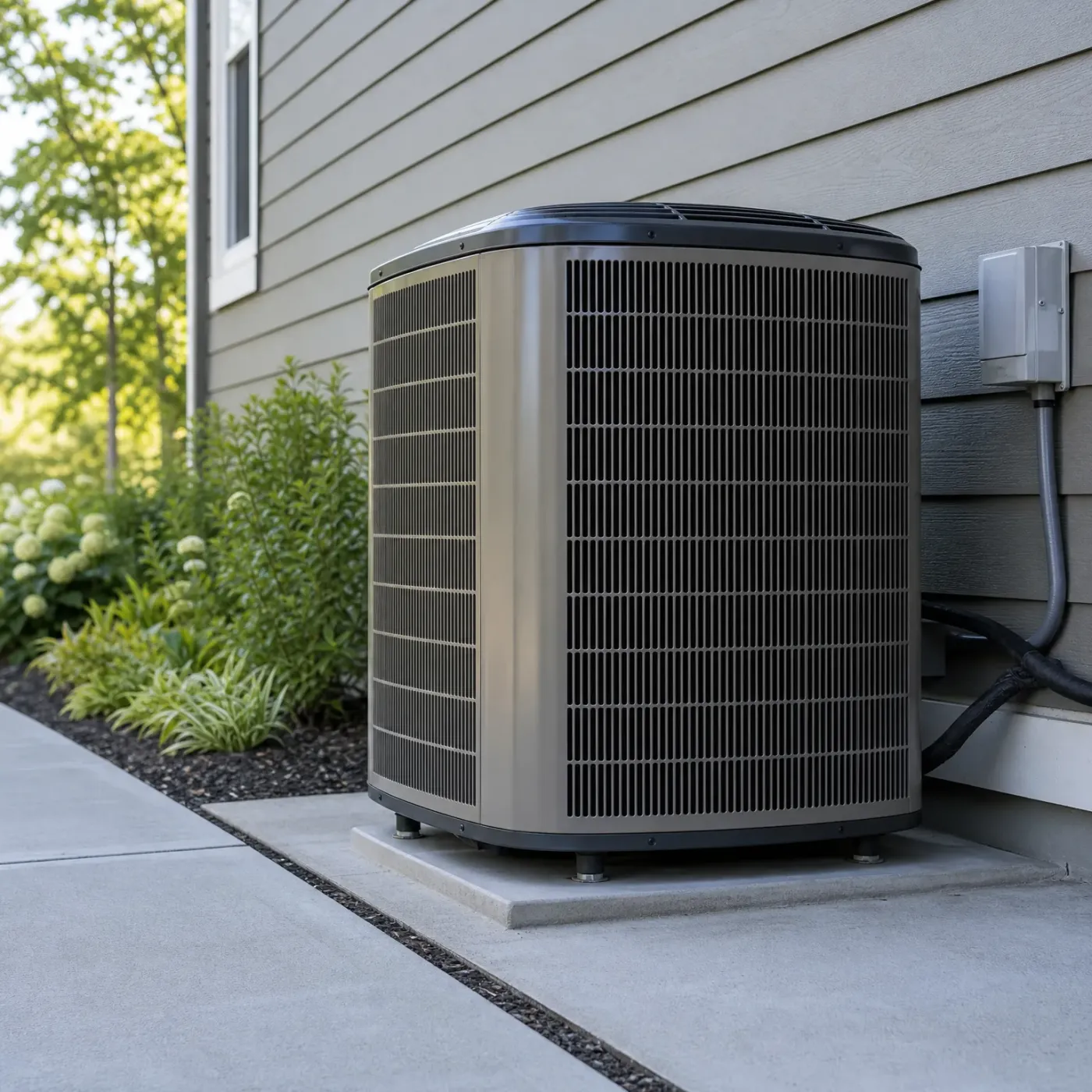
An outdoor air conditioning condenser unit on a concrete pad beside a house with horizontal siding, with an electrical disconnect box on the wall and shrubs to the right in low evening light.

Done looking for an air conditioner pro

Why your AC vents are sweating in Alabama

Those vents sweating isn't the air conditioner cooling too well. It usually means the humid Alabama air is meeting a duct or vent that's too cold for it, or air is leaking around a connection somewhere. This page gets into what's actually causing it and what fixes it. Once you send the form, finding someone to look at it stops being on you.

Hand off my repair

Sweat on your vents means warm, humid air is touching something cold enough to make it condense, the same way a glass of ice water beads up on a July afternoon. Alabama air carries a lot of moisture, and when that air meets a duct or vent cover that's running cooler than the room around it, water forms right on the metal. A few things cause that cold spot. The duct might not be insulated enough, or the insulation has come loose or gone missing somewhere along the run. Air leaking out around a loose vent or a gap in the ductwork can pull in more humid air than the system was built to handle at that spot. Whatever the cause, that moisture doesn't stay on the vent. It can soak into the ceiling or wall around it, and drywall and insulation don't dry out fast once they're wet. The dampness you're seeing now is worth having a contractor look at before it becomes a repair to the ceiling itself.

A weathered outdoor air conditioner condenser unit on a concrete pad beside a house with horizontal vinyl siding, with a conduit and disconnect box on the wall to the right.
Before you get your air conditioner repair
A gray outdoor air conditioning condenser unit on a concrete pad beside a house with horizontal lap siding, with a conduit and electrical disconnect box on the wall and a green shrub in mulch to the right.
After you get your air conditioner repair

Metal cools faster than the air around it, so the vent cover or the first foot of duct near it often sits colder than the rest of the run. That's where the moisture finds a surface to land on.

A duct that's poorly sealed or wrapped with thin insulation will sweat sooner than one that's wrapped well, because the cold air inside has less separating it from the humid air in the room.

A woman in a knitted shawl sits in a living room with a fireplace, shelves, a sofa with cushions, and a lamp by a bright window, looking off to the side.
A woman with long brown wavy hair in a green shirt over a white top stands in a living room with built-in white shelves, a ceiling fan, a potted plant and a sliding glass door.
A woman with shoulder-length gray-streaked hair in a light gray knit sweater stands smiling and looking off to the side in a living room with a sofa, houseplant, framed picture, and sunlit sliding glass door.
A woman with shoulder-length curly gray hair wearing a gray knit sweater stands near a window with a sheer curtain, looking to the side, with a blurred interior room behind her.

Cold metal and wet air don't mix well, and that's what's happening at your vents. The air handler pulls air across a coil that's running cold enough to pull moisture out of it, and right after that coil, the supply air is at its coldest. That's why the vents closest to the air handler are usually the first ones you'll find wet. If a vent was cut or bent during an earlier repair, the insulation around it may not seal tight against the metal anymore, and that gap lets humid air reach a cold surface it shouldn't touch. Flex duct loses its outer wrap with age too, so instead of staying contained at the vent, the sweating spreads down the duct itself. A dirty filter or a closed damper cuts airflow across the coil, letting it run colder than it's built to, which drops the temperature of the duct and the air inside it even further. And if the thermostat is set several degrees colder than the house actually needs, the system runs longer than it should, giving condensation more time to build on every cold surface it passes.

Why Vents Sweat in Humid Air

  • Air inside the duct runs colder than the metal or flex needs to be to stay dry when humidity outside is high.
  • Sweating usually shows up first at the supply vents near the air handler, where the air is coldest right after it leaves the coil.
  • A vent that was cut or bent during a repair can leave a gap where insulation doesn't fully seal against the metal.
  • Flex duct that's lost its outer wrap over time cools faster, so the sweating spreads past just the vent cover onto the duct itself.
  • Low airflow from a dirty filter or a closed damper lets the coil run colder than it should, which drops duct temperature further.
  • A thermostat set several degrees below what the house needs keeps the system running longer, giving condensation more time to form.
A gray outdoor air conditioner condenser unit on a concrete pad beside a house with horizontal lap siding, with a wall-mounted disconnect box and conduit at left and a green shrub and mulch bed at right.
The condenser sits level on its pad, running steady without ice or strain on the coil.
An outdoor air conditioner condenser unit on a concrete pad beside a house with horizontal lap siding, with a conduit running to a gray electrical disconnect box on the wall.
A struggling condenser can lower suction pressure enough to drop duct temps and feed the sweating indoors.
  1. Humid air hits a duct or vent running colder than the air around it

  2. Moisture in that air condenses on the cold metal surface

  3. Weak duct insulation or a bad seal lets the cold reach the outer surface

  4. Condensation beads up and drips from the vent or duct

A woman and a child wrapped together in a thick knitted blanket on a sofa, both with eyes closed, with a lit table lamp and houseplant in the dim background.
An older woman with gray hair in a bun and glasses, wearing a beige knit sweater, smiles while looking to the side in a warmly lit kitchen, with a loaf of bread on the counter in the foreground and a snowy scene outside the window.
An outdoor air conditioning condenser unit on a concrete pad beside a house with horizontal lap siding, with a gray electrical disconnect box and conduit on the wall and green shrubs and trees to the left.

It's off your list after this

Only one pro gets your request, so you hear from one company.

Send the request today and let an air conditioner pro reach out to you.

Send it today

Asking costs nothing, and the choice to hire stays yours.

What's that wet spot on your ceiling near the vent?

You'll usually see it before you hear about it. A ring of water on the ceiling drywall around a vent, a drip after the AC's been running a while, or a musty smell in a room that never used to have one. Touch the vent cover and it's cold and damp, sometimes with beads of water sitting right on the metal. If it's been going on for a while, the drywall around the vent may be soft or discolored, and that's the ceiling itself taking on water it was never built to hold. Left alone, that moisture doesn't stop at a stain. It can work into the insulation above the ceiling and give mold a damp, dark place to start.

A gray outdoor air conditioning condenser unit on a concrete pad beside a house with horizontal lap siding, with a wall-mounted disconnect box and conduit, and shrubs to the left.

Unit running normally

The condenser sits level on its pad, clean and clear of leaves, running on a steady note. Alabama heat keeps it working hard all summer, but a healthy unit holds its charge and airflow, so the ducts inside stay at a temperature the humidity can live with.


An outdoor air conditioning condenser unit on a concrete pad beside a house with horizontal siding and a concrete foundation, with dry brown leaves on the ground to either side.

Unit in trouble

Dirt and fallen leaves around the base are a sign airflow across the coil is restricted. A condenser working this hard can pull coil temps low enough to chill the ducts past what the humid air inside your house can handle, which is where the sweating on your vents starts.

Power costs 16.09 cents per kilowatt-hour statewide

At 16.09 cents a kilowatt-hour, an air conditioner working harder than it should to cool rooms that stay muggy runs up your bill while it fights a problem the thermostat can't fix. A duct or vent sweating isn't a sign it's cooling well, it's a sign it's running longer than it needs to.

EIA-861 2025 statewide residential average

What the sweating tells you

  • Sweating vents mean a duct or vent surface is running colder than the humid air around it, not that the AC is doing its job better.
  • Fixing it means sealing the leak or adding insulation where the cold duct meets warm air, not turning the thermostat up.
  • Left alone, the moisture keeps beading and dripping, and that water stains ceilings and feeds mold behind drywall.
  • A technician who works on Alabama homes all summer knows which duct runs and vent covers sweat first and why.
  • One licensed local contractor takes the call, so you're not fielding quotes from four different companies while water drips from your ceiling.
  • The fix is usually straightforward once someone traces the cold spot back to its cause.

Wet vents aren't about a weak air conditioner or a strong one. They're about a surface somewhere in the duct run sitting colder than the air around it, with enough moisture in that air to find it. In Alabama, that moisture is almost always there to find. The fix follows from that: seal the gap or add insulation where warm meets cold, and the sweating stops, because the condition that caused it is gone. Nothing about the thermostat setting changes that.

Left alone, it doesn't stay cosmetic. Water that beads on a vent cover or the first stretch of duct has to go somewhere, and usually that's down into ceiling drywall or back into insulation that stays damp long after the AC shuts off. What starts as a ring on the ceiling can turn into a repair with more steps than it needed.

Someone who services ducts and vents in Alabama homes through a full summer has seen this pattern enough times to know where it starts. The runs near the air handler, the poorly sealed joint, the thin wrap on a flex duct, these aren't mysteries to someone who traces this kind of thing every week. That's who gets the call when you send the request through this page. One contractor, licensed, working in your area, not a handful of companies competing for the job while the ceiling keeps staining.

At dusk, a dark board-and-batten house with a standing-seam metal roof and lit entry walkway of stone pavers, with two large outdoor heat pump units on a stone-walled pad at right and trees and hills in the background.

Air Conditioner Repair

Hand off the search today

RepairCentral ACAlabama
Step 1 of 2

What ZIP code is the job in?

  • A cream chunky cable-knit throw draped over a beige upholstered armchair beside a bright window, with a wooden side table holding a book and a vase of leafy branches at left.
    • Say what's going on with your air conditioner, and a pro who works on them reaches out.
    • A local pro who knows air conditioners gets your details and gets in touch.
  • Living room corner with a gray sofa holding beige pillows and a knit throw, a round wooden coffee table with a dark planter and shallow bowl, a jute rug, a floor lamp, a framed landscape print on the wall, and a window showing trees.
    • Once you send the form, finding a pro is off your list.
    • After you send the request, you're done searching.
  • A living room corner with a cream sofa and cushion, knit throw, wooden coffee table holding a shallow bowl and dark ceramic vase with green foliage, a floor lamp, potted plant in a woven basket, and linen curtains at a window.
    • Describe what your air conditioner is doing once, in one form.
    • Answer a few questions instead of calling shop after shop.
  • A round reclaimed-wood coffee table with a black metal base sits on a woven rug in front of a cream sofa with cushions, with a lit built-in fireplace and a tall indoor tree in the background.
    • Your request goes to one pro, not a list of companies.
    • The pro who reaches out is licensed in Alabama.



