

Ductwork doing what it should
Air moves through the metal trunk line and the round spiral duct without picking up anything along the way. The furnace sits dry against the foundation wall, drain line clear, nothing sitting in the runs to breed mold.
That smell hits you when the air kicks on, and it doesn't let up. In Mobile County, with the humidity we carry most of the year, a musty smell from the vents almost always means moisture somewhere in the duct system, and it's not something you can place by sniffing around a register. Finding it means someone who can get into the ducts and see what's actually going on. Left alone, you're stuck living with it, or trying to mask it, while whatever's causing it stays put. The usual route is calling around to a few companies, explaining the smell, the house, where your system is, then doing it again for the next quote. This page skips that part. Tell it what you're dealing with and it matches you with a contractor who works on duct systems like yours in this area, and they'll reach out directly. No repeat explanations, no sorting through quotes on your own.
You notice it most when the AC first kicks on, that damp closet smell pushing through the vents. It's not strong enough to point to one room or one cause, and you're not sure if it means something is growing in the ductwork or if it's just the house settling into another muggy Mobile summer. Either way, you want to know what's actually going on before you decide it's worth doing anything about.
A musty smell from the vents means water has collected somewhere in the duct system, usually on the coil or in the ductwork itself, and it's sitting there long enough to grow mold. In Mobile County, the air conditioner runs for months at a stretch pulling moisture out of thick, humid air, and that moisture has to drain away through a condensate line. When that line clogs or the ducts don't seal and insulate the way they should, water lingers instead of draining, and mold takes hold in a place you can't see or reach. The smell is the ductwork telling you there's standing moisture inside it, not just damp air moving through.

It's a Saturday morning in April, warm enough that the AC has started cycling on through the day. You're dusting the living room shelves when you notice the ceiling vent grille above the couch has a gray film built up along the slats. You run a finger across it and it comes away dark. Looking down, there's a faint layer of dust settled on the end table and the lamp shade beneath the vent, more than you'd expect for a room you keep closed up most of the day. The air coming out doesn't feel dirty, just damp, with that same musty edge you've been noticing when the system kicks on. You wipe the grille clean, knowing it'll look the same again in a few weeks.
Half the homes here were built by 1980
Half the homes in Mobile County were built in 1980 or earlier, which is right when older ducts start leaking the moist air that grows mold.
Heat runs November through March
AC here runs April through October, seven months of pulling humid air across coils and ductwork that rarely gets a chance to fully dry out.
Cooling runs April through October
Heat only runs November through March, so for five months the ducts sit unused and damp, which is exactly when mold settles in and stays.
ACS 2020-2024 · NOAA nClimDiv 1991-2020
Mold doesn't grow from humid air alone. It needs water sitting still, and in a duct system there are a handful of places that happens. The evaporator coil pulls moisture out of the air every time the AC runs, and that water is meant to drip down a condensate line and out of the house. When that line clogs, which happens as algae and dust build up inside it, the water backs up into the drain pan under the coil instead. A pan that's cracked or just slightly out of level can hold water for days, and that's long enough for mold to take hold right at the air handler, which means every cycle pushes that smell through the whole house.
Ductwork itself can hold moisture too. Flex duct running through a hot attic or a crawlspace carries cold air inside it once the AC kicks on, and the outside of that duct sweats the same way a glass of ice water does. The insulation wrap around it soaks that moisture up and stays damp long after the AC shuts off. Return ducts add another path. If a seam or seal has opened up along the return run, it pulls air from whatever space it passes through on every cycle, attic or crawlspace air included, and whatever mold spores are in that space come along with it. None of this shows up by looking at a vent cover. The water and the growth are both further back in the system, at the coil, the pan, or along the duct run itself.






Skip searching for someone who cleans ducts in Mobile County.
Asking costs nothing, and the choice to hire stays yours.
The evaporator coil sits in the duct system and collects condensate every time the AC runs. That water drains off through a small PVC line, usually out near the foundation or into a drain pan. Algae and dust build up inside that line over time, and once it's blocked, the water backs up into the drain pan instead of leaving the house. A full pan sits there through each cooling cycle, seven months of it most years in Mobile County, and that standing water is what feeds the mold growing in the duct run above it. It's not something you can see without pulling a panel.
Mold doesn't grow at a steady rate. It needs the moisture to sit for a stretch, so the smell can ease off during a dry week and come back strong after a few muggy days in a row. That's why a lot of homeowners figure the problem fixed itself. It didn't. The mold is still in the ducts, and it only needs the humidity to climb again to start pushing that smell through the vents once more. Cleaning the duct run removes what's already grown, but the drain line and the coil are what let it grow back if they're left alone.


Getting the ducts cleaned out clears the mold and the smell it's been pushing through the house, but it doesn't stop condensate from building up again if the drain line or the coil caused it in the first place.
Pair the cleaning with a look at the drain line and the coil, and the musty smell has no way back in. Skip that part and you're paying to clean the same ducts again next summer.
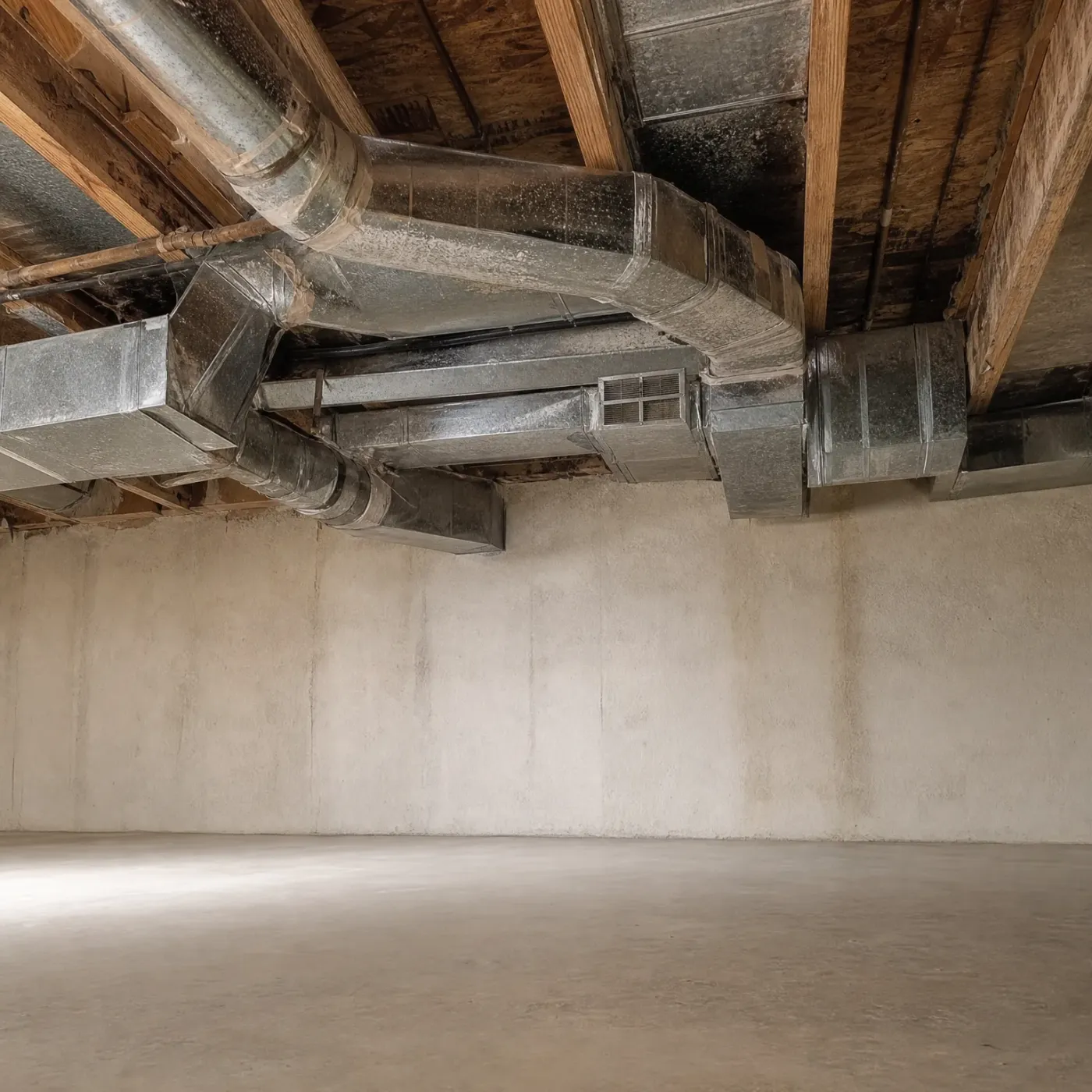
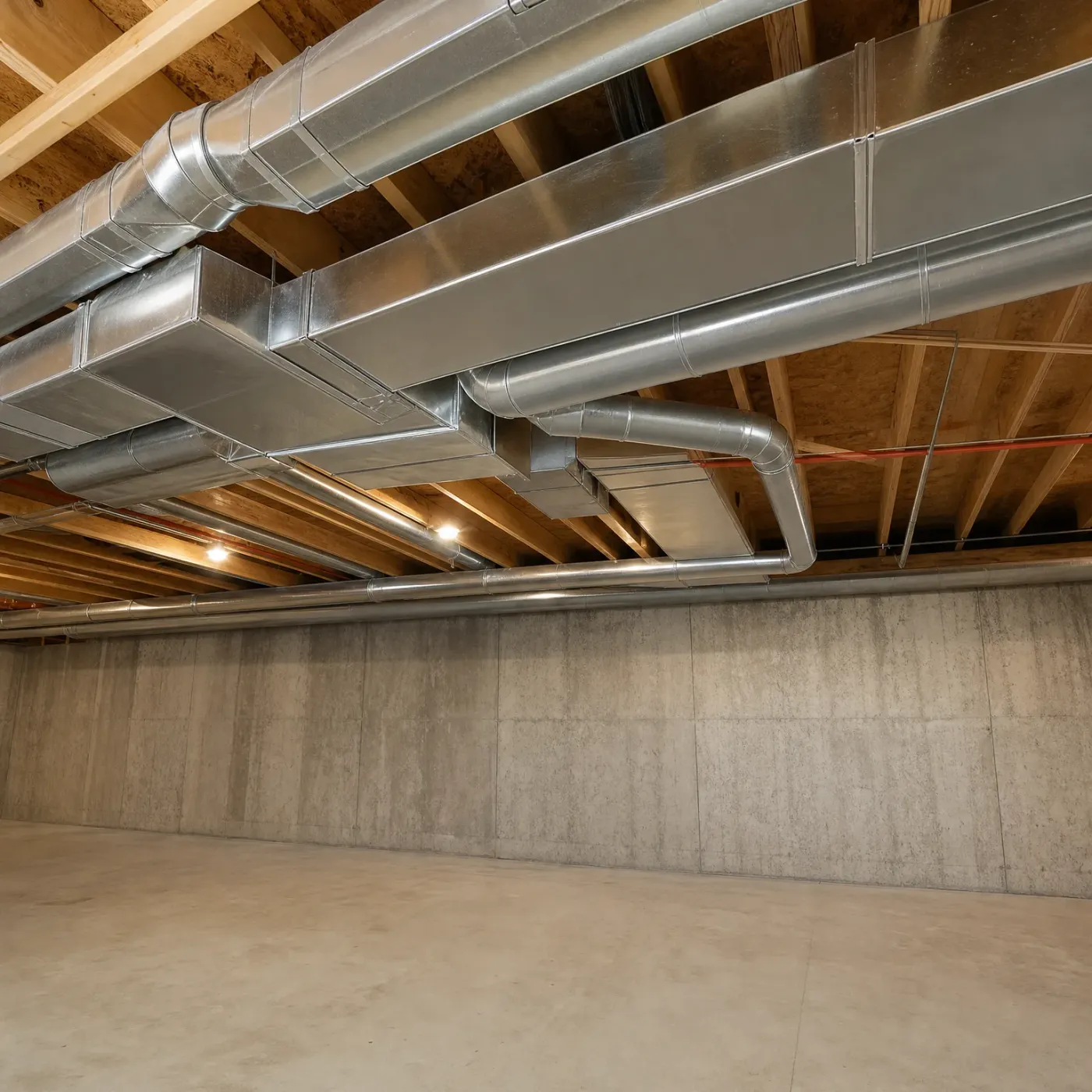

Air moves through the metal trunk line and the round spiral duct without picking up anything along the way. The furnace sits dry against the foundation wall, drain line clear, nothing sitting in the runs to breed mold.

Here the flex duct and the small pipes running along the joists are feeding whatever's growing inside the metal above them. Every time air pushes out through that one vent grille, it carries the smell with it.
Walk through your house with the AC running and check each room. The smell is usually stronger in whatever room sits closest to the air handler, and weaker in rooms at the far end of the duct run. You might notice it more in a bedroom that stays shut most of the day, or in a hallway closet with a return vent. Look at the grille itself. A gray or black film on the slats is mold growing on the dust the air carries past it, not just dust sitting there. Left alone, that mold keeps feeding on the moisture in the ducts and the house keeps breathing it in, which matters more if anyone in the house has asthma or allergies.

You could pull the vent covers off and wipe down what you can reach, then run the AC with the windows open for a few hours hoping the smell airs out. It usually comes back within a day or two because the mold is further back in the duct run than a rag can reach. You'd also still need to find out whether a drain line or the coil itself is feeding it, which means crawling under the house or into the attic to look.
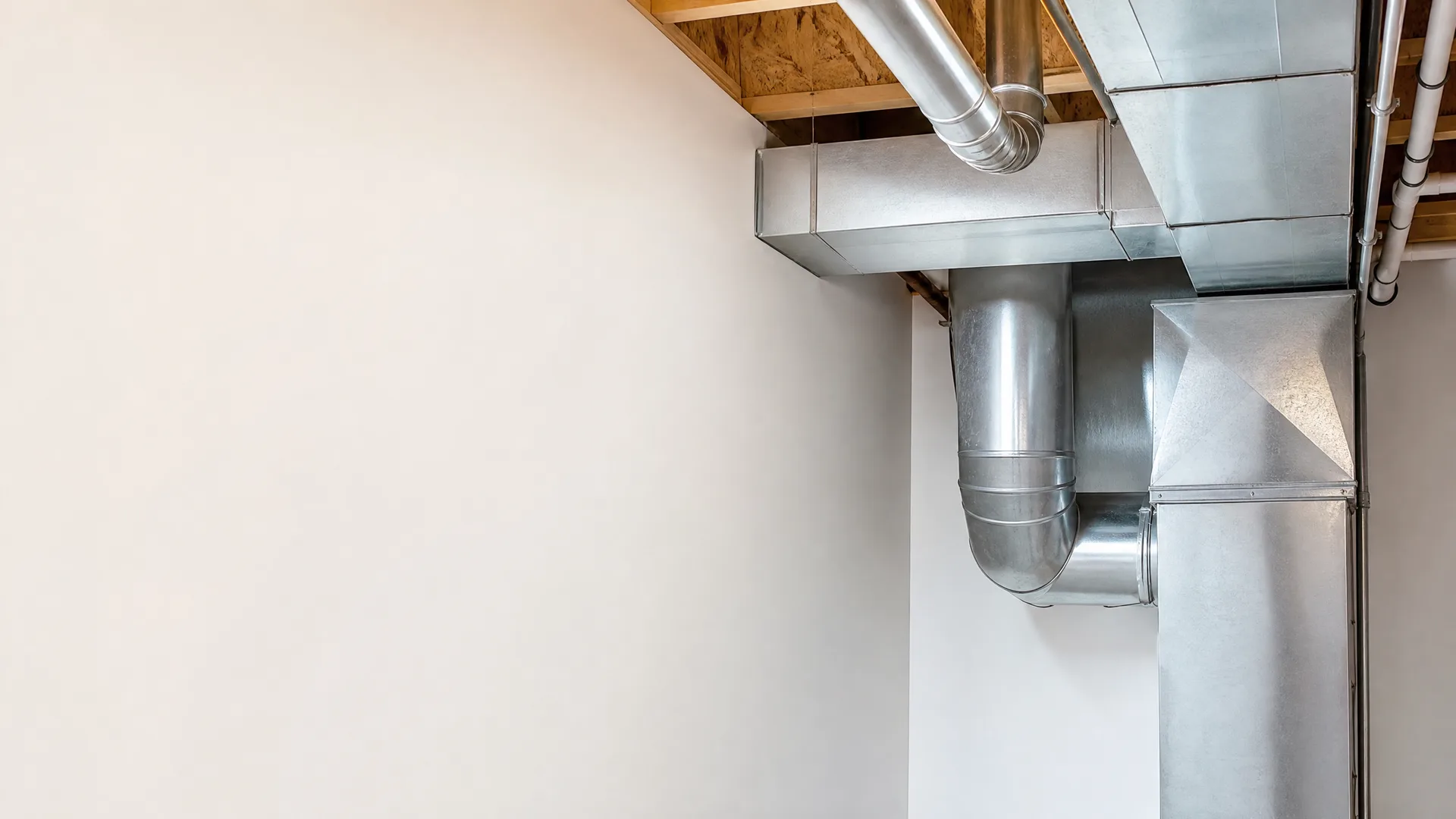
Instead of calling around Mobile County asking which companies even do duct cleaning, explaining the smell over and over, and sorting through quotes that don't tell you much, you answer a few questions once and get matched with a contractor who handles this kind of job. They reach out to you directly to look at your ducts and tell you what's actually sitting in the runs.
At 17.82 cents per kilowatt-hour, running the AC longer than it needs to costs you. Mold-clogged ducts restrict airflow, so the system works harder and runs longer to cool the house. Getting the ducts clear lets the air move the way it's supposed to, without the extra runtime.
EIA-861 2025
A musty smell from your vents in Mobile County means moisture sitting somewhere in the duct run, usually at the coil or the drain line, and it keeps coming back until that moisture and the mold it grew gets cleaned out. Wiping down vent covers or running the AC with the windows open might cut the smell for a day, but it comes back because the source is further back in the ducts than you can reach. Getting there on your own means finding a contractor who does duct cleaning, calling around to see who's available, explaining what you're smelling and where, and sorting through quotes to figure out who's worth hiring. You already know what's wrong and roughly where it's coming from. What's left is getting someone out to clean the ducts and check the drain line and coil so the smell doesn't just come back in a month. That part doesn't have to sit on your evening list along with everything else.
Skip searching for a duct system pro and answer a few questions instead.