
Sealed ducts, steady air
Here the metal ducts and flex runs sit tight at every joint, so the air your system pulls and pushes stays inside them. Dust stays down because the duct run isn't pulling in basement air along the way.
You've wiped down the same shelf twice this week and the floor still shows footprints by evening. It's not just your imagination, and it's not a dirty house. In Madison County, the air handling itself is working against you, and the dust is a sign of what the duct system is doing every time it runs.
Summers here run long and muggy, which means the AC cycles on and off for months at a time, and every cycle pushes air through the ductwork and out the vents into every room. If the filter is the wrong size, loose-fitting, or overdue for a change, it lets dust pass through instead of catching it. Leaky duct joints make it worse by pulling in dust from the attic or crawlspace and blowing it right into the house. Electric heat in the winter doesn't reduce this, since the same ducts and blower are still moving the same air. A cleaning clears out what's built up inside the ducts themselves, which is often the real source.

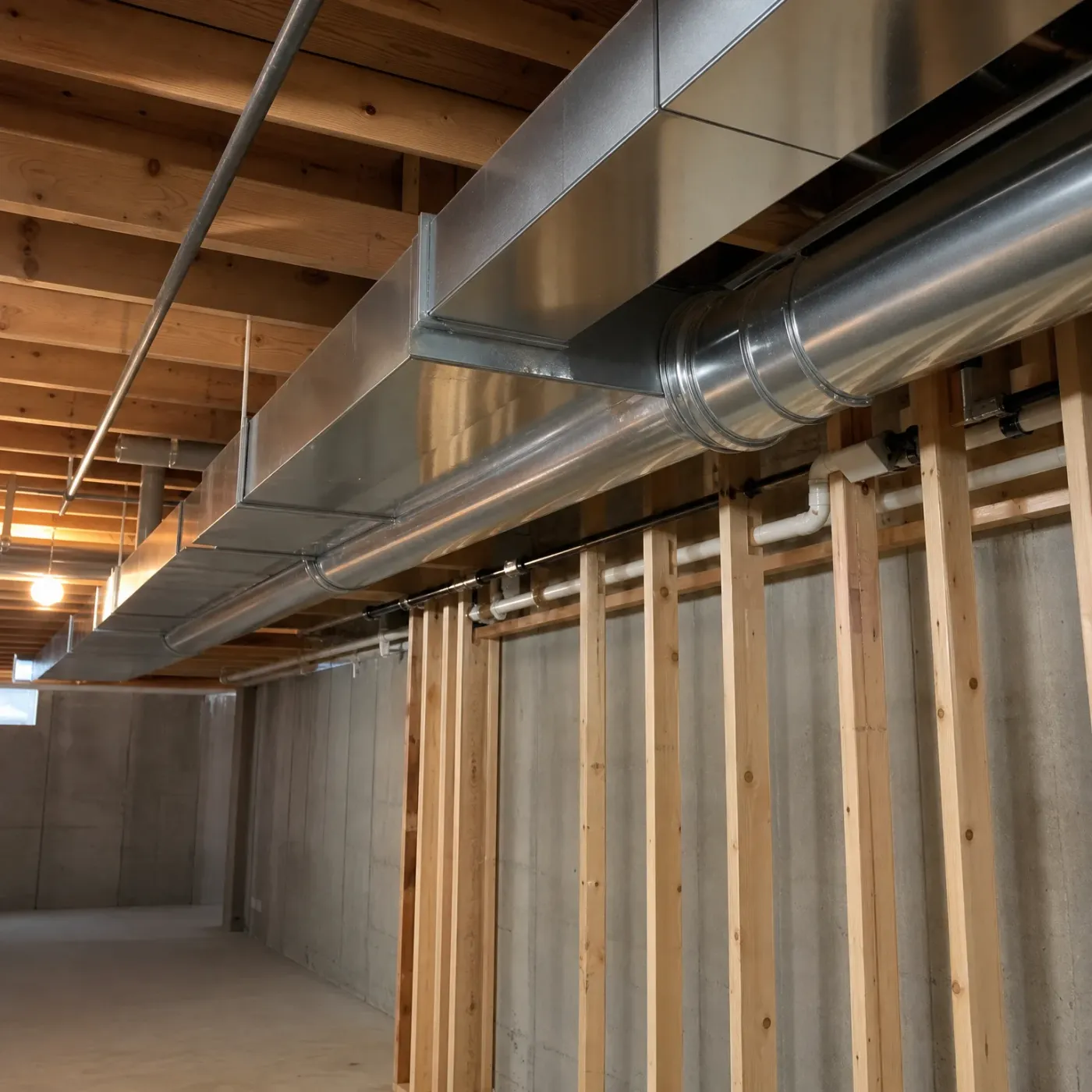
Here the metal ducts and flex runs sit tight at every joint, so the air your system pulls and pushes stays inside them. Dust stays down because the duct run isn't pulling in basement air along the way.

A duct like this one, running loose over bare concrete and open joists, can open small gaps at the seams. Every time the blower kicks on, it draws basement air through those gaps and spreads it through the house as dust.




A supply or return duct that has come loose at a joint doesn't just lose air, it trades it. Air moves from high pressure to low pressure, so a gap in a return line pulls in whatever is sitting around it, attic insulation fibers, crawlspace dirt, the fine grit that collects behind drywall. That air goes straight through the blower and out through your vents. You can run the system for years without seeing the gap itself, because it's usually behind a wall or above a ceiling. What you see instead is the dust it carries showing up on your furniture and floors within hours of a cleaning.
Your filter is built to catch what passes through the return grille, not what enters downstream of it. Once air is pulled in through a gap in the duct itself, it's already past the filter and on its way to the rooms in your house. A tighter filter won't fix that, and neither will changing it more often. The air handler and coil inside the unit can pick up some of this dust too, which is one reason a system pulling unfiltered air starts working harder over time. Sealing the duct run is what stops the dust at its source.


A duct system only works if the air moving through it goes where it's supposed to. Every return vent in your house is pulling air toward the blower, and if there's a gap near one of those vents, it doesn't just move less air, it pulls in whatever is nearby. Attic insulation, crawlspace dust, debris sitting in a wall cavity. That air skips the filter entirely, because the filter only catches what passes through it on the way in. Once that dust is in the duct system, the blower doesn't move it once. It cycles the same air through your house hundreds of times a day, so whatever came in through a gap gets delivered to every room, over and over. Flex duct that sags between the joists makes this worse. Dust settles in the low spot, then gets kicked loose each time the system starts up. None of this shows up as a leak you can see. It shows up as a shelf that needs wiping twice in one week.


The pro who gets in touch is licensed in Alabama and works in Madison County.
Describe your ductwork job once, to one pro.
Asking costs nothing, and the choice to hire stays yours.

This is what a duct run looks like fresh, every joint still sealed tight against the joists. Air moves through the metal and flex pipe without picking up anything from the basement around it. A system built like this keeps the dust it started with, not the dust sitting under the floor.

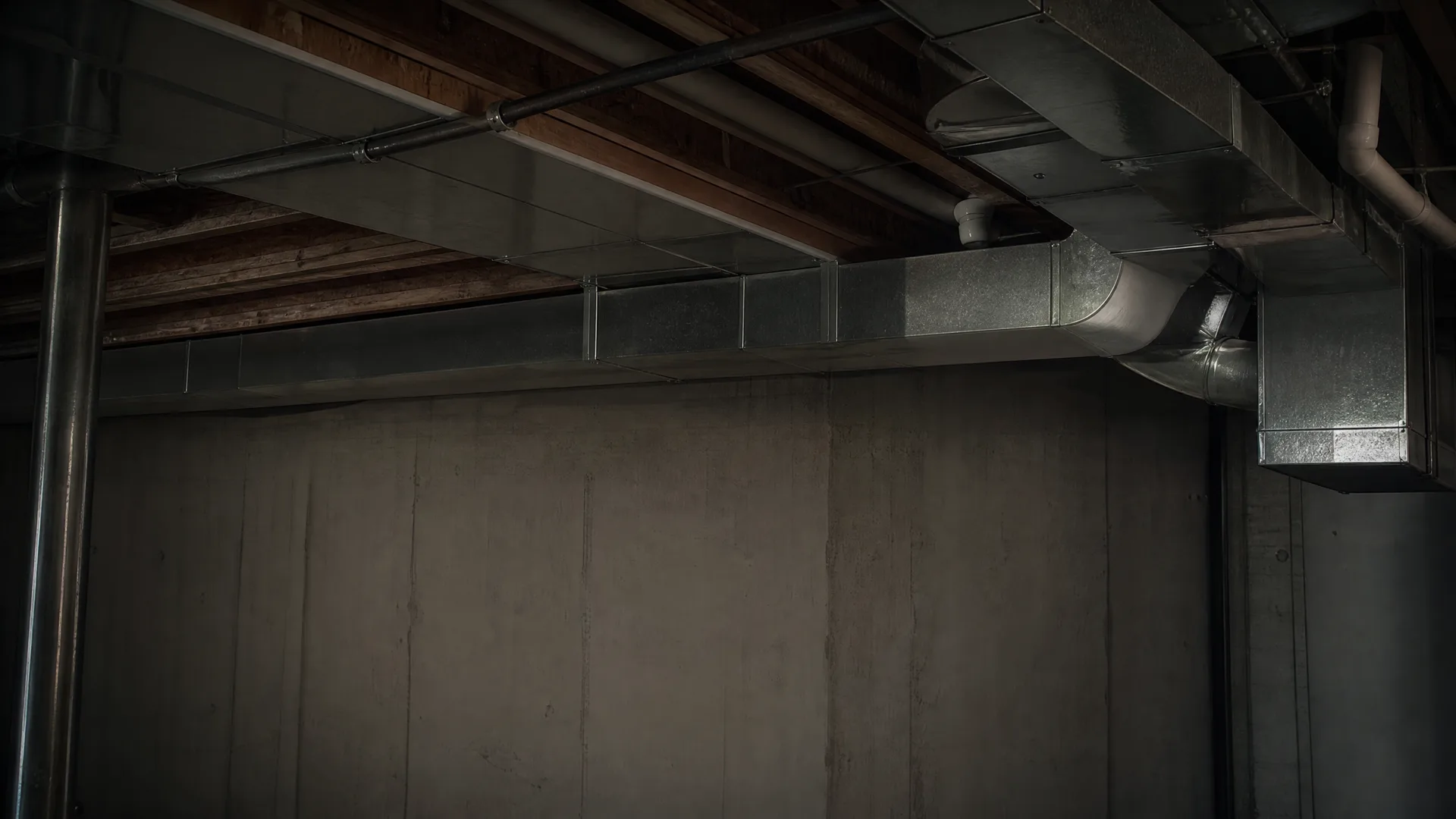
This is the same kind of run after years of pulling in air it was never supposed to touch. The dark coating on the metal is dust and grime that built up pass after pass through the blower. Once it looks like this, cleaning the vents won't touch what's layered inside the ducts themselves.
At 12.48 cents a kilowatt-hour, running your blower longer than it needs to doesn't hit your bill hard. That's worth knowing because a dusty duct run tempts people to run the fan less to save money. Here, you can run it as much as clearing the air takes.
EIA-861 2025
Dust that comes back a day after you clean is riding on the air your system moves through the house hundreds of times a day.
A duct run that's sealed tight stops feeding it, so what you wipe away stays away, and your shelves hold a clean day longer than they do now.
Half the homes here were built by 1992
Half the houses in Madison County were built in 1992 or earlier, so half the duct systems in this area have had three decades of joints to work loose.
Heat runs October through April
October through April, your furnace runs about seven months a year, and every one of those months pushes air through whatever gaps have opened in the ducts.
Cooling runs May through September
May through September, cooling runs about five months a year, and that's five more months of the blower pulling dust through those same gaps.
ACS 2020-2024 · NOAA nClimDiv 1991-2020
The dust on your shelf is coming from your duct run, not from anything you've been missing with a cloth. Loose joints pull in attic insulation and crawlspace dust, and the blower spreads it through every room, over and over, all day. Sealing those joints and cleaning what's already inside the run is what stops it. There's no other fix that reaches the actual source.
Madison County has a lot of duct systems with decades of joints working loose, and a contractor who works on them here all season has seen this exact pattern more times than you'd guess, the gap near a return, the fiber that's been circulating for months. That's who shows up when you put in a request through this page, someone local, licensed to do the work, and already familiar with what tends to fail in homes around here. You're not handing your number to a handful of companies and fielding calls all afternoon. It goes to one contractor, who already knows what they're likely looking at before they open the first vent cover.
None of this means your house is dirty or that you've been doing something wrong. It means the system itself has been working against you every time it runs. Seal the run, clean what's settled inside it, and the air moving through your house stops carrying the problem back to every room it reaches.
A licensed pro who works in Madison County gets your request.