







Why your AC is blowing dust in Alabama

Tune-up, service, or cleaningCentral ACAlabama
Step 1 of 2

What ZIP code is the job in?

Dust coming out of your vents usually means the filter isn't catching what it should, or something past the filter is spreading it. A clogged or torn filter lets dust through instead of stopping it. Leaky ducts pull in dust from the attic or crawlspace and blow it straight into your rooms. Dirty coils and blower components can also shed debris into the airflow. With summers here as muggy as they are, your AC is running long hours, moving a lot of air through that same filter and that same duct run, day after day. The more it runs, the more dust gets pushed through if the filter is wrong for the system or the ducts have gaps. This is usually not dangerous on its own, but it means the system is moving air it shouldn't be, and it's worth having someone check the filter fit, the duct connections, and the coil before it gets worse.

An outdoor air conditioner condenser unit on a concrete pad beside a house with light horizontal siding, with a small electrical disconnect box on the wall, mulch and shrubs at left, and a plain white wall and concrete slab at right.

What a torn filter misses

A filter with a hole or a tear stops looking like it's doing anything. Air finds the path with the least resistance, so it pushes through the gap instead of the mesh around it. Every bit of dust in that stream goes straight to your coil and your ducts, then out into your rooms. Checking a filter means more than seeing it's in place. Hold it up to a light. If light comes through evenly, it's still working.

A dark gray outdoor air conditioner condenser unit on a concrete pad beside a house with horizontal siding and a plain light wall, with mulch and grass in the foreground and a conduit and electrical box on the wall.

Why the coil matters too

Dust that gets past the filter sticks to the evaporator coil, since the coil stays wet with condensation while the AC runs. A dirty coil doesn't just block airflow, it gives dust somewhere to collect and later let go of, into the air moving over it. In Alabama's humidity, that coil stays damp for months at a stretch, April through October, which gives dust more chances to stick and more chances to come loose again.

New Filter or a System Check

Change the filter

  • A new filter stops dust again within days if the real source is a gap in the ductwork, not the filter itself.
  • Fixes the symptom you can see without touching whatever is pulling attic or crawlspace dust into the airflow.
  • Costs you nothing but the filter, so it's worth trying first if the dust is new or light.
  • Won't help if the duct seams, a disconnected joint, or the return box itself is the entry point.
  • Leaves the question open of why the last filter failed to catch what it should have.

Have the system checked

  • A contractor can pressure test the ducts and find the seam or joint that's pulling in attic dust.
  • Catches a torn filter, a wrong-size filter, or a return box that's leaking air around its edges instead of through it.
  • Finds other things running the filter down fast, like a coil or blower wheel that's already coated.
  • Answers why the dust is getting worse instead of just buying another week with a new filter.
  • Means you stop guessing at which part is letting dust through and start with what's actually happening in your system.
A smiling bearded man in a dark green hooded jacket and blue t-shirt sits on a couch in a living room with shelves, a potted plant, and a bowl of popcorn on a wooden table.
A smiling man in a green long-sleeved shirt sits on a beige sofa in a living room, with a bowl of popcorn in the foreground, a large potted plant and shelving behind him.
A smiling man in a dark blue T-shirt sits on a couch in a dimly lit living room with a bowl of popcorn and a remote on a wooden table, a lit floor lamp and bookshelves behind him, and windows showing greenery.
A smiling bearded man in a dark green long-sleeved shirt sits on a leather couch in a living room, with a bowl of popcorn and a remote control on a wooden table in the foreground.

Why does my AC blow dust every time it kicks on?

Why does my AC blow dust every time it kicks on?

It's pulling in air from somewhere other than the filter

Dust at the exact moment the system kicks on points to something in the ductwork, not the filter itself. When the blower starts, it pulls air hard through whatever path is easiest. If a duct joint has come loose or a return line runs through the attic with a gap in it, that's the moment it pulls hardest and the dust rides straight in. A clean filter won't stop this, because the dust never passes through it. A contractor can pressure test the ducts and find the gap, or check whether the return is pulling from a space it shouldn't. In a house with ductwork running through an attic, that's usually where the search starts.

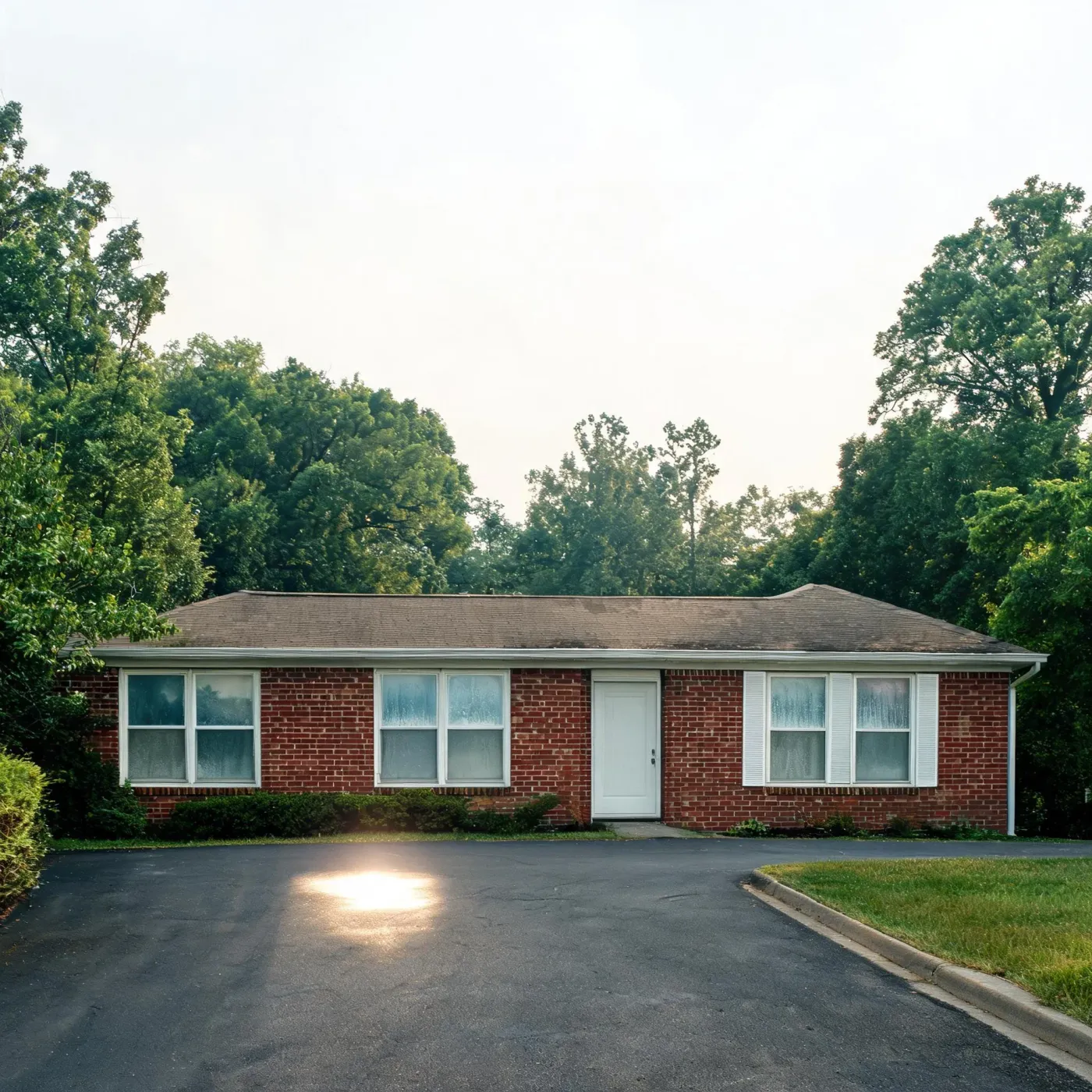
A single-story red brick ranch house with a white door, white-trimmed windows and a shingled hip roof, fronted by a wide asphalt driveway with sunlight glare, surrounded by green deciduous trees under a pale sky.

A dew point of 69°F is what Alabama summers average across June, July and August, according to NOAA climate records. At that level the air stays heavy even with the AC running, and a system has to pull more moisture out of it just to keep the house feeling normal. The harder and longer it runs, the more air it moves through the filter and the ducts, and the more dust it carries along with that air. If there's a gap somewhere, this is the time of year it shows up worst, because the system almost never shuts off long enough to stop pulling air through it. A maintenance visit gets someone checking the filter fit and the duct connections before another muggy stretch pushes more dust through the house. Once you send the request, you're not the one tracking down who can come look at it.

NASA POWER T2MDEW county cells weighted by homes

Stop chasing an air conditioner pro

Fill out one form instead of calling around for an air conditioner tune-up.

It costs nothing to send, and you don't have to hire anyone.

What you'll notice first

A film on the TV stand or the kitchen counter a day or two after you wiped it clean. Dark streaks on the wall above a vent. Dust that seems to collect faster in whichever room sits closest to the return. If you run a rag along the top of a door frame and it comes back gray within a week, that's not normal buildup. That's your system moving dirty air through the house on a loop, every time it cycles, whether it's running three times a day or ten.


What it puts at risk

The same dust riding the airflow settles inside the system too, on the coil and in the blower housing, not just on your furniture. A coil coated in dust doesn't transfer heat the way it should, so the system runs longer to cool the same rooms. In Alabama, with the humidity these months bring and electric heat already pushing bills up in winter, a system working harder than it needs to costs you in both seasons, not just the one you notice the dust in.

An outdoor air conditioning condenser unit on a concrete pad beside a house with light vinyl siding, an electrical disconnect box and conduit on the wall, bare shrubs and mulch to the right, and a concrete walkway in the foreground.
Before you get your air conditioner maintenance
An outdoor air conditioner condenser unit on a concrete pad beside a house with beige horizontal siding and a stone-veneer base, with refrigerant lines running to a gray wall-mounted electrical box, surrounded by dark mulch, a flowering shrub and an evergreen on the left.
After you get your air conditioner maintenance

You keep chasing it

You wipe the counter, change the filter, check the vents, and the dust comes back. You're still the one tracking down which part of the system is letting it through.

Skip calling around

Someone finds the source

A maintenance visit checks the filter fit, the seal around the return, and the ductwork for the gap that's actually pulling dust in.

Skip calling around
A closed dark laptop and a ceramic mug of coffee on a wooden dining table, with wooden chairs, a dark kitchen cabinet with cutting boards and a potted plant, and a leafy plant by a window in the background.

What this does to your house over a summer

Alabama summers run long, and your system is moving air through that house for months straight. Every pass that carries in dust instead of stopping it adds a little more to the coil, the blower wheel, and whatever surface the air lands on next. By August the film on the counter is back the same day you wipe it, and the vent above the couch has a gray streak that wasn't there in May.

It also costs you the evening. Checking the filter, wiping sills, running a flashlight along the duct joints you can reach, that's time you weren't planning to spend. A maintenance visit puts someone in the attic and crawlspace who already knows what a gap in the ductwork or a coil going green looks like, so you're not the one piecing it together room by room, filter change by filter change, hoping the next one is the one that works.

Interior corner with a beige sofa holding a dark green and a light cushion and a textured throw, a potted small-leaved tree beside a white-framed window, and a dark shallow bowl on a wooden coffee table in the foreground.
An outdoor air conditioning condenser unit on a concrete pad beside a house with white horizontal lap siding, with an electrical disconnect box and insulated refrigerant line on the wall and a shrub over mulch to the right.

Running clean

This is what a system doing its job looks like. The pad is clear, the lines run straight to the disconnect, and nothing around the unit hints at a problem. Air moving through here picks up nothing extra on its way to your vents.

An outdoor air conditioner condenser unit on a concrete pad beside a house with light horizontal lap siding, with an electrical disconnect box and conduit on the wall behind it.

Letting dust through

Weathering like this on the cabinet often comes with gaps you can't see from the yard, at a seam or around the lines where they meet the wall. Those gaps pull in attic or crawlspace dust and send it straight into your airflow, no filter in the way.

A woman with dark hair in a bun reclines on a sofa with her eyes closed, wrapped in a cream fleece blanket, a closed blue hardcover book resting in front of her, with a lit lamp and a vase of dried flowers in the background.
A smiling bearded man in a navy sweater sits at a candlelit dinner table with a glass of red wine, a bowl of salad, and plates of food in the foreground.

Power costs 16.09 cents per kilowatt-hour statewide

At 16.09 cents a kilowatt-hour, every extra hour your AC runs to push air through a dirty coil or a clogged filter shows up on the bill. A system working harder to move the same air costs you more for the same cool house.

EIA-861 2025 statewide residential average

A gray outdoor air conditioner condenser unit on a concrete pad beside a house with white horizontal siding and a brick foundation, with a wall-mounted disconnect box and conduit, and a green shrub with mulch at left.
A clean unit like this moves air freely, so the dust it picks up stops at the filter where it belongs.
An outdoor air conditioning condenser unit on a concrete pad beside a house with white horizontal vinyl siding, with a gray electrical disconnect box and refrigerant lines on the wall behind it.
A grille caked like this is pulling dirty air through the whole system before that air ever reaches a filter.

Where the dust is coming from

  • Dust that keeps coming back means a filter problem, a duct leak, or a coil doing its job badly, and the fix depends on which one it is.
  • A visit that checks the filter fit, the duct seals, and the coil tells you which of the three is actually letting dust through.
  • Left alone, the dust keeps landing on the coil and the blower wheel all summer, and your AC spends more hours running to move the same air.
  • Finding and calling around to different contractors, then explaining the same dust problem to each one, is the part that ends once you send the form.
  • You stop comparing quotes and sorting through who can actually look at a duct leak versus a torn filter.

Dust that keeps showing up after you've wiped it away is coming from one of three places. The filter isn't catching it because it's torn or doesn't fit right. The ducts are pulling it in from the attic or crawlspace before the air ever reaches a filter. Or the coil is already coated enough that it's adding to what passes through instead of stopping it. Looking at the counter or the vent won't tell you which one it is. Only checking the filter fit, the duct seals, and the coil will.

Alabama summers keep your AC running for months, and every one of those months is more time for dust to land on the coil and the blower wheel if the real source never gets found. A system working through that buildup runs longer to move the same air, and that shows up on the power bill before it shows up anywhere else.

The part of this that actually changes once you send the form isn't the dust itself. It's not searching for who handles duct leaks versus who handles a coil, not calling two or three contractors and explaining the same problem each time, not sorting through quotes to figure out who's actually equipped to check all three. That legwork is gone. What's left is a visit that looks at the filter, the ducts, and the coil, and tells you which one has been letting the dust through.

A beige upholstered armchair with a dark green pillow sits beside a woven basket holding a cream fringed throw, with a potted leafy plant in a second basket near a window.
Sunlit living room corner with a beige upholstered sofa and striped linen cushion, a potted small-leaved tree in a woven basket beside sheer curtains, a framed artwork on the wall, and a jute rug on a wood floor.
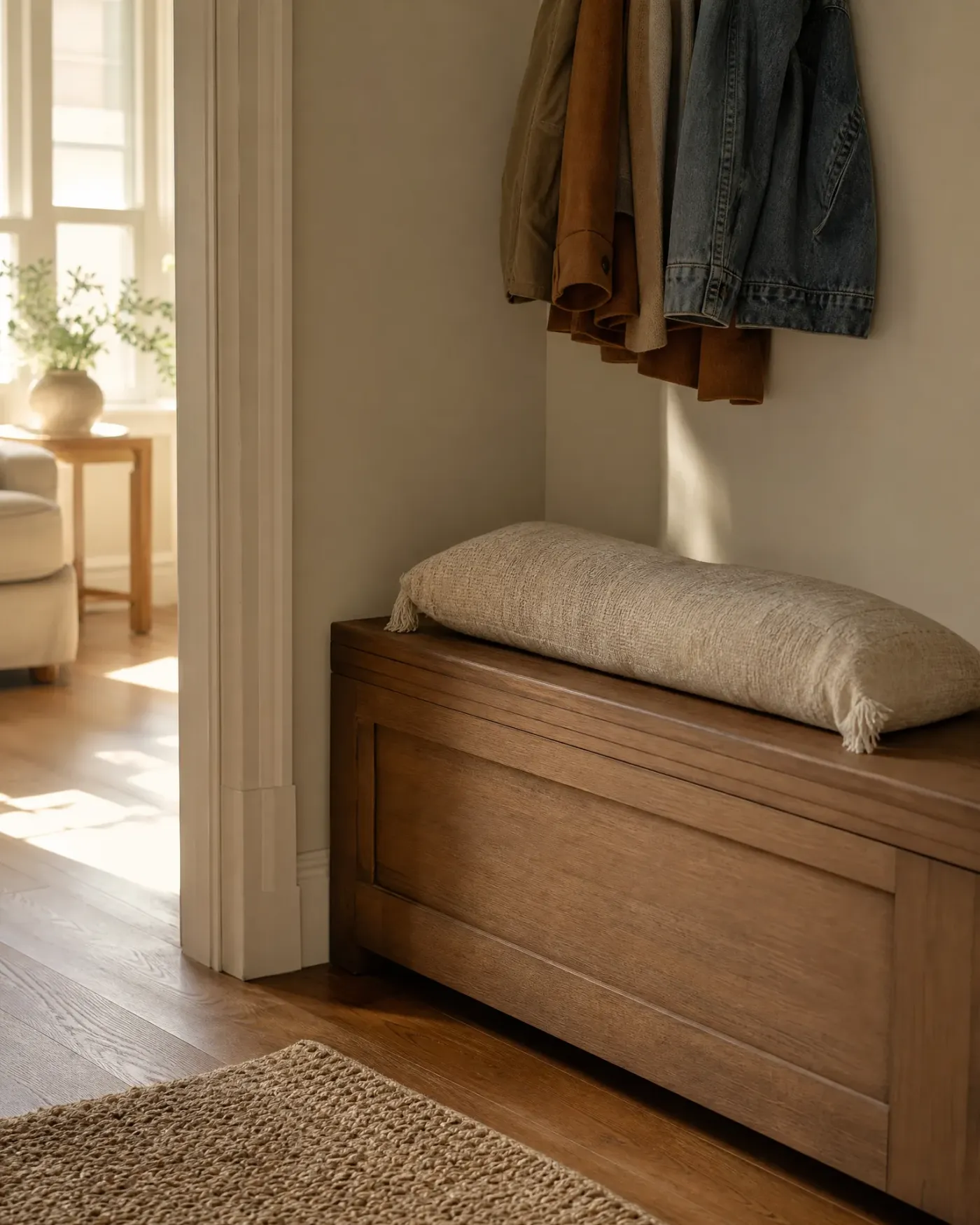
A wooden storage bench with a long linen bolster cushion sits against a pale wall beneath hanging jackets, beside a doorway showing a plant and chair in sunlight, with a woven rug on the wood floor.
A dark wood sideboard holding a shallow wooden bowl and a pale ceramic vase with leafy branches, against a beige wall with a framed artwork and a window showing a sunset sky and trees.
A lit ceramic table lamp with a tapered fabric shade sits on a wooden side table beside a small wooden bowl, with a woven basket on the shelf below, next to a gray upholstered sofa and a dark-framed window at dusk.

Finding a pro stops being your job

One form instead of hunting for a pro who does air conditioner tune-ups.

Fill out one form

There's no charge for the request.