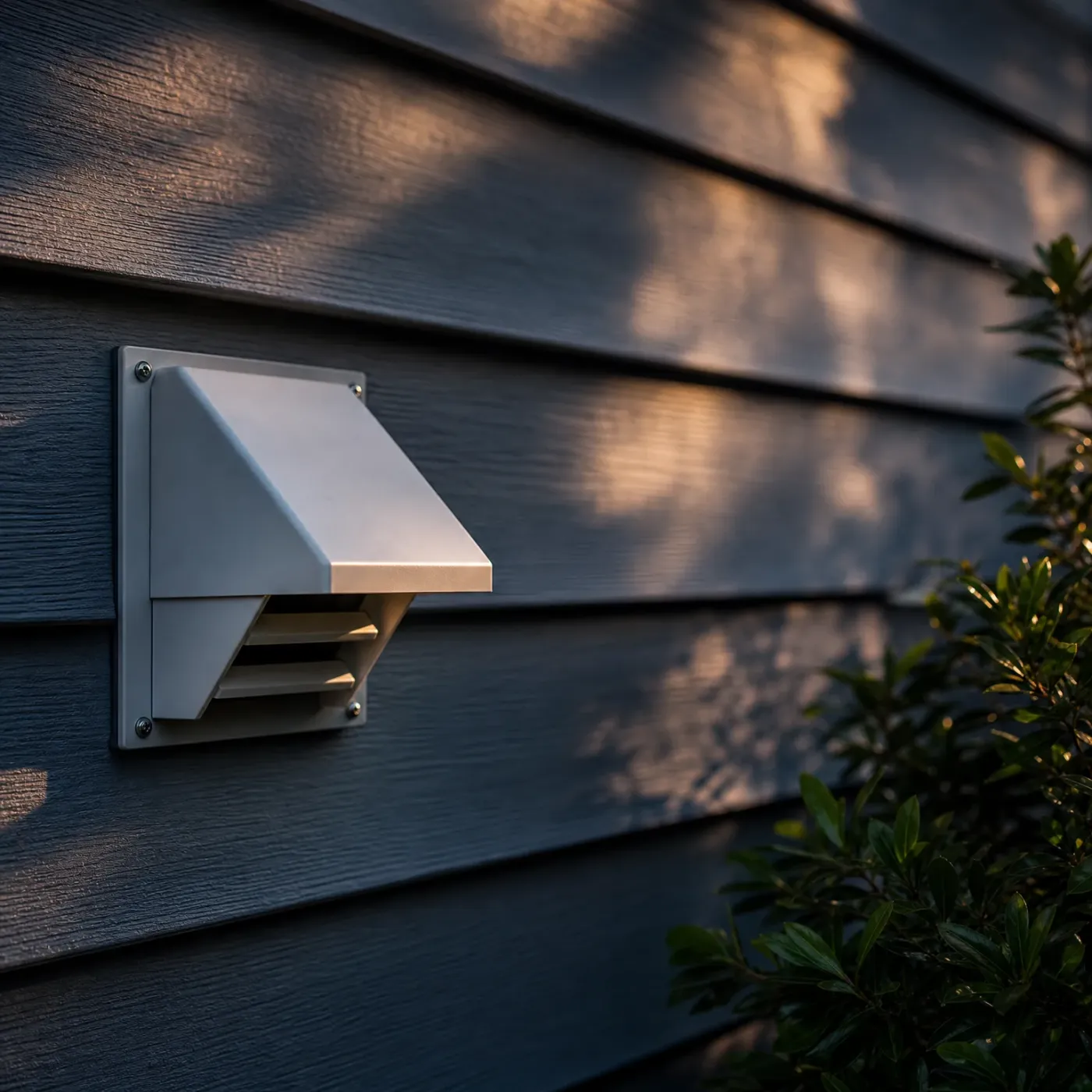
A white hooded louvered vent cover mounted on dark gray horizontal lap siding, with dappled late-day light and shadows across the wall and a leafy shrub at the right edge.

Send one request and you're done looking

Birds nesting in a dryer vent in Alabama

Birds build fast, and a dryer vent hood is a easy spot for one to pick. Once they're in, lint and feathers and twigs can block the vent enough to keep your dryer from venting outside at all. This page gets into what that blockage does to your dryer and your home, and what clearing it out involves. Send the form and you're done hunting for someone who'll deal with it.

Hand it off

A bird builds a nest in a dryer vent because the vent hood looks like a hollow in a tree, a dark, sheltered opening a few inches wide with warm air pushing out of it. Spring is when it usually happens, while birds are nesting, and the flap on the hood that's supposed to keep things out can get stuck open or knocked loose, which gives them a way in. Once the nest is built, the vent is partly or fully blocked from the outside. Your dryer still runs, but the air it pushes out has nowhere to go, so it backs up into the duct. That means longer drying times, a dryer that runs hotter than it should, and lint sitting in the duct with nowhere to vent, which is a fire risk. In Alabama's humid summers, that trapped moist air sitting in the duct also gives mold something to grow on. The vent needs to be cleared and the nest removed before the dryer is run again.

A dusty white plastic dryer vent hood with lint-clogged louvers mounted on beige horizontal vinyl siding above a concrete foundation wall and a bed of rounded gray rocks.
Before you get your dryer vent cleaning
A white plastic louvered dryer vent hood mounted on beige horizontal lap siding above a concrete foundation wall bordered by gravel.
After you get your dryer vent cleaning

The hood on your dryer vent has a flapper that's supposed to keep it shut when the dryer isn't running. It's spring-loaded, not locked, and a bird working at it long enough can force it open and start building a few inches inside, sometimes right at the opening. The nest is twigs and grass packed together with lint the dryer's been pushing out all along. That mix doesn't need much to catch. Once it's in there, hot wet air from your dryer has nowhere to go but back up the duct, so the dryer runs longer to get clothes dry and pushes damp air back toward itself instead of outside. Clearing it out means going past the hood, down the full run of duct, because lint settles further in than the nest ever reaches. The fix that keeps a bird from doing this again next spring is a cap or guard sized so there's no opening left to build in.

How a Nest Blocks Your Vent

  • A nest usually sits right at the hood or a few feet in, built from twigs, grass and dryer lint packed tight by the bird.
  • The flapper on the vent hood is spring-loaded to keep air moving out and pests from getting in, but a determined bird can force it open to build.
  • Lint is just as flammable packed inside a nest as it is loose in the duct, and the dried grass and twigs burn just as easily.
  • A blocked vent forces hot, damp air back through the duct toward the dryer instead of outside, which runs the drying cycle longer.
  • Cleaning out a nest means clearing the full run of duct, not just the hood, since lint and debris settle past where the nest sits.
  • A cap or guard installed after cleaning keeps the opening too narrow for a bird to get back in come next spring.
A smiling man in a dark blue T-shirt sits on a light gray sofa in a living room with a wooden shelf and window behind him, with a laptop edge visible in the foreground.
A bearded man in a plaid flannel shirt sits indoors looking out a window at snow-covered trees, with a steaming mug on the sill and wooden kitchen shelves behind him.

Finding a pro stops being your job

Explain the job once and skip repeating it on every call.

There's no charge for the request.

What a blocked vent does

A dryer pushes hot, damp air out through the vent with every load. When a nest blocks that path, the air has nowhere to go, so it backs up into the duct and the dryer itself. Lint sitting in a warm, blocked vent is a fire risk, and it's the main reason house fires get traced back to dryers. Short of that, a blocked vent means loads that take two or three times longer to dry, a dryer that runs hotter than it should, and a laundry room that stays muggy long after the cycle ends, which in an Alabama summer is already working against you.

Why it keeps happening

A vent hood that's been cleared once isn't closed off from birds the next spring. The flapper still opens to push air out, and a nest built outside the hood gets pulled in the moment it blocks the flap from sealing shut. If a bird nested there before, the opening worked for one, and the smell of old lint can draw another. A dryer vent that's cleaned on a schedule gets caught and cleared before a nest has time to pack in tight, instead of being found after a load won't dry or the room fills with heat.

Power costs 16.09 cents per kilowatt-hour statewide

At 16.09 cents a kilowatt-hour, a dryer forcing hot air against a blocked vent runs longer to dry the same load, and that extra time shows up on your bill. Clearing the nest gets the vent moving air the way it should again.

EIA-861 2025 statewide residential average

A Clear Vent, A Faster Fix

  • A bird in the vent blocks airflow, and that blockage is the whole problem, from slow drying to the fire risk sitting in warm lint.
  • Clearing the nest is what gets your dryer venting outside again the way it was built to do.
  • Checking the vent hood yourself only tells you there's a problem, not whether the duct behind it is still packed with lint and feathers.
  • Instead of calling around and explaining the same bird story to every contractor who picks up, you send one form and the search is done.
  • A cleaning crew knows how far into the duct a nest can reach and what tools get it out without damaging the vent.
  • Once the vent is clear, your dryer goes back to pushing air straight outside, and your power bill stops carrying the extra runtime.

A bird picked your vent hood because it looked like a safe, dark hollow, and now the nest it built is sitting between your dryer and the outside air. That's the whole problem. Warm, damp air has nowhere to go, so it backs up into the duct, your loads take longer to dry, and the lint packed in with the twigs sits there as a fire risk. None of that clears on its own. Looking at the hood from outside tells you a bird got in, but it won't tell you how far the nest reaches into the duct or what's still packed behind it. That's the part that needs a cleaning crew, not a guess.

Getting there is usually the slower part. Searching for someone who handles bird nests and not just lint, calling a few numbers, telling the same story about the vent hood to each one, then lining up their quotes against each other takes real time, and the nest sits there the whole time you're doing it. Sending one form instead means you're done with that search, and the next call you get is from someone who already knows what you're dealing with.

Once the nest and the lint behind it are out, the vent goes back to doing what it was built for, pushing air straight outside with nothing in the way. Your dryer stops working against a blockage, and the extra minutes it was adding to every load, and to your power bill, go with it.

A single-story stone-clad house with low-voltage path lights along a gravel bed and lawn at dusk, with a tree line and orange sky on the horizon.

Dryer Vent Cleaning

Let someone else find the pro

Duct and vent cleaningAlabama
Step 1 of 3

What kind of equipment?

  • A ceramic vase holding leafy green branches and a shallow wooden bowl sit on a wooden window ledge beside a sunlit window, with a cream upholstered chair and knit throw in the foreground.
    • A local pro who cleans dryer vents gets in touch with you.
    • Your dryer vent cleaning request goes to a local pro who does this work.
  • Sunlit living room corner with a beige upholstered sofa, a round wooden side table holding a ceramic vase of olive branches, linen curtains at a window, a floor vent in the baseboard, and a woven jute rug on hardwood flooring.
    • After you send the request, you're done searching.
    • Send the form and the dryer vent cleaning stops sitting on your list.
  • A wooden side table with a single drawer holds a shallow carved wood bowl and a white ceramic vase of green eucalyptus stems, beside a window and an upholstered chair draped with a cream knit throw.
    • One form replaces the calls you'd make to find a dryer vent pro.
    • Skip calling around for someone who cleans dryer vents.
  • Corner of a house with horizontal siding, a white-framed window and stone veneer base, beside a covered entry with wooden steps, a potted plant, mulched beds of green shrubs and a flagstone path.
    • Your request stays with one local pro.
    • Your dryer vent cleaning request goes to one local pro.








