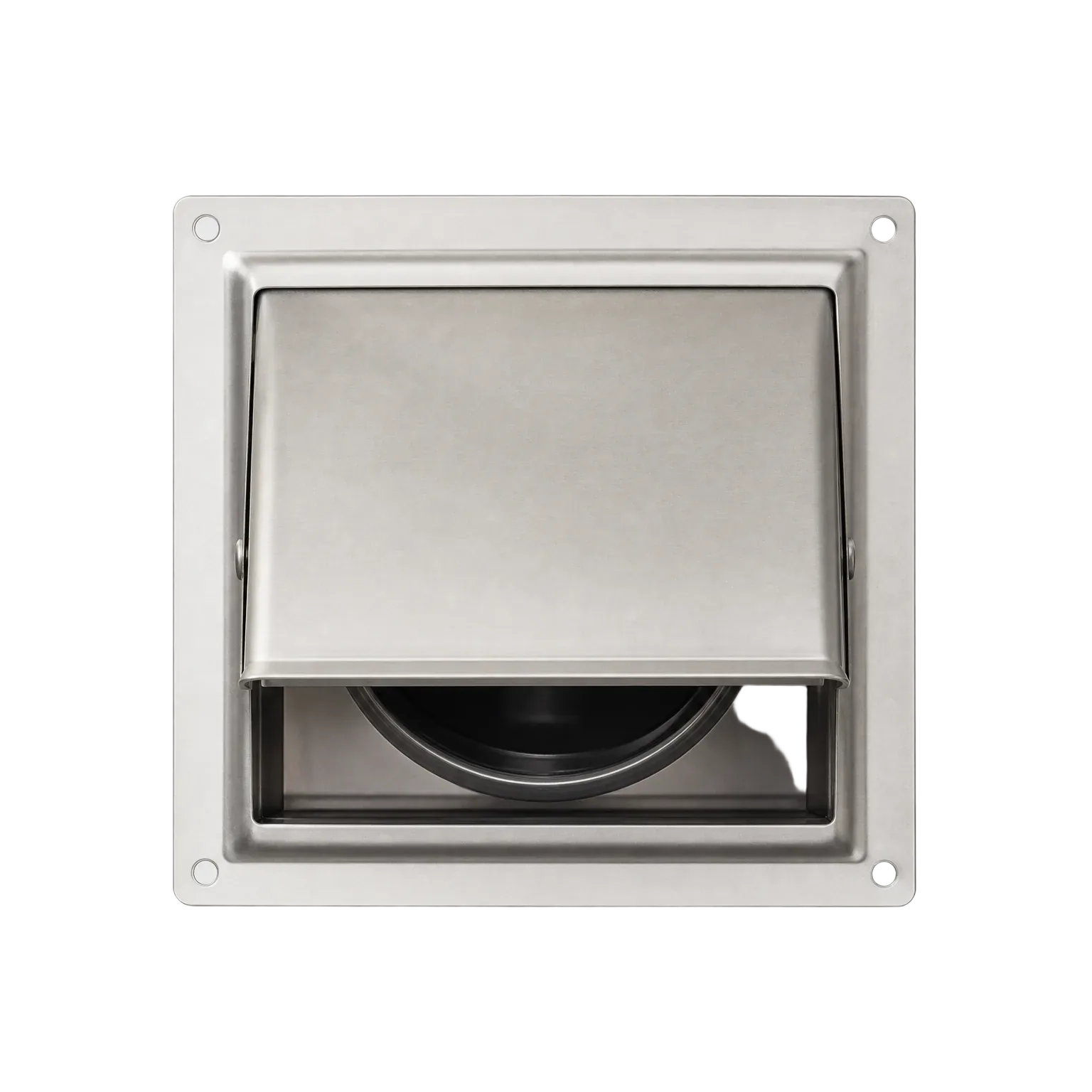

Vent clear
Air moves straight out through the hood with every load. The flap opens when the dryer starts and closes again when it stops. A load of towels finishes in one cycle, and the lint stays where it belongs, in the trap you clean each time.
A dryer that runs two or three cycles to finish a load is usually not drying, it's pushing damp air through a vent that's clogged with lint. Lint builds up along the length of the duct, and once it narrows the path, the moist air pulled from your clothes has nowhere to go. The dryer keeps heating and tumbling, but the air inside barely moves, so clothes come out warm and still wet. Alabama summers make this worse. The air coming in is already heavy with moisture, so a vent that's even partly blocked struggles to push it back out. Every extra cycle it takes is heat run twice for one load, and since most homes here heat with electric, that cost shows up fast. A clear vent lets the dryer do its job in one cycle instead of two or three. If yours has been running long after the clothes feel done, the vent is the first place to look.


A dryer doesn't just blow heat and hope. The element cycles on and off, and a thermostat reads the drum to decide when to fire again. The air it heats has to leave somewhere, out through the duct and through a flap at the wall or roof cap that only opens under pressure. When lint narrows that path, the dryer is pushing against a flap that doesn't want to move. Most machines don't go by a timer to decide a load is done. A sensor reads moisture in the drum, and if airflow is slow, that sensor keeps reading damp clothes that are close to finished. A crushed or overly long duct run makes this worse, stretching one cycle into two or three. In Alabama, with summers this muggy, the air going into that duct is already carrying moisture before the clothes even start. Every extra minute the element runs to chase a dry reading costs the same as any other minute, and with electric heat and power rates here, that adds up on a bill that's already not cheap.


A long dry time costs more here than it would somewhere milder. Alabama summers already load the air with moisture, so a dryer fighting a clogged vent is pushing damp clothes through damp air twice over, and the extra cycle shows up on a power bill that's already high since most homes here run on electric heat. A vent that's clear moves that air out fast. One that's packed with lint holds it in the drum, and the dryer just keeps heating to compensate. You could spend an afternoon calling around town, explaining the same problem to every contractor who picks up, and still be sorting through quotes that don't match. Instead you can put in what's going on once, and a contractor who handles vent cleaning in your area takes it from there. Your dryer's been telling you something every extra cycle. Worth finding out what it is before another summer of runs like this one.
Air moves straight out through the hood with every load. The flap opens when the dryer starts and closes again when it stops. A load of towels finishes in one cycle, and the lint stays where it belongs, in the trap you clean each time.

The screen is caked with lint and the flap barely opens. Damp air backs up into the duct instead of venting outside, so the dryer keeps heating a load that's already run its cycle. You feel it when you pull clothes out still warm and still damp.
At 16.09 cents a kilowatt-hour, every extra cycle a clogged vent forces costs you more than it would most places. A load that should finish in 40 minutes and instead runs through twice burns electricity you're paying premium rates for, load after load.
EIA-861 2025 statewide residential average
A dryer that needs two or three tries to finish one load is telling you something about the vent, not the machine. The heating element and drum are doing their job. What they're working against is a duct packed with lint, holding damp air inside instead of letting it out through the flap. In Alabama, where summer air is already heavy with moisture, that trapped air has nowhere easy to go, so the dryer runs longer to get clothes to the same dry reading it would otherwise reach in one cycle. Every extra cycle adds up at 16.09 cents a kilowatt-hour, and most homes here heat with electricity, so the cost of a slow dryer shows up fast on the bill. None of this gets fixed by raising the heat setting or running the dryer longer. It gets fixed by clearing the duct so air can move the way it's supposed to, straight out through the hood, with the flap opening and closing on its own with each load. Once that path is clear, a load of towels finishes once, the way it should. If your dryer has been running long past what a normal cycle takes, the vent is the place to look, not the machine itself. The next step is getting someone who can look at the vent itself and tell you what it will take to clear it.




A pro who works on dryer vents
Answer a few questions instead of calling shop after shop.
