Skip searching for someone who cleans dryer vents in Madison County.
A clogged dryer vent runs hotter and slower, and it runs that way every time you dry a load. Lint builds up in the duct, airflow drops, and the dryer works harder to push hot moist air through a narrower path. Here in Huntsville, where summers already run long and sticky, a dryer fighting a blocked vent adds heat and moisture to a house that's already working to shed both.
You already know the dryer's been taking longer to finish a load, or the top of it runs warm to the touch. What you don't know is whether that's just lint in the trap or lint packed into the vent line itself, and how far back it goes. That's not something you can see by pulling the trap and looking.
Finding someone who clears dryer vents usually means a run of phone calls. You look up a few companies, ask if this is something they even handle, explain the dryer's symptoms to whoever answers, wait on a quote, then explain the same thing again to the next one. Some do vent cleaning as a sideline to duct work and don't have the tools made for it. Some won't come out for a single vent line at all.
This page skips that part. Request the work here and it goes to one contractor in Madison County who clears dryer vents regularly, in homes running the same electric dryers and the same kind of vent runs as yours. Someone who does this work through Huntsville's long humid summers and its cold winters knows what a vent looks like after a year of heavy use versus three, and what kind of blockage shows up in homes like yours. You explain the problem once, to the person who's actually going to look at the vent.
Below is what decides how often that vent needs clearing out, and what changes the answer for your house.
How often should I clean my dryer vent in Huntsville, AL?
Your dryer takes longer than it used to, or the top of it feels warm to the touch, and you're wondering whether that's just normal or a sign you're overdue for a cleaning. Most homeowners don't think about the vent until something seems off. There's a straightforward answer for how often this needs doing, and it depends partly on how much you dry and partly on conditions specific to Madison County.
Once a year, more often if you run the dryer most days
Once a year is the standard for most households. Lint builds up gradually with every load, and a year is usually how long it takes to narrow the duct enough to slow the dryer down and push its exhaust temperature up. If you're drying loads daily, for a family of five or more, or running towels and bedding often, every six to eight months fits better. Humidity through a Huntsville summer adds to the load too, since damp air moving through a partly clogged vent has to work harder to clear the duct than dry air does. A vent that goes uncleaned for two or three years is doing real work against itself the entire time, not just at the end.
What lint does inside the duct
Lint doesn't just sit at the vent opening. It catches on every seam, every joint, every bend in the duct, and builds there load after load. A duct with turns traps more than a straight run, since lint settles anywhere the airflow slows down. Over time what started as a light coating narrows the whole passage, and the dryer has to push the same hot, wet air through a smaller and smaller opening.
Why the hood matters too
The flap on your vent hood outside is supposed to open when the dryer runs and close when it stops, keeping pests and weather out. A hood packed with lint can't swing open all the way, so even a clean duct behind it won't move air the way it should. Checking the hood while the dryer runs, and watching whether it opens fully, tells you something a glance at the lint trap never will.
What does your household mean for your dryer vent?
2.39 people per household on average
With 2.39 people in the average Madison County household, laundry runs often enough that lint builds up steadily, year round, not just a few times a season.
Half the homes here were built by 1992
Half the homes in Madison County were built in 1992 or earlier, so a lot of vent runs here are older setups that may have never been cleaned since they went in.
Power here costs 12.48 cents per kilowatt-hour
At 12.48 cents per kilowatt-hour, power here is cheap, but a clogged vent still makes your dryer run longer to dry the same load, and that adds up on every cycle.
ACS 2020-2024 · EIA-861 2025
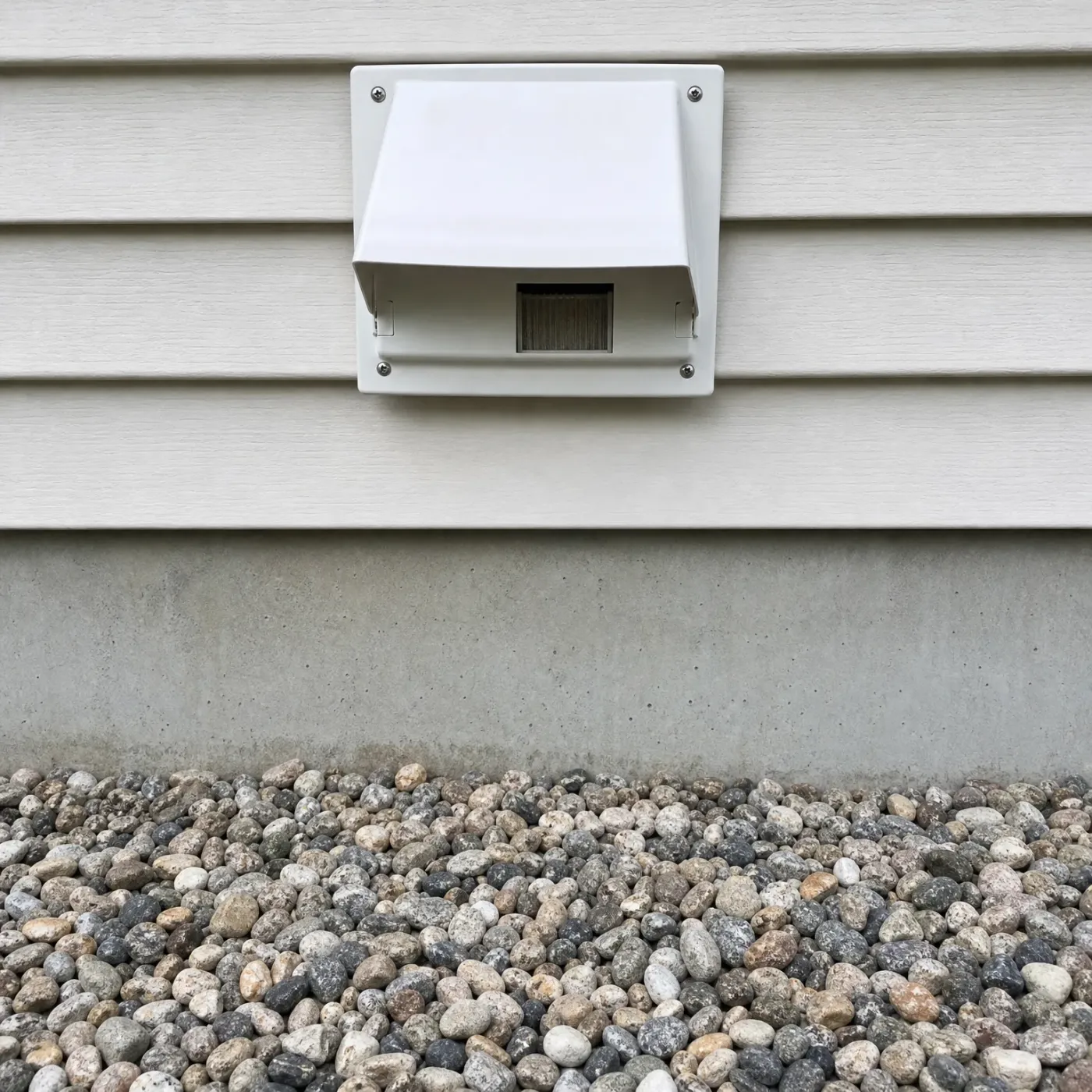
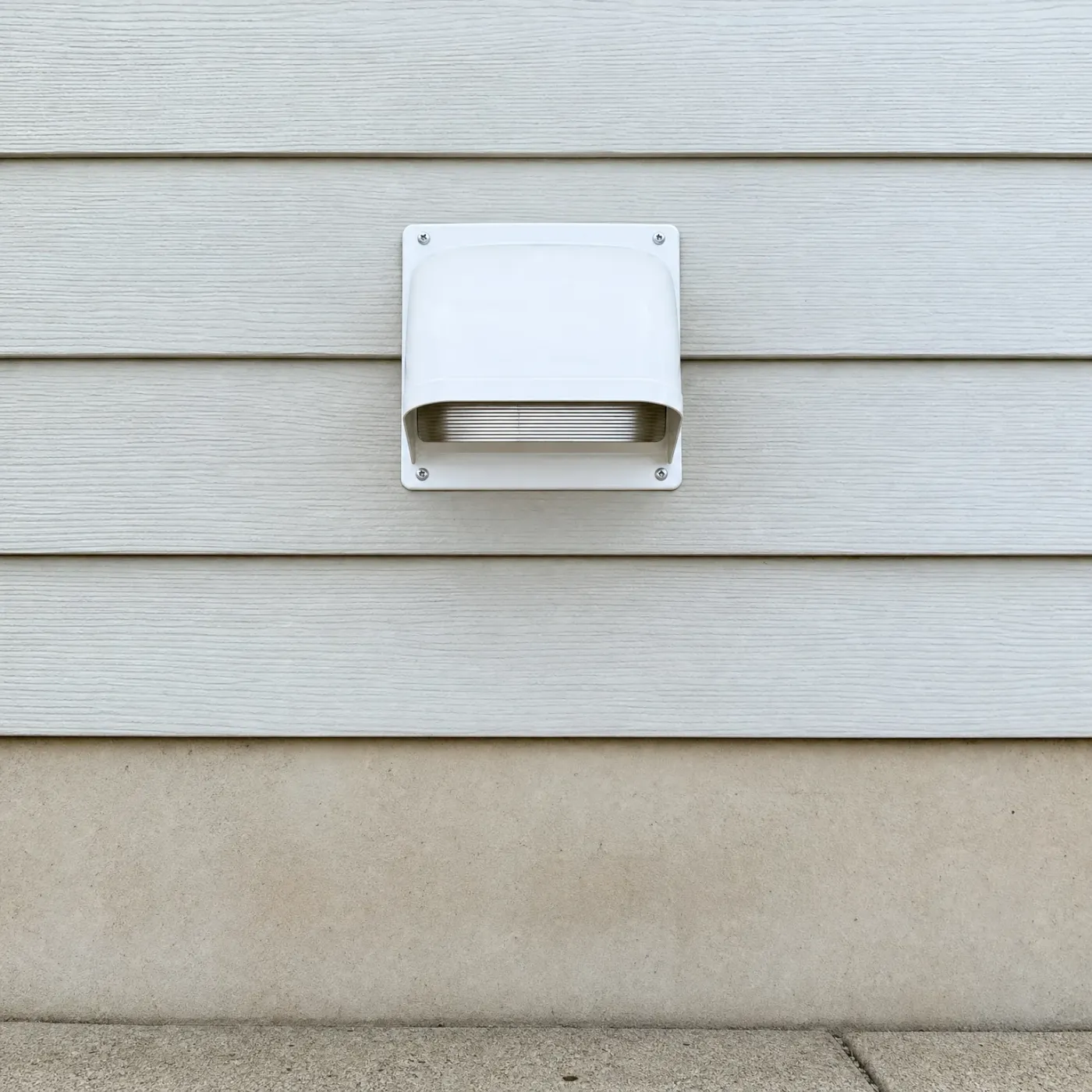
Clear and venting properly
Air pushes straight out through the hood with every load, and the flap swings open and closed on its own. You'll feel strong, warm airflow if you hold your hand near the vent while the dryer runs. That's a duct with nothing blocking it.
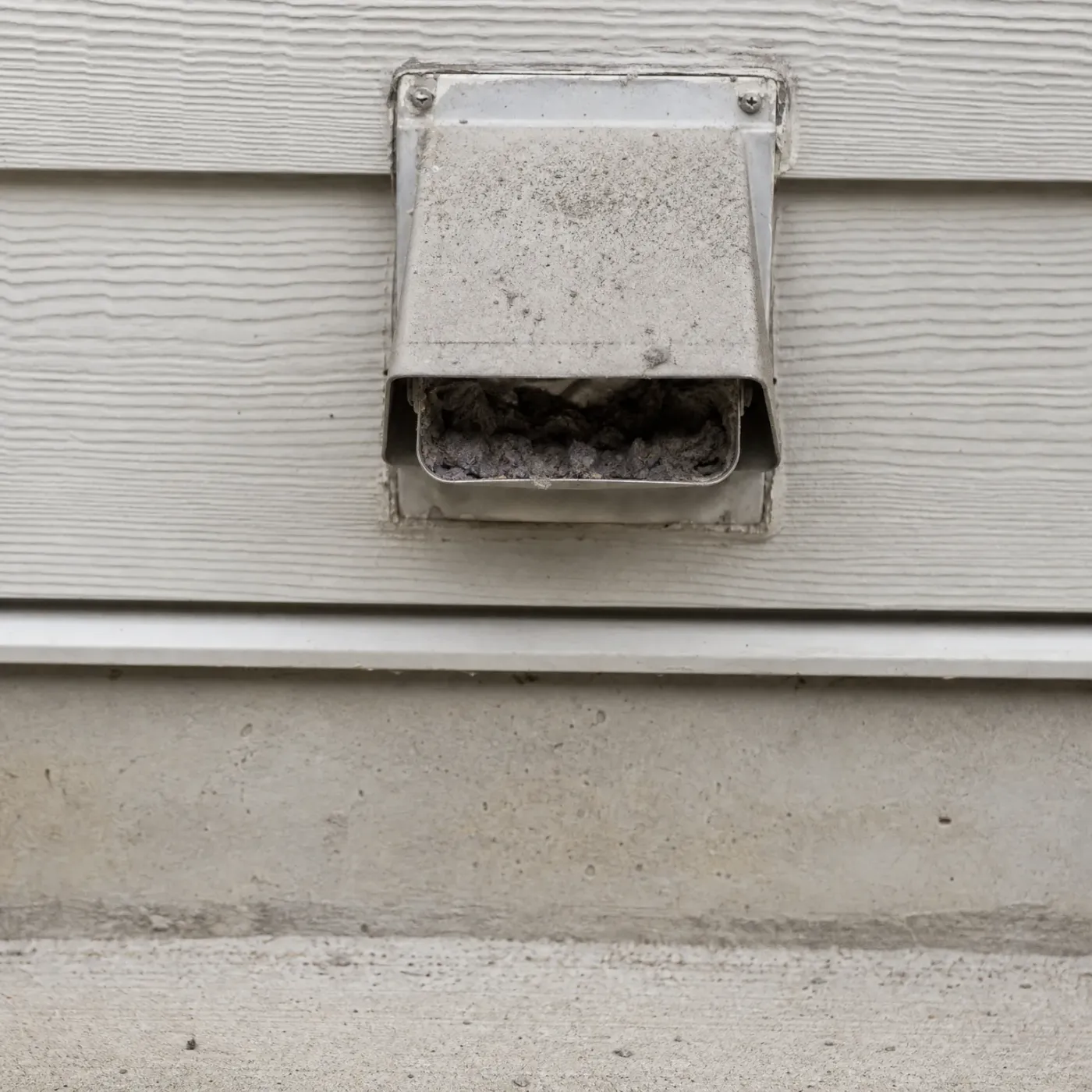
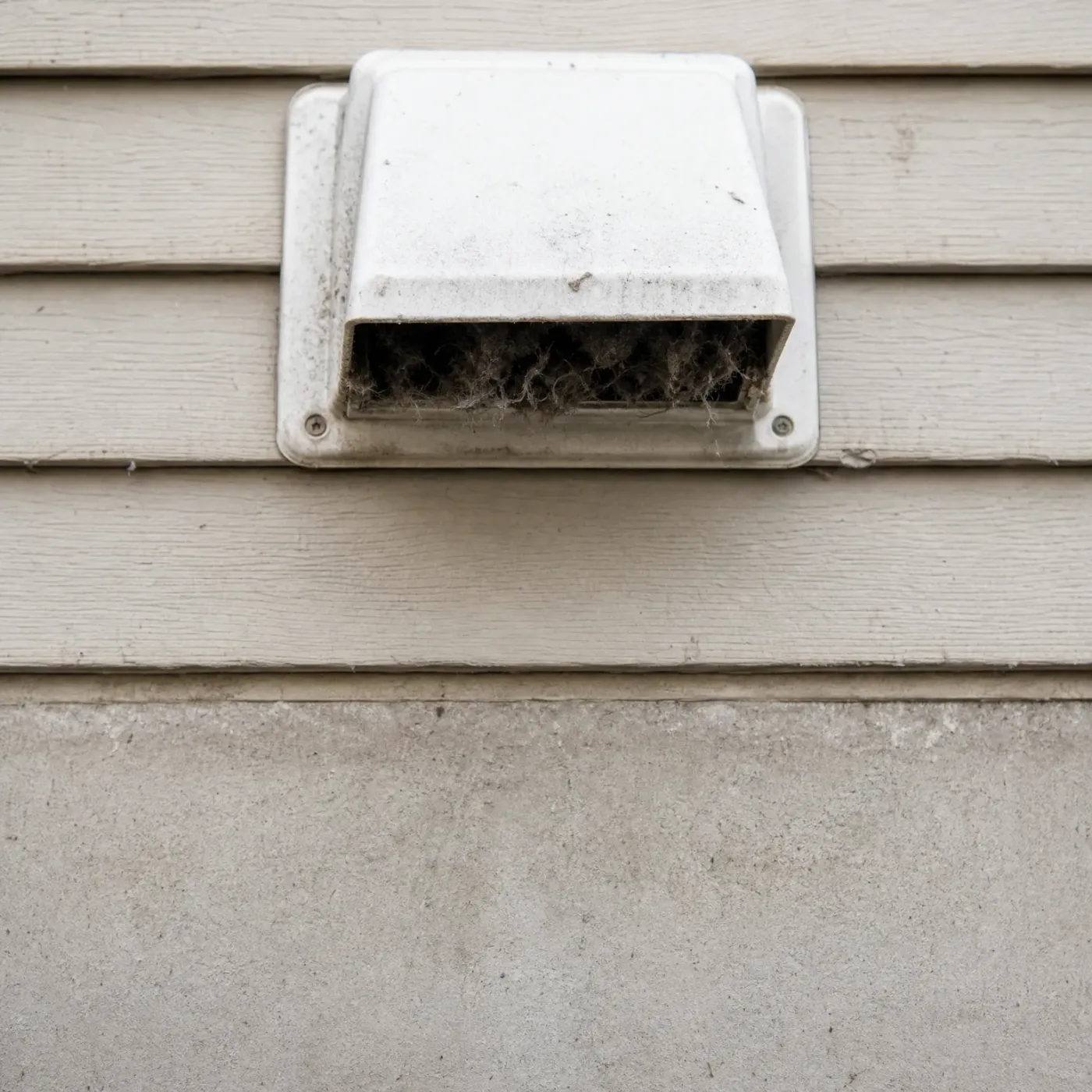
Clogged and struggling
Lint has built up around the flap until it can't close all the way anymore. Air that should be pushing out hard now just seeps past the edges. Once you see lint like this on the outside, more of it is packed into the duct behind it.
Once a Year or Twice
Clean once a year
Lint has had twelve months to build up on the duct walls, which is enough to narrow the path even in a straight run.
Once-a-year cleaning catches the buildup before it reaches the point where the dryer is working noticeably harder every load.
This works for a household that doesn't run the dryer every day and has a short, straight duct run to the outside.
You'll still notice drying times creeping up a little before the next cleaning, since a year is close to the edge for most homes here.
If your vent has turns or runs longer than usual, a full year lets more lint collect at each bend than it would in a straighter setup.
Clean twice a year
A household running the dryer most days fills the duct with lint faster, so twelve months is too long to wait.
Cleaning in spring and again in fall keeps the duct clear through both the humid summer stretch and the cold months when the dryer runs longer per load.
Homes with a duct that bends more than once or twice trap lint at every joint, so twice a year keeps each bend from building up unnoticed.
You'll feel the difference in drying time staying consistent, instead of slowly climbing between a single yearly cleaning.
This fits a household of more than two or three people, where the volume of laundry alone adds up faster than the duct can clear itself.
The pro who gets in touch is licensed in Alabama and works in Madison County.
It costs nothing to send, and you don't have to hire anyone.
How the vent actually works
A dryer vent hood has a flap, called a damper, that should swing open when the dryer runs and fall shut when it stops.
A damper that stays open or barely moves usually means lint has built up on the hinge or is propping it from inside the duct.
Rigid metal duct holds up better over years of cleanings than flexible foil duct, which sags and traps lint at every low point.
Every elbow in the duct run is a spot where lint collects first, so a duct with two or three bends needs more attention than a straight shot to the wall.
The exhaust duct is separate from the intake filter you clean after every load, and one being clear tells you nothing about the other.
A cleaning job clears the full run from the back of the dryer to the outside hood, not just the section you can reach by hand.
Your dryer vent is a one-way path for hot, wet air, and every part of it has a job. At the outside wall, the hood holds a damper, a hinged flap that opens when air pushes against it and closes when the dryer shuts off. That close keeps outside air, bugs and in winter some cold air from coming back up the duct into your house. Watch it the next time you run a load. If it barely lifts, or doesn't fall shut all the way after, lint is sitting on the hinge or caught just inside, holding it open.
The duct itself matters as much as the hood. Rigid metal duct runs straight and holds its shape, so lint moves through it more easily over years of use. Flexible foil duct sags between the points where it's fastened, and those low spots catch lint the way a dip in a hose catches water. Every elbow, whether the duct is rigid or flexible, is a spot where moving air slows down and lint drops out first. A run with two or three bends to get from the dryer to the outside wall is going to build buildup faster than a short, straight shot.
None of this has anything to do with the lint filter you pull out and clean after every load. That filter sits on the intake side, catching lint before it ever reaches the duct. The exhaust duct is a separate system entirely, running from the back of the dryer to the outside hood, and a clean filter tells you nothing about what's built up in there.
Before you get your dryer vent cleaningAfter you get your dryer vent cleaning
A dryer running hot and slow isn't just an inconvenience. It's a dryer heating element working against a blocked path, and that's the setup that ends in a lint fire.
Most dryer fires start in the vent, not the machine. A duct that's clear removes the fuel. A duct packed with lint waits for the spark.
2.39 people per household on average
At 2.39 people, most Madison County households run a load every day or close to it. That's a dryer pushing warm air through the same duct day after day, so lint has more chances to build before a year is up.
ACS 2020-2024
1
Lint collects inside the duct walls as each load dries.
2
Airflow narrows, so the dryer runs hotter and slower.
3
A technician disconnects the duct at the dryer and the hood.
4
A rotating brush runs the full length of the duct, knocking lint loose.
Once a year is the answer for most houses in Huntsville and across Madison County, and twice a year if the laundry runs daily or the duct has more than one bend. The dryer tells you between cleanings too: longer drying times, a top that runs hot, a damper that barely moves are all signs the duct is narrowing before the year is up. None of that is something you have to figure out alone. A technician who works on dryer vents all over Madison County every week knows which duct runs and hood styles clog fastest and what a dangerous buildup looks like versus a normal one. You'd be matched with one licensed local contractor for this, not a handful of companies competing for your callback, so there's one visit to schedule and one person who already knows the area's homes well enough to tell you straight what your vent needs.
Dryer Vent Cleaning
One form, no calling around
Get matched with someone who does this kind of work in Madison County.
Get matched with a Madison County pro who cleans dryer vents.
After this form, you can stop searching for a dryer vent pro.
One request and the search for a pro is handled.
Answer a few questions instead of calling shop after shop.
Describe your dryer vent job once, to one pro.
Your request goes to one pro, not a list of companies.