Heat Pump Repair in Albertville, AL
Homes here need heat from October through April and cooling from May through September. If your system quits, tell us what it's doing and a licensed contractor who covers Marshall County will get in touch.
Tell us about the job
It takes about a minute.
Your heat pump runs almost all year here
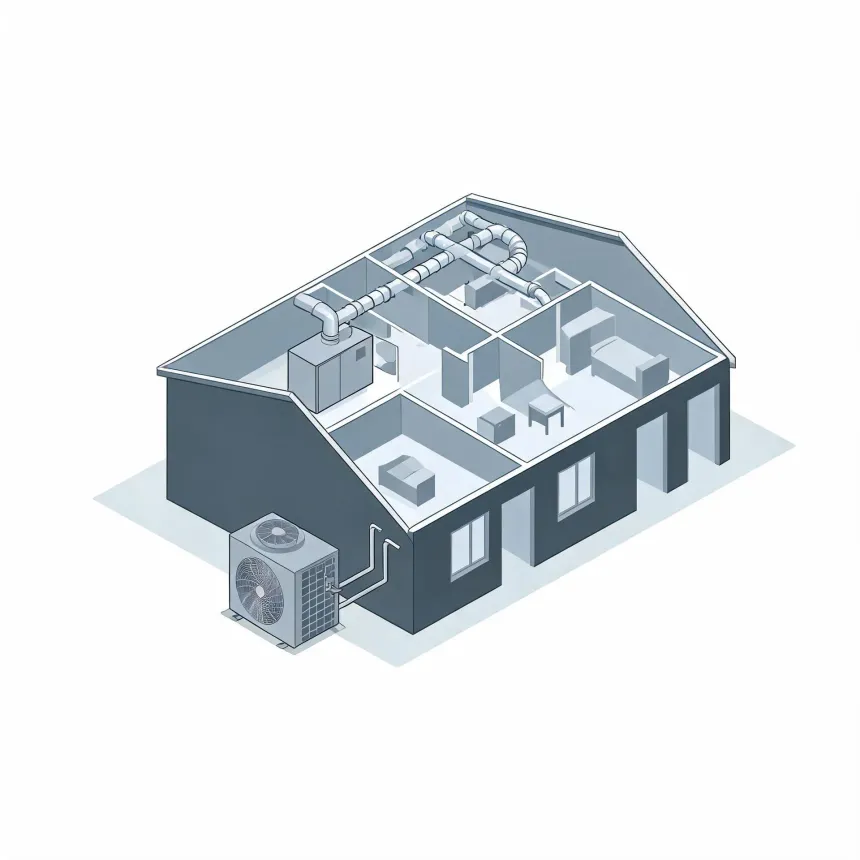
Albertville needs heat or cooling twelve months a year. Seven months of heat, five months of cooling, with almost no break in between. That kind of schedule doesn't give the system much time to rest, and it shows up in parts that cycle on and off all day, like the contactor and the capacitor.
Winter nights average 34°F, which is right in the range where a heat pump works hardest, pulling heat from air that's barely above freezing. Summer afternoons average 88°F, and the compressor carries that load all season. Marshall County has also seen 181 damaging wind events and 6 winter storms over the past ten years, and with two thirds of homes here heating with electricity, a power interruption means the heat stops until it's back. If your system won't kick on after an outage, or it's blowing air that isn't warm enough on a cold night, that's the wear this kind of year-round use causes.
- 7 months
- October through April, your system heats
- 5 months
- May through September, it cools
- 34°F
- the average winter night it heats against
- 88°F
- the average summer afternoon it cools against
NOAA nClimDiv, 1991–2020 normals
Alabama requires HVAC contractors to hold a state license.
The Alabama Board of Heating, Air Conditioning & Refrigeration Contractors issues that license. It covers the contractor, not the individual job.
A heat pump repair means opening the refrigerant side of the system in most cases. Federal law requires EPA Section 608 certification for that work, in every state. So on a job like this, the contractor's license and the technician's federal certification are the two things standing behind the work.
Source: Alabama Board of Heating, Air Conditioning and Refrigeration Contractors
- Why is my heat pump blowing cold air?
- In winter, this usually means the heat pump has switched into defrost mode to melt ice off the outdoor coil, and it will feel cool for a few minutes until it switches back. If the air stays cool for a long stretch, the system may have lost refrigerant charge or the reversing valve may be stuck in the wrong position. Either problem needs a contractor to check with gauges, since guessing at refrigerant levels can damage the compressor.
- Why is there ice on my heat pump?
- A heat pump forms some frost on the outdoor coil during cold weather, and it clears that off on its own through regular defrost cycles. A thick or solid layer of ice that does not go away means airflow across the coil is blocked, often by a dirty filter, a failed fan motor, or low refrigerant. With winter nights here averaging 34°F, the outdoor unit runs defrost cycles often, so a system that cannot complete them will keep building ice until a contractor clears the fault.
- Why is my heat pump running but not cooling?
- If the outdoor unit and indoor blower are both running but the air is not cold, the most common causes are a dirty filter starving the system of airflow, a coil covered in dirt or ice, or refrigerant that has leaked out. On a hot Albertville afternoon near 88°F, low refrigerant shows up fast because the system has to work harder to pull heat out of the house. Checking refrigerant charge and sealing a leak requires a contractor with the right gauges and license.