Why your heat pump bill is high in Alabama summers

RepairHeat PumpAlabama
Step 1 of 2

What ZIP code is the job in?

A heat pump working against Alabama's summer humidity runs longer than it would in a drier climate, because it has to pull moisture out of the air as well as cool it. That longer runtime adds up fast when most homes here heat and cool with electricity and power costs what it does in this state. A unit that cycles on and off every few minutes instead of running a long steady stretch is usually working harder than it should, often because the refrigerant charge is low, the coil is dirty, or the outdoor fan isn't pulling enough air through the unit. Any of those make the system use more electricity to move the same amount of heat. A bill that jumped compared to last summer, even with the thermostat set the same, usually means something has changed inside the equipment, not just outside in the weather.

A gray-haired man in a dark sweater sits on a light gray sofa in a living room, looking toward a sunlit window with trees outside.
A gray-haired man in a dark blue sweater sits on a light gray sofa in a sunlit living room, looking off to the side, with a potted plant, shelving unit, and large glass doors behind him.
A bearded man with graying hair in a dark green sweater sits on a sofa in a living room, looking off to the side, with a sliding glass door and a dim kitchen doorway behind him.
A gray-haired man in a dark knit sweater sits on a light gray sofa in a living room, looking toward a sunlit window, with houseplants, a lamp, and framed art in the background.

Is your heat pump running all day and still not keeping up

You might notice the outdoor unit never seems to shut off, or the air coming from the vents feels cool but not cold. Rooms farther from the thermostat stay warmer than the rest of the house. The indoor unit runs loud, or you hear it cycling on and off more than it used to. Your bill climbs even though you haven't changed the setting. Sometimes there's a musty smell, which can mean moisture isn't being pulled out of the air the way it should. Left alone, a unit working this hard tends to wear out its parts sooner, and what would have been a repair now turns into something bigger.

A dimly lit bedroom at dusk with a made bed, a table lamp on a nightstand, and a condensation-covered sash window with a dark curtain.

It's past midnight and the sheets are damp against your legs. You kicked the blanket off an hour ago and it didn't help. The window unit hum from the outdoor pad carries through the wall, steady, never cutting off. You get up and stand in front of the vent and the air moving out of it is cool, not cold, barely enough to raise the hair on your arms. The glass at the corner of the window has fogged over from the humidity pressing against it outside. You check the thermostat on your way back to bed. It still reads four degrees above where you set it. You lie back down on the dry side of the pillow and listen to the unit keep running.
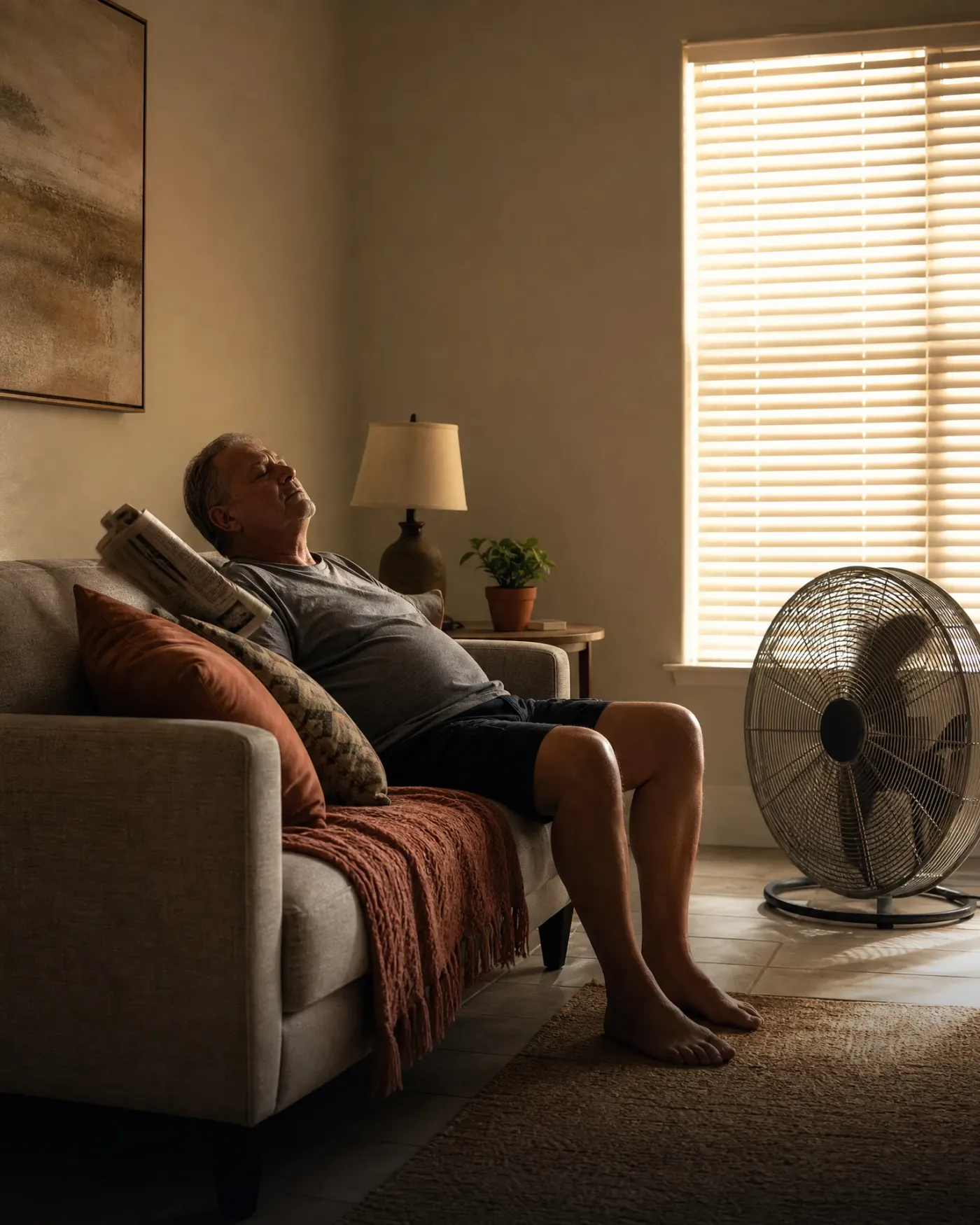

Why does my heat pump run constantly in summer and still cost so much?

You've watched the outdoor unit run for hours without stopping, and the power bill at the end of the month shows it. You're not imagining it. In Alabama's summer heat and humidity, a heat pump doesn't just fight temperature, it fights moisture too, and that changes how the system behaves hour to hour in ways that aren't obvious from inside the house.

A heat pump sized or charged correctly still runs long hours here, but a struggling one runs continuously and barely keeps pace

A heat pump cools by moving refrigerant through a cycle, and that cycle needs the right amount of refrigerant and clean coils to move heat efficiently. If the charge is low or the outdoor coil is caked with dirt, the system can't shed heat fast enough, so the compressor keeps running to try to catch up. It never gets ahead. You'll see the outdoor fan spinning nonstop, vents blowing air that's cool but not cold, and the indoor coil sometimes icing over from the strain. In Alabama's humidity, that same system also has to pull extra moisture out of the air on every cycle, so a unit that's already undersized or low on charge falls further behind than it would somewhere drier.

A gray outdoor condenser unit on a concrete pad beside a house with horizontal lap siding, a conduit and disconnect box on the wall, a shrub with white flowers at right and evergreen foliage at left.

A unit that can keep up

The fins are clean and the airflow around the unit is clear. A heat pump like this can move heat the way it's supposed to, cycling on and off instead of running straight through a July afternoon. That keeps the compressor from overworking in Alabama's humidity, and it shows up as a lower bill.

A gray outdoor air conditioning condenser unit on a concrete pad beside a house with light vinyl siding, with a gray electrical disconnect box and conduit on the wall to the right.

A unit working against itself

Dirt and weathering have built up on the fins, and that cuts off the airflow the unit needs to release heat. It runs longer to do the same job, and the compressor strains doing it. A contractor who services heat pumps all summer can tell you whether this is a cleaning or something further along.

High Bill: Normal or a Problem

Running high but working fine

  • The outdoor unit cycles off at some point during the day instead of running straight through the afternoon.
  • Every room in the house reaches the temperature set at the thermostat, even the bedrooms at the far end of the hall.
  • The bill went up, but it tracks with a stretch of 95 degree days and the humidity sitting heavy on top of that.
  • Air coming out of the vents feels genuinely cold on your hand, not just moving.
  • The outdoor coil and fins are clean, nothing blocking airflow around the unit.
  • You haven't noticed any new sound, smell, or ice forming on the lines.

Running high because something's off

  • The outdoor unit runs for hours at a stretch and you can't remember the last time it shut off on its own.
  • One or two rooms stay noticeably warmer than the rest of the house no matter how long the system runs.
  • Air from the vents feels like it's just moving, not actually cold, even with the thermostat set low.
  • Ice has shown up on the outdoor unit or the refrigerant lines at some point this summer.
  • The bill jumped well beyond what the heat and humidity alone would explain.
  • A licensed contractor who works on heat pumps in Alabama summers can tell you which of these it is before it runs you up another month of bills.
An outdoor air conditioner condenser unit on a concrete pad beside a house with beige horizontal siding, with conduit running from an electrical box on the wall.
Before you get your heat pump repair
A beige outdoor air conditioning condenser unit on a concrete pad beside a house with horizontal vinyl siding, with refrigerant lines and a disconnect box on the wall, surrounded by dark mulch and a green shrub at left.
After you get your heat pump repair

The right pro for this job

Your request goes to one pro, not a list of companies.

There's no charge for the request.

What a low charge does to runtime

A heat pump moving the right amount of refrigerant pulls heat and moisture out of the air in a set number of minutes, then shuts off. Take away even a little of that refrigerant and the same job takes longer, because the coil can't absorb as much heat per pass. The system doesn't know to run harder. It just keeps running, cycle after cycle, trying to reach a setpoint it was reaching fine a year ago. A refrigerant leak is usually slow, so the change shows up gradually, a few more minutes of runtime each week until it's running most of the afternoon.

Why the outdoor coil matters so much here

The outdoor coil is where the heat your house collects gets dumped into the air outside, and in Alabama it's working against air that's already hot and already humid. If that coil is coated in dirt, pollen, or grass clippings, it can't shed heat as fast, so the system has to run longer to move the same amount of heat out of the house. A contractor who services heat pumps in this area year after year knows to check that coil first, because it's often the simplest explanation for a unit that runs long and a bill that's climbed.

Power costs 16.09 cents per kilowatt-hour statewide

At 16.09 cents per kilowatt-hour, every extra hour your heat pump runs shows up fast on the bill. A unit that's low on refrigerant or losing airflow has to stretch that hour into two just to cool the same rooms.

EIA-861 2025 statewide residential average

  1. A contractor checks refrigerant charge against the nameplate.

  2. They test airflow across the indoor coil.

  3. They check amp draw on the compressor under load.

  4. They confirm the system cycles off at the right point.

An outdoor condenser unit on a concrete pad beside a gray lap-sided house, with an electrical disconnect box and conduit on the wall and shrubs with mulch to the right.
Clean coil fins and a clear pad let the unit cycle off once the house reaches temperature instead of running straight through the afternoon.
An outdoor air conditioner condenser unit on a concrete pad beside a house with horizontal vinyl siding, with refrigerant lines and an electrical disconnect box on the wall and dry leaves on the ground.
Dirty coil fins and leaves piled against the base block airflow, so the unit works harder and runs longer to move the same heat outside.
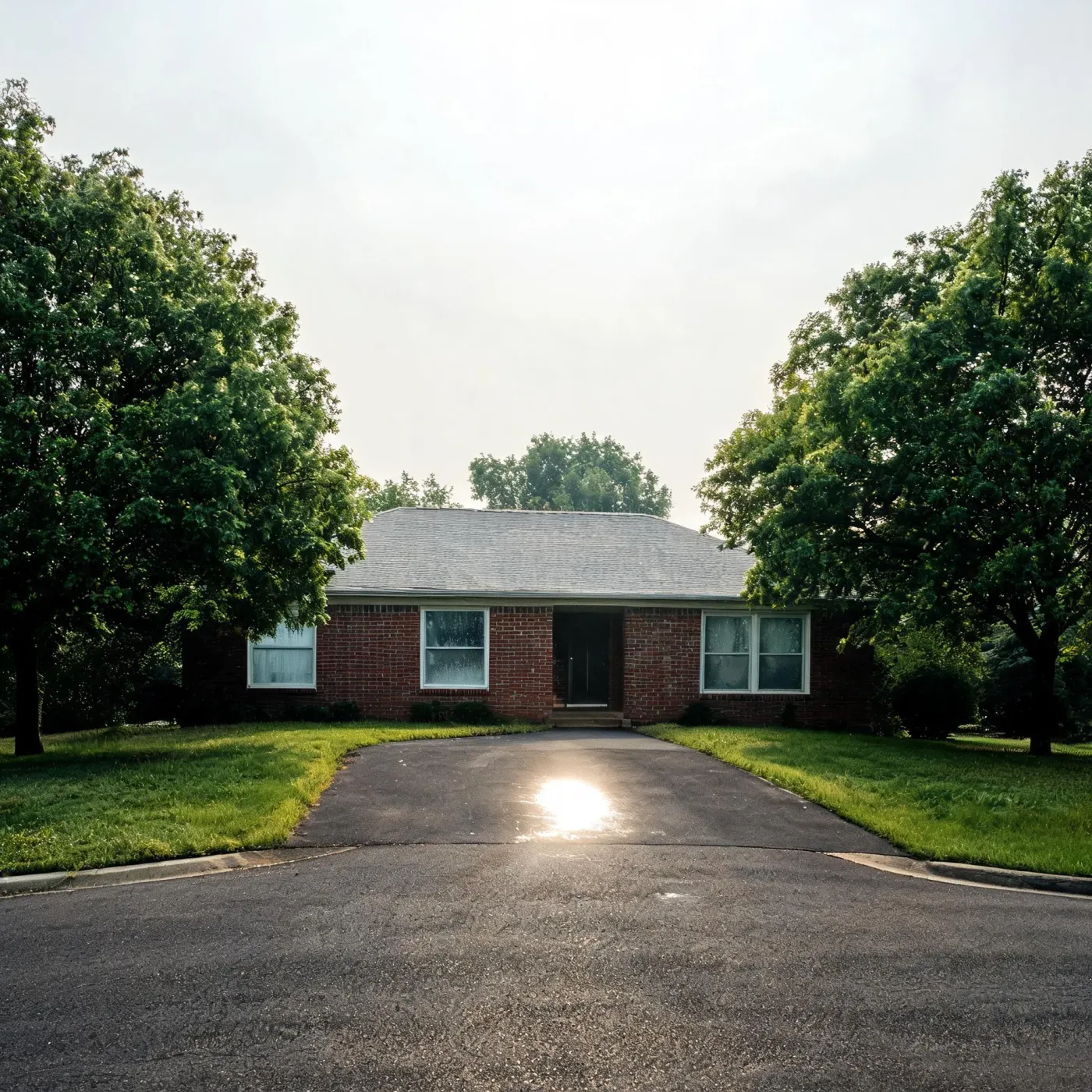
A single-story red brick ranch house with a gray shingled roof, white-framed windows and a central dark front door, fronted by a wide asphalt driveway, green lawn and large deciduous trees on both sides under a bright hazy sky.

The National Weather Service puts the average summer dew point in Alabama at 69°F across June, July and August. That's heavy, sticky air, not just warm air. Your heat pump has to wring that moisture out before the house feels right, and pulling water out of the air takes longer than just cooling it. On a dry day a unit can cool the house and shut off. At a 69°F dew point it keeps running, pulling humidity down a little at a time, and that extra runtime is what shows up on your bill even when the thermostat reads the same number it always has.

NASA POWER T2MDEW county cells weighted by homes

A middle-aged woman with shoulder-length dark hair, wearing a gray cardigan over a cream top, sits in an upholstered armchair and looks toward a sunlit window, with a shelf holding framed pictures and a plant behind her.
A woman and a child wrapped together in a knitted gray blanket on a couch, with the child's head resting on her shoulder and a lit table lamp and houseplant in the background.

What the long runtime is telling you

  • A heat pump running long hours in Alabama's humidity isn't automatically broken, but one that never cycles off is telling you something.
  • Low refrigerant, a dirty coil or weak airflow all show up the same way: longer runtimes and a higher bill, even when the house never quite feels right.
  • A contractor who works on heat pumps through Alabama summers has seen which of those three usually causes a given symptom.
  • Checking refrigerant charge, airflow and amp draw against the nameplate tells you which part is actually at fault, not just that something is.
  • Getting matched with one licensed local contractor means you're talking to someone who knows this equipment, not fielding calls from several companies.
  • Fixing the actual cause brings the runtime back down to what the humidity here actually requires, not less.

A heat pump that runs long hours against Alabama humidity is doing what it's built to do. One that never shuts off, in a house that still doesn't feel right, is past that and into a problem with a cause. Low refrigerant, a dirty coil and weak airflow all look the same from the thermostat. The bill climbs, the rooms stay off, and the outdoor unit just keeps going. The only way to tell them apart is to check the system against its own nameplate: refrigerant charge, airflow across the coil, amp draw on the compressor. That's what separates a guess from a diagnosis.

This is where it matters who's doing the checking. A contractor who works on heat pumps all summer in this state has run these same checks on units fighting this same humidity, over and over, and has a sense for which reading points to which problem before the numbers even come back. That's not something a general handyman or an out-of-state call center picks up.

When you get matched through this page, it's with one licensed contractor local to you, not a handful of companies competing for the job and blowing up your phone. That contractor fixes what's actually wrong, whether it's the charge, the coil or something in the airflow, and the runtime settles back to what this summer's humidity actually calls for. Not lower than that. Just no longer than it has to be.

A house roofline with a stone chimney rises above trees, with a tall pine, Spanish-moss-draped oak branches, and misty hills in the background.

Matched to your heat pump job

Connect with a pro

You only hire the pro if you want to.

A heat pump that runs long hours all summer is putting wear on the compressor every one of those hours. A local contractor who works on these systems every summer can look at your unit, find what's making it run longer than it should, and get it back to cycling normally before the next bill comes due.