
AC Maintenance in Jasper, AL
Air conditioners here run from May through September, so April is the time for a tune-up. Tell us about your system, and a licensed contractor who covers Walker County will get in touch.
Tell us about the job
It takes about a minute.

Five months of heat on your AC
Your air conditioner runs from May through September in Jasper. Summer afternoons average 90°F, and the compressor is what does the work of getting the house down to temperature on those days.
A tune-up checks the parts that carry that load. Refrigerant charge, the condenser coil, the capacitor that starts the compressor. A weak capacitor or a dirty coil makes the unit run longer to do the same job, and on a 90 degree afternoon that is when it can stop keeping up.
- 5 months
- May through September, your air conditioner is on duty
- 90°F
- the average summer afternoon it cools against
- 31 hail events
- in ten years, and hail bends the fins on outdoor coils
- 65 wind events
- in ten years, and wind drives debris into outdoor units
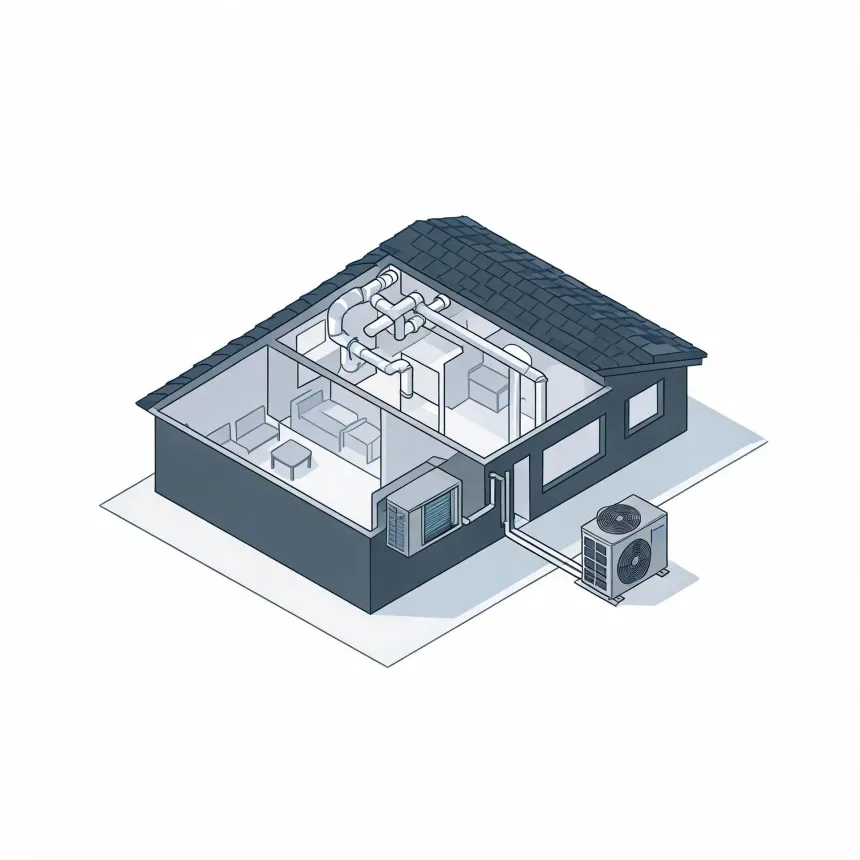
NOAA nClimDiv, 1991–2020 normals

Book your AC tune-up in April, before homes here start needing cooling in May.
- Jan
- Feb
- Mar
- Apr
- May
- Jun
- Jul
- Aug
- Sep
- Oct
- Nov
- Dec
A tune-up checks the refrigerant charge, cleans the coils, tests the capacitor and tightens the electrical connections.
Alabama requires HVAC contractors to hold a state license.
The license is held by the contractor, not issued job by job, so it covers the business behind whoever shows up at your door in Walker County, through the Alabama Board of Heating, Air Conditioning & Refrigeration Contractors.
Maintenance on an air conditioner usually means checking refrigerant levels and pressures, and any technician who opens that side of the system, anywhere in the country, has to hold EPA Section 608 certification. That certification is separate from the state license. One says the contractor is on record with Alabama. The other says the person handling refrigerant was trained to do it without venting it into the air or damaging the system.
Source: Alabama Board of Heating, Air Conditioning and Refrigeration Contractors
- What does AC maintenance include?
- A technician checks refrigerant levels, cleans the condenser coil, tests the capacitor, and clears the condensate drain so it isn't clogged when you need it most. They also check electrical connections and run the system through a full cooling cycle to see that it's actually cooling. In Jasper, where the coil sits outside through hailstorms and wind, that visual check on the outdoor unit matters. A good visit ends with the technician telling you what they found, not just that they showed up.
- How often does an air conditioner need maintenance?
- Once a year, before the season it works hardest in. Here that means getting it checked before May, ahead of the five months of cooling season and afternoons that average 90°F. A yearly check catches a weak capacitor or a low refrigerant charge before it turns into a breakdown mid summer. Waiting until the unit struggles or stops means diagnosing a problem instead of preventing one.
- Is AC maintenance worth it?
- Yes, because it catches small problems while they're still small. A capacitor going bad or a coil losing efficiency doesn't announce itself until the unit is struggling in the heat. Jasper summers run five months, with afternoons averaging 90°F, so a neglected system has more time to wear down before anyone notices. A yearly check is a small cost against a system quitting during the hottest part of the year.