Mini Split Installation in Mobile, AL
A new system here will heat from November through March and cool from April through October every year. Tell us about the house, and a licensed contractor who covers Mobile County will get in touch.
Tell us about the job
It takes about a minute.
Mobile asks a mini-split to run almost every month of the year
Cooling season here runs April through October, seven months of summer afternoons averaging 91°F. Winter is shorter, November through March, and nights in the coldest stretch average 42°F. Between the two seasons there is almost no month left where the unit gets to sit idle.
A new mini-split installed here has to meet the federal minimum for a split-system heat pump, 14.3 SEER2 for cooling and 7.5 HSPF2 for heating. With seven months of afternoons near 91°F, the cooling side of that rating is the one doing the most work. Most homes in the area heat with electricity, so the mini-split is often carrying the heating load too, not just backing up another system.
- 5 months
- November through March, your system heats
- 7 months
- April through October, it cools
- 42°F
- the average winter night it heats against
- 91°F
- the average summer afternoon it cools against
NOAA nClimDiv, 1991–2020 normals
Alabama requires HVAC contractors to hold a state license.
The Alabama Board of Heating, Air Conditioning & Refrigeration Contractors tests contractors and keeps a record of who holds a license. That license belongs to the contractor, not to this job, so it tells you the person or company has met the state's standard, not that this particular installation has any paperwork of its own yet.
In most cities and counties around Mobile, installing a mini-split needs a permit from the local building office, with an inspection once the work is done. That inspection covers the installation itself, separate from whatever the state license already covers.
Source: Alabama Board of Heating, Air Conditioning and Refrigeration Contractors
- Is a mini split worth it?
- For a room or addition that fights your main system, yes. Mobile needs cooling seven months of the year and heat the other five, so a system that handles both without ductwork earns its keep here. It runs on electricity, which matters since most homes in the area already heat that way, and it gives you a heat source in a room that never gets enough from the main unit. Whether it makes sense for your whole house is a different question, one a contractor can answer after seeing the place.
- How many rooms can a mini split cover?
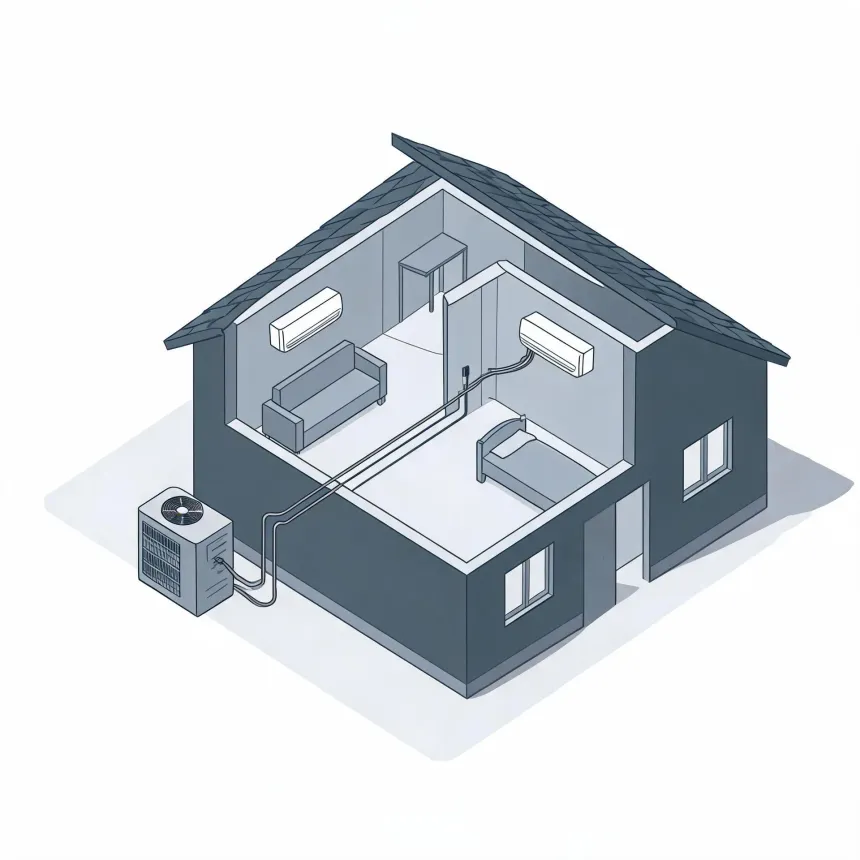
- A single outdoor unit can run one indoor head or several, depending on the system. Single-zone systems cover one room or open area. Multi-zone systems tie several indoor heads to one outdoor unit, each head running its own room on its own schedule. How many rooms a given system can actually handle depends on the size of the outdoor unit and the size of each room, and that is a load calculation a contractor does for the specific house.
- Can a mini split heat a whole house?
- It can, if it is sized and placed for that from the start. A multi-zone system with a head in each main area can carry a house through Mobile's winters, where lows average 42°F, without any backup heat needed. What it takes is enough indoor heads in the right rooms and an outdoor unit sized for the whole load, not just one or two rooms. A contractor can tell you whether your layout works for that or whether some rooms would be better served another way.