Mini Split Installation in Florence, AL
A new system here will heat from October through April and cool from May through September every year. Tell us about the house, and a licensed contractor who covers Lauderdale County will get in touch.
Tell us about the job
It takes about a minute.

Florence runs its mini-split almost year round
Winter nights here average 32°F, right at the edge where a heat pump has to work hardest to pull warmth from the outside air. Summer afternoons average 89°F, so the same unit is doing real work on the other end too. Homes here need heat from October through April, seven months, and cooling from May through September, five months. That leaves the system with almost no season off.
Any mini-split installed new has to meet the federal minimum for a split-system heat pump, 14.3 SEER2 for cooling and 7.5 HSPF2 for heating. With 68.1% of homes here heating with electricity, that heating side carries real weight for most of the county. Lauderdale County has also logged 9 winter storms and 653 damaging wind events over the past ten years, and 18% of Alabama households went at least a day without power in 2024, which is worth asking about when you're choosing a system that has to run through both seasons.
- 7 months
- October through April, your system heats
- 5 months
- May through September, it cools
- 32°F
- the average winter night it heats against
- 89°F
- the average summer afternoon it cools against
NOAA nClimDiv, 1991–2020 normals
Alabama requires HVAC contractors to hold a state license.
The license comes from the Alabama Board of Heating, Air Conditioning & Refrigeration Contractors, and the state tested the contractor and keeps a record of them. That license belongs to the contractor, not to any one job, so the same license covers a mini-split install as it does any other HVAC work they take on.
In most cities and counties in Alabama, an install like this needs a permit from the local building office, with an inspection once the work is finished. That inspection is what checks the work itself, separate from the license the contractor already holds.
Source: Alabama Board of Heating, Air Conditioning and Refrigeration Contractors
- Is a mini split worth it?
- For the right house, yes. A mini split heats and cools without ducts, so a room that never gets comfortable on the main system can get its own zone. Homes here need heat from October through April and cooling from May through September, so the system runs most of the year, and a heat pump model handles both jobs with one piece of equipment. Whether it makes sense for your house depends on what you have now and which rooms are giving you trouble, and a contractor can walk through that with you.
- How many rooms can a mini split cover?
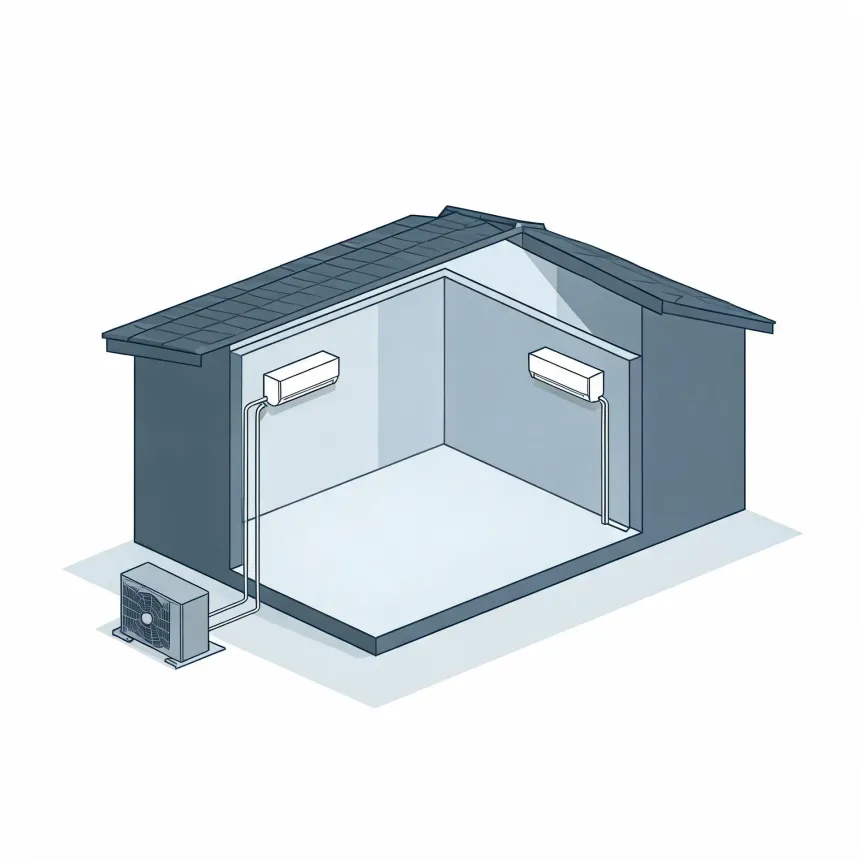
- A single outdoor unit can run one indoor head or several, depending on the system. Multi-zone systems are built to carry a number of indoor heads, each one set to its own room and its own temperature. The limit is the outdoor unit's capacity, so a contractor sizes it against the rooms you actually want covered rather than a fixed number.
- Can a mini split heat a whole house?
- It can, if it is sized and placed for that job. A multi-zone heat pump system with an indoor head in each main room can carry the whole house through winter, including nights here that average 32°F. What decides it is layout. Open floor plans with a head in every zone work well, while a house with many closed-off rooms may need more heads or a different approach, which is something a contractor should walk through room by room.