
HVAC Repair in Fort Payne, AL
Homes here need heat from October through April and cooling from May through September. If your system quits, tell us what it's doing and a licensed contractor who covers DeKalb County will get in touch.
Tell us about the job
It takes about a minute.

Fort Payne runs its system almost year round
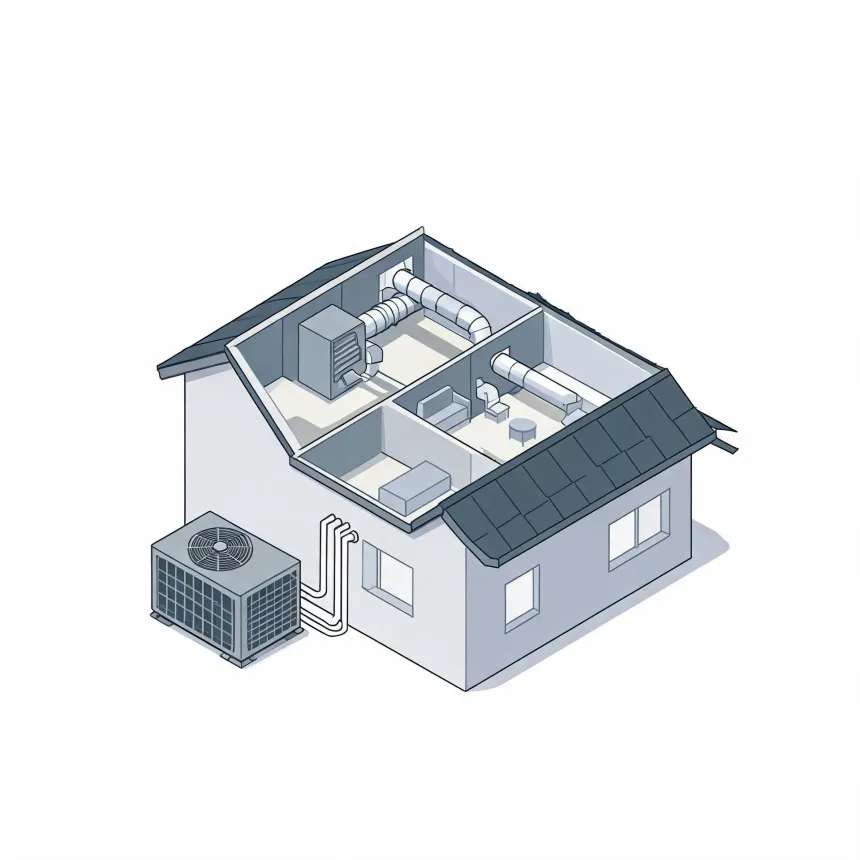
Your furnace works October through April here, and the air conditioner takes over May through September. That leaves the system only a couple months a year to rest, and most homes are heating or cooling something almost every month.
Winter nights averaging 33°F mean the burner cycles on and off through the night, and each start puts wear on the igniter. Summer afternoons averaging 86°F keep the compressor working hard for five straight months. Dekalb County has also seen 203 damaging wind events and 6 winter storms over the past ten years, and with most homes here heating on electricity, a power interruption means no heat until it comes back on.
- 7 months
- October through April, your system heats
- 5 months
- May through September, it cools
- 33°F
- the average winter night it heats against
- 86°F
- the average summer afternoon it cools against
NOAA nClimDiv, 1991–2020 normals
Alabama requires HVAC contractors to hold a state license.
The Alabama Board of Heating, Air Conditioning & Refrigeration Contractors tests contractors before it issues a license. The board keeps a record of who holds one and who does not. That license belongs to the contractor, not to the job, so it stays in place from one repair to the next rather than being issued fresh each time.
For a repair to your heating and cooling system, that state license is what stands behind the person doing the work. It means the contractor was tested and is on record with the state before ever showing up at your door.
Source: Alabama Board of Heating, Air Conditioning and Refrigeration Contractors
- Why is my heat not working?
- Most often it comes down to power, fuel, or airflow. Check your thermostat is set to heat and the temperature is above room temperature, then check your breaker panel for a tripped switch. If you have a gas furnace, look for a pilot light that has gone out or a switch on the unit itself that got bumped off. A clogged filter can also starve the furnace of airflow until it shuts itself down, so check that next. Beyond that, an igniter or flame sensor going bad is common and not something to test yourself. About two thirds of homes here heat with electricity, so if your heat pump is running but blowing cool air, that is worth mentioning to whoever you call.
- Why is my system running but not cooling the house?
- If the blower is running but the air is not cold, the problem is usually with the outdoor unit, not the indoor one. Start with the air filter. A dirty filter chokes airflow across the indoor coil and can ice it over, which stops cooling even though the system runs. Go outside and check the outdoor unit too. If the coil there is covered in leaves or debris, or the fan is not spinning, that will stop heat transfer just the same. A refrigerant leak causes the same symptom, but that is not something to check yourself, it takes gauges and a licensed hand to find and fix.
- What can I check before calling for HVAC repair?
- Start with the thermostat. Make sure it is set to the right mode, the temperature is set past room temperature, and the batteries are not dead. Next check your breaker panel for anything tripped, since a lost circuit looks like a dead system from the thermostat's point of view. Pull the air filter and look at it against the light. If you cannot see through it, replace it, since a clogged filter causes both heating and cooling problems. Last, walk around the outdoor unit and clear anything blocking it, leaves, grass clippings, or a cover left on from winter. If none of that fixes it, a licensed contractor can look at what is left, which is usually something electrical or mechanical inside the system.