
HVAC Installation in Athens, AL
A new system here will heat from October through April and cool from May through September every year. Tell us about the house, and a licensed contractor who covers Limestone County will get in touch.
Tell us about the job
It takes about a minute.

A system that runs nearly every month here
Limestone County asks for heat from October through April and cooling from May through September. That is 12 months a year one system or the other is working, with almost no break between them. Winter nights average 33°F, so a new furnace or heat pump has to hold up through a full season of cold starts, not just a few weeks of it. Summer afternoons average 89°F, and the air conditioner has to answer that heat for five straight months.
Most homes here heat with electricity, so a new system has to carry both jobs well. Limestone County has seen 171 damaging wind events and 8 winter storms over the past ten years, and close to a fifth of Alabama households lost power for a day or more in 2024. That is worth knowing when you choose equipment and where it goes in.
- 7 months
- October through April, your system heats
- 5 months
- May through September, it cools
- 33°F
- the average winter night it heats against
- 89°F
- the average summer afternoon it cools against
NOAA nClimDiv, 1991–2020 normals
Alabama requires HVAC contractors to hold a state license.
The Alabama Board of Heating, Air Conditioning & Refrigeration Contractors tests contractors before they can hold this license, and it keeps a record of who holds one. The license belongs to the contractor, not to any one job, so it covers the company doing your installation rather than this specific system.
Most cities and counties require a permit from the local building office to replace a furnace, air conditioner or heat pump, with an inspection once the work is done. That permit and inspection are what stand behind the installation itself, separate from what the state license tells you about the contractor.
Source: Alabama Board of Heating, Air Conditioning and Refrigeration Contractors
- When should I replace my HVAC system?
- Look at the age and how often it breaks, not just whether it still runs. Most furnaces and air conditioners last a decade or two, and once one starts needing a repair every year, replacing it usually makes more sense than paying for parts again. A unit here also has to work hard, with heat needed October through April and cooling needed May through September, so there is little downtime for a struggling system to rest. If your energy bills have crept up with no clear reason, or a contractor has told you the same part is wearing out again, that is a sign to start planning a replacement instead of waiting for it to fail on the coldest or hottest day of the year.
- Should I replace my furnace and air conditioner at the same time?
- If they are close in age, yes, it usually makes sense to replace them together. A furnace and air conditioner installed at the same time are matched to work as a system, and pairing an old furnace with a new air conditioner, or the other way around, can mean one part limits how well the other performs. It also keeps the connections between the two consistent, since both were sized for each other from the start. That said, if one unit is much newer than the other, a contractor can look at both and tell you honestly whether replacing just one makes sense for now.
- What happens during an HVAC installation?
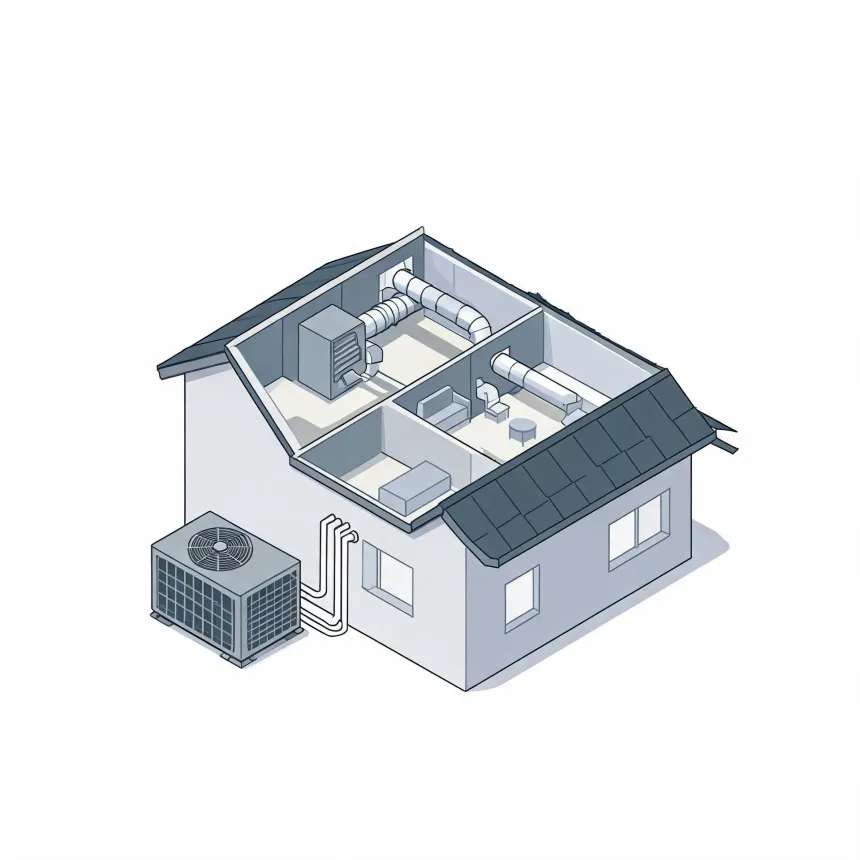
- A contractor removes the old furnace, air conditioner, or both, and sets the new equipment in place, connecting it to the existing ductwork, gas line or electrical circuit, and the refrigerant lines for the outdoor unit. They check that the ducts are sized right for the new equipment, since a system that is too big or too small for the ductwork will not heat or cool evenly. Once everything is connected, they test the system to make sure it is running the way it should, including checking airflow and, for a furnace, the ignition and venting. The exact steps depend on what is being replaced and how the current setup is built, so a contractor will walk you through what your specific job involves.